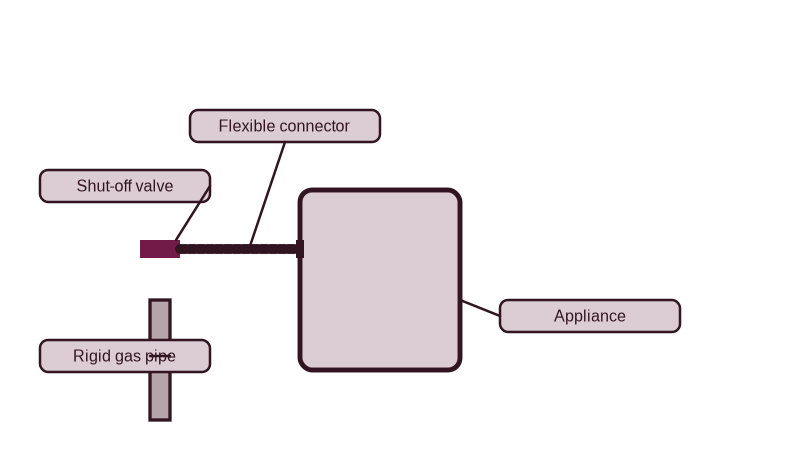
Half-inch flexible gas line means a corrugated metal connector, usually coated stainless steel, attached at one end to a rigid gas pipe and at the other to an appliance. People look it up when a stove, dryer, water heater or barbecue needs moving or replacing. The short answer is that choosing, sizing and fitting it is gas work, and it belongs to a qualified contractor. This explainer from Conejo Plumbing Pros helps you understand the parts and the questions to ask, and nothing here is a how-to for doing the work.
What is the purpose of a half-inch flexible gas connector?
One gas appliance, such as a range, dryer, furnace or water heater, is tied to the rigid gas supply by a half-inch flexible connector, with a shut-off valve in between. The half inch is the connector's size. It must match the appliance's inlet and carry enough gas for its rating. Different appliances need different lengths and sizes.
The connector should be short and visible, so its condition can be seen. It should never pass through walls, floors or ceilings, or serve as a house gas pipe. Those runs use rigid pipe or approved corrugated tubing fitted by a contractor.
A shut-off valve near the appliance allows gas to be stopped there while the remainder of the house stays supplied. An appliance with no valve, or a valve that will not turn, is work for a plumber.
Who may legally install or repair a gas line?
Anyone doing gas piping for pay must hold a California contractor license, and a permit is usually required to add a gas line, move one or hook up an appliance. A homeowner doing work on their own home may have some options, but the rules are strict and gas is high risk. We advise hiring a plumber for any gas work.
A contractor checks the pipe size against the load of all appliances, uses approved materials and fittings, supports the pipe, tests for leaks with pressure and a leak detection solution and, where required, arranges an inspection. That sequence is what makes the work safe and what a permit pays for.
Tankless water heaters often prompt a gas piping upsize, because the unit draws more gas than a tank heater does. Price to replace a tankless heater covers that case.
What are the exterior gas line rules?
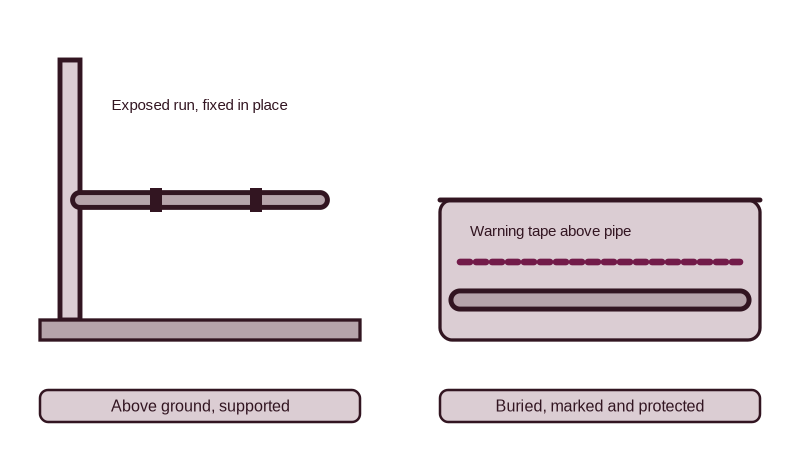
We cannot give you a code citation we have not verified. In general, outdoor gas piping must be an approved material, protected from damage and corrosion, supported properly and tested before use. A barbecue or fire pit line is a gas installation like any other. Put the question to your building office, giving your address, before any work starts.
Different offices apply the rules around the valley: City of Thousand Oaks Building and Safety for the city, the City of Westlake Village through City Hall, and the Ventura County Resource Management Agency for unincorporated areas such as Lake Sherwood and Hidden Valley. Check which one covers you prior to starting.
Outdoor flexible connectors are limited in where they may be used, since sun, moisture and damage affect them. A contractor will tell you whether a connector is permitted for your appliance and location.
How deep does a residential gas line have to be buried?
Required depth is set by the code and the local office, and since no figure has been verified, none is given here. It varies with the pipe material, the location, such as under a yard or a driveway, and whether the line is protected. Check with the building office before any digging.
Digging is dangerous around buried lines. Before anyone digs, ask the building office and the gas utility how buried lines get located and marked at your address. Gas, water, electric and communication lines may all be buried in a yard, and hitting a gas line is an emergency.
Around mature oak trees, digging can damage roots, and cities often have rules about protected trees. Ask the city before trenching near one. A contractor who installs buried gas piping will usually deal with both the utility marking and the permit.
Is it possible to run a gas line in a mobile home?
Manufactured and mobile homes carry separate requirements for gas piping, connectors and shut-off valves, and a contractor does the work, with a permit where required. The utility may also need to inspect or turn on service. Do not connect a gas appliance to a mobile home yourself.
Where the home meets the park's gas supply is a special concern, because the home can shift and settle. The connector type, support and shut-off are specified by rules for those homes. The park's operator, the utility and the building office each have a role.
Find a plumber who works on manufactured homes and ask if they have done this kind of job, and if the quote covers a permit and pressure test. Our page on what a gas line job costs shows how a quote is built.
What is the right response to a gas smell?
Leave the building at once, without touching any light or appliance switch, and contact SoCalGas on 1-800-427-2200 from outside. Use 911 if anyone is at risk, or if SoCalGas cannot be reached. Stay out until you are told it is safe. That number is the SoCalGas emergency line.
SoCalGas says to use 911 if damage endangers life or property. Avoid using electronic devices inside the building where possible, never start a vehicle in an attached garage, and warn neighbors if you can do so safely.
If gas service reaches your street, SoCalGas is the utility. A gas smell after work on a line is an emergency, as is a hissing sound or dead plants near a buried line. Once the emergency is over, a contractor can locate and repair the leak. Send the quote form once the utility confirms it is safe; requests are read on weekdays, 9am to 5pm.
Which kinds of pipe carry natural gas in a home?
Typical houses use black iron pipe, corrugated stainless steel tubing known as CSST, or in some places other approved materials. Which are allowed depends on the code the local building office enforces, and underground runs use different, protected materials. Copper and galvanized pipe are treated differently by different jurisdictions, so ask the office.
Black iron is rigid, threaded and sealed with gas-rated compound. CSST is flexible, comes in rolls and uses special fittings, and its installers are normally trained by the maker. Underground, plastic gas pipe of an approved type is used by utilities and some contractors, with tracer wire. Do not assume a material is allowed because you saw it somewhere else.
Never use a garden hose, a water-line connector or an unlisted flexible hose for gas. Connectors made for gas carry a rating label. If you cannot read a rating, or the connector is old, kinked or corroded, it should be replaced by a contractor.
Common questions
Is a flexible gas connector allowed behind a wall?
No. Flexible appliance connectors must stay visible and short, never routed through walls, floors or ceilings. A hidden run needs rigid pipe or approved tubing, installed by a contractor and permitted where required. If a connector passes through a wall or cabinet, have a plumber inspect it.
How long does a flexible gas connector last?
No single answer exists. Connectors age through heat, moisture, movement and corrosion, and some carry a rating or date. Replace one that is kinked, rusty, cracked, old or sitting on an appliance that has been moved. A contractor swaps it for a new connector of the right type and size.
Does a gas line need a permit?
Often yes. A permit with an inspection is common for new gas lines, extensions and appliance hookups. Ask the building office for your address, and have the contractor put the permit in the quote. A gas line without a permit can be a safety hazard and can cause problems at a home sale.
Should an adult stay home during gas work?
Yes, an adult should give access, agree the scope, and be present when gas is turned back on and the appliances are tested. The utility may need to relight pilots. Clear access to the appliances and the meter, and tell the contractor about pets.