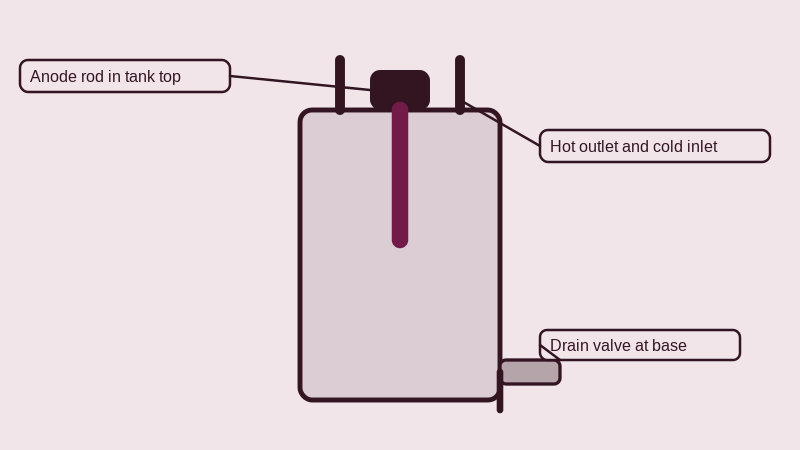
Inside every storage tank sits a metal rod designed to be consumed in place of the tank. When the rod is used up, the steel begins to rust and the heater has a short life ahead. Replacing the rod is among the more worthwhile bits of water heater maintenance, and it is part of the wider water heater repair and replacement help at Conejo Plumbing Pros. The sections ahead cover the rod's role, inspection, the steps of the job and the point where a plumber makes more sense.
What does an anode rod do in a water heater?
The anode rod, built from magnesium or aluminum around a steel core, hangs inside the tank as a sacrificial part meant to corrode. Water carries tiny electrical currents that attack metal, and the rod gives way first so the steel lining does not. Once the rod is mostly consumed, the tank becomes the next target and begins to rust through.
That is why the rod is a maintenance item, not a repair. Heaters that are never checked can go for years without protection and then fail suddenly at the bottom seam. Water that is hard, soft or treated with a softener can change how fast the rod wears, so two identical heaters in different homes may need the rod at different times.
A tankless heater has no tank, so it has no anode rod. Its heat exchanger scales instead, and that is flushed with a descaling solution. When weighing the two types, our comparison of tank and tankless heaters shows what each needs to keep running.
How do you keep the rest of the heater healthy?
Each year, flush sediment by running a few gallons off at the drain, briefly lift the lever on the temperature and pressure relief valve to test it, keep clutter away from the heater, and check the pan and fittings for drips. Combined with a rod check, these cover most of what a heater needs.
Keep the thermostat at a safe level to avoid scalding, and be careful when draining, since the water is hot. If the relief valve drips nonstop or the tank rumbles loudly, hire a plumber. For a heater that keeps running out of hot water, see our emergency water heater repair page.
Treat the rod as a means of buying time, not a cure for an old tank. If the heater is already old and showing rust or leaks, ask whether the money would be better spent on a new one. The quote form lets us pass on a request listing the heater type, age and what you see.
Is replacing an anode rod a DIY job?
Yes, provided the heater is accessible, you can shut off power or gas safely, and you are comfortable with a large socket and a hose. A seized rod, tight headroom, an old heater or a closet with gas piping makes a plumber the safer choice, since a stuck rod can strain the tank fittings.
Leave gas piping, the gas control valve and the vent alone. Those belong to a contractor, whose California license can be checked through the state board's free lookup. If you smell gas, leave the house and call SoCalGas on 1-800-427-2200 from outside, or 911 if someone is in danger.
A tank that already leaks at the base, is rusty at the fittings or is far beyond its expected life may not deserve a new rod; a plumber can decide whether the heater is worth saving. Water heaters strapped to the wall in California homes should keep that strapping intact after any work, and the plumber can be asked to confirm it.
How is an anode rod replaced?
First the heater is switched off and the cold supply closed, then some water is drained until the level falls below the top of the tank. A socket and long breaker bar loosen the old rod, which is pulled out and replaced by a new one threaded in with pipe sealing tape. Refilling follows, with air bled from the lines and power restored.
The details matter. On an electric heater, cut the breaker first, before anything else. On a gas heater, set the gas control to pilot or off. Let the water cool, since the top of a tank can still be hot, and have a bucket and hose ready.
The rod is hex-headed on top of the heater, often needing a large socket, and it can be seized tight. A pneumatic impact wrench or a long handle helps. Space above the heater is the limiting factor in many closets and garages; with little clearance, a flexible segmented rod can be bent into the tank.
Which type of anode rod is best for your water?
Magnesium rods protect best but wear faster, aluminum rods last longer and suit harder water, and a zinc-aluminum rod is used where a sulfur smell is the complaint. A powered rod uses a small electrical current and does not wear out in the same way. Which one is right depends on your own water and priorities.
Where the hot water smells of sulfur or rotten eggs, a plumber may switch the rod type or add a powered rod. Check the water report from the supplier that serves your address to see how hard the water is, since conditions differ around Thousand Oaks, Westlake Village and Hidden Valley.
Water softening changes the picture. Softened water can attack the rod faster, so homes with softeners should check it more often. See water softener installation costs if a softener is on your list.
How do you know when the anode rod needs replacing?
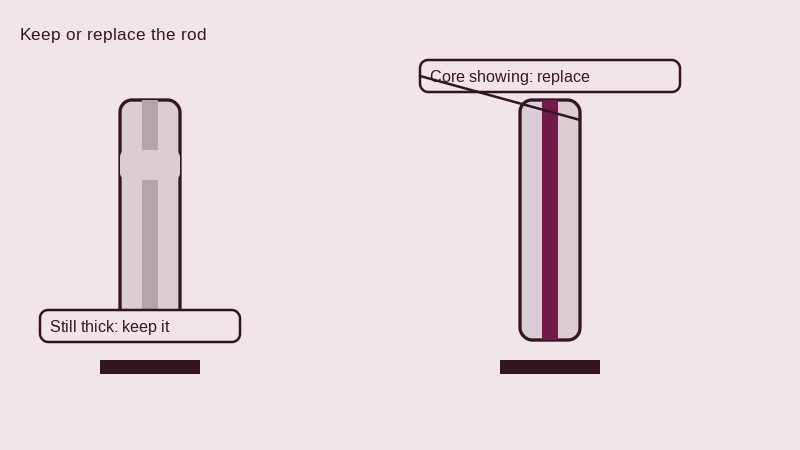
Take the rod out and look at it. If more than a few inches of the steel core show, if the rod is pitted, thin or coated in calcium, or if a section is missing, it needs replacing. A rod that still looks thick and covered with metal is still working, and can go back in.
Many plumbers recommend a rod check at intervals of a few years, shorter with softened water. The heater itself offers clues: popping or rumbling as sediment builds, rust-colored hot water, a rotten egg smell from the taps, or hot water that now runs out sooner than before.
When a gas or electric heater is nearing the end of its warranty, that is a good moment to look. If the tank is already leaking from the shell, a new rod will not rescue it. In that case read about the signs in our water heater leak guide and consider a replacement.
Common questions
How long does an anode rod last?
The answer varies with the water and the rod type, but many hold up for three to five years, though some wear out faster in softened or hard water. The only reliable test is pulling the rod to look; if it is still thick with metal and shows no bare steel, it is still working.
How long does the job take?
A straightforward swap on an accessible heater often takes under an hour, plus time for draining and refilling the tank. A seized rod, tight headroom or a heater that has to be moved can add time. Request an estimate from the plumber when you book, and allow for the heater to be offline.
Will replacing the rod fix a smelly hot water problem?
Sometimes. A sulfur smell often comes from bacteria feeding on the rod's chemistry, and a different rod type, a powered rod or a flush and disinfection can help. If the smell persists, the plumber may check the water source and the heater temperature. It is not always the rod.
Must someone be home during the rod replacement?
Yes, someone over eighteen should be home so the plumber can get to the heater and so you learn when water and power will be off. The plumber also needs access to the water shut-off and the electrical panel or gas control. Keep the area near the heater clear beforehand.