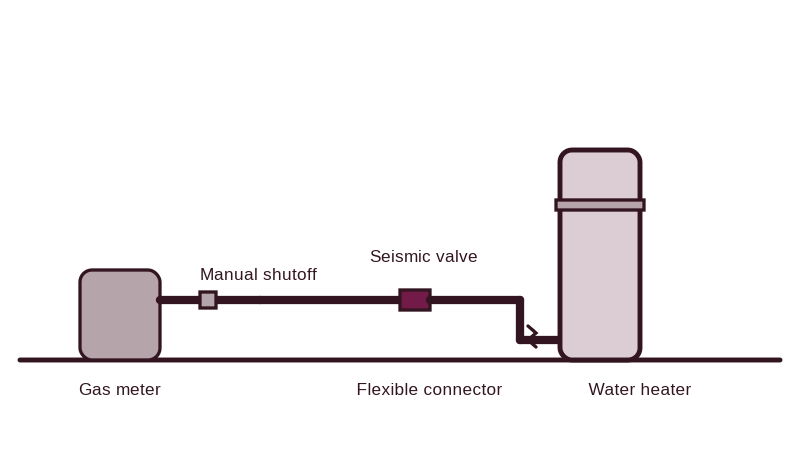
Installed on the gas line just beyond the meter, a seismic shut off valve closes on its own when it senses strong shaking, which stops a broken line from feeding gas into a damaged house. Gas can also be closed by hand at the meter. In both cases, fitting a valve is gas piping work that belongs to a local plumbing business, and the Conejo Plumbing Pros home page is where you can request a visit.
Southern California homeowners think about this because shaking can crack a rigid gas line or yank a water heater off its connector. Gas is given an odor so a leak can be noticed, yet an earthquake can also cut power and force you to move fast. The point of the device is a valve that acts with nobody home.
What does fitting an earthquake gas valve involve?
There are two kinds. A manual wrench-turn valve at the meter lets you close the gas yourself. An automatic seismic valve is a separate device a plumber fits on your house-side gas line, tripping on strong motion. Fitting one means cutting into the line, so it counts as gas line work, and permits and inspection may apply.
People often mix these up with a third device, the excess-flow valve: it closes when flow surges, such as from a snapped line, but shaking alone does not trigger it. Ask the plumber exactly which device is on the quote and what it responds to. The mounting spot, the support around it and whether the gas company owns the meter all shape the job.
Everything up to and including the meter is SoCalGas property. On its own safety page the utility tells customers who smell gas to evacuate and make the report from a safe place, and it links a separate guide on shutting off natural gas by hand. Read that guide before the next earthquake, not during it.
What should you do right after an earthquake?
Look and listen around the house for a smell of gas, a hiss, or a water heater connection that has been damaged. If you notice any of these, get out immediately and touch no lights or appliances. Once outside, contact SoCalGas at 1-800-427-2200. Use 911 instead if damage threatens life or property, or the utility cannot be reached.
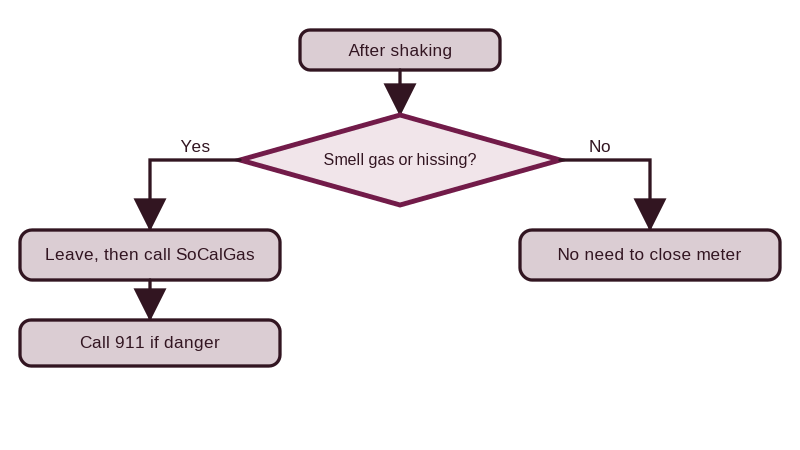
Never search for the leak. Do not use a lighter, a device inside the building or a garage door opener that can spark while you are still in the leak area. With no smell and no visible damage, you do not need to close the gas at the meter, since shutting it off can mean a utility visit to relight pilots in some homes. The rule is simple: smell gas, leave, report it.
What affects the price of a valve installation?
No dollar figure is quoted here because no verified local price exists to cite. Several things move a quote: the pipe size, how easily the line can be reached, whether the layout near the meter needs rework, the valve model, and any permit requirement. A plumber should quote in writing after seeing the actual line.
A longer run, a cramped side yard or old rigid pipe needing updates before a device can go on all add work. If a gas line needs repair as well, mention it up front, since repair and a new valve can be combined in one visit. Judge quotes by what they include, not the headline number; our page on what a gas line job costs lists the questions that make quotes comparable.
The local building office handles permits. For most of Thousand Oaks that is City of Thousand Oaks Building and Safety; for unincorporated areas such as Lake Sherwood, Oak Park and Hidden Valley, the Ventura County Resource Management Agency. Ask the plumber who applies for the permit and if an inspection comes next.
When do you need a gas valve or gas line work done?
A plumber is needed if you smell gas near a meter, appliance or line, hear hissing, find a corroded or kinked flexible connector, or see a water heater that moved during shaking. A home with no automatic valve and an older rigid line is also a reasonable candidate for one. Anything beyond a simple smell test is not a DIY job.
Flexible connectors behind a water heater, stove or dryer are a common weak point because they can pull tight when a heavy appliance shifts. Water heaters in California are expected to be strapped against moving; a loose one is a gas risk as much as a water one. Our water heater repair page covers what a plumber inspects.
Never check for leaks using a flame. A plumber uses a pressure test or a gas detector. If the smell comes and goes, treat it as real until a professional says otherwise.
Common questions
Do Thousand Oaks homes have to have a seismic gas valve?
Local rules, how old the house is and whether you are renovating all affect whether yours needs one, and no blanket requirement for Thousand Oaks has been confirmed here. Ask City of Thousand Oaks Building and Safety, or the county office for unincorporated areas. A plumber can also say if a permit applies to your line.
Can I install the valve myself?
Gas piping is regulated work. Cutting into a gas line and fitting a device is no weekend project, and a wrong joint can leak with no sign for weeks. Hire a California contractor with the right license, along with the permit and inspection the local building office requires. Flame or soapy water shortcuts are no substitute.
How long does the installation take?
A simple installation on an accessible line is often a couple of hours of work, plus time for the gas to be shut off and the line tested afterward. Permit steps and inspection scheduling can add days. The plumber confirms the timing after viewing the meter area and the pipe path.
What if my gas meter is shut off after an earthquake?
If you or the utility closed the gas, leave it off unless SoCalGas instructions for your meter say turning it back on is safe. Appliance pilots must be relit and the line checked for leaks. If you smell any gas, leave the building first, then contact SoCalGas at 1-800-427-2200.
Does the valve protect against fires from other causes?
No. A seismic valve is built for earthquake movement, not for every leak or fire. A slow leak at an appliance connection might not trigger it. Keep gas detectors, working smoke alarms and a clear route out. The valve is one layer, not the whole plan.