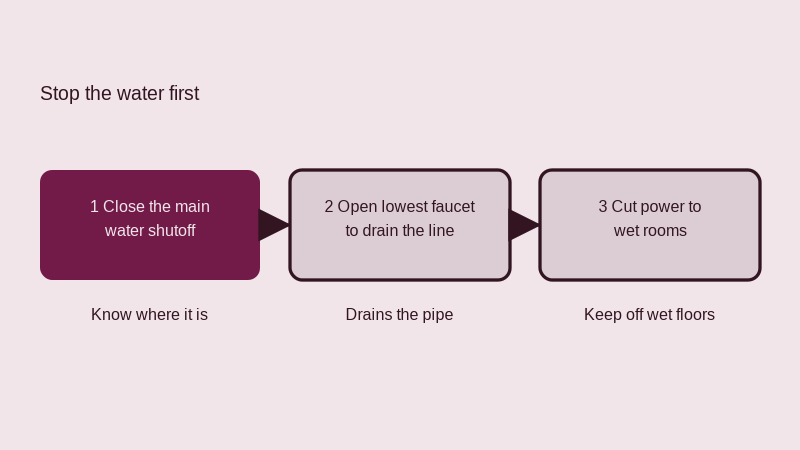
When a pipe bursts, turn the water off at the main valve, kill the power to any wet area you can reach safely, and submit a repair request. A local plumber visits, locates the failed section, removes it and fits a new one. This page assumes you begin at the quote form or the Conejo Plumbing Pros home page, since we set up the visit and leave the pipework to the plumber.
Most burst pipes in Thousand Oaks and Newbury Park homes are not dramatic freezes. They are slow failures: a pinhole that finally gives way, a fitting that has corroded, or a supply line that took a jolt from high pressure. The result is the same, though. Water is coming through a wall or ceiling and you want it stopped.
Can a plumber fix a burst water pipe?
Yes. The plumber removes the split or corroded section, joins in new pipe, pressure-tests the line and restores the water. A single failed run is usually a same-visit repair. If the pipe sits inside a finished wall, the plumber may also open a section of drywall first, and the patching afterward is a separate trade.
The scope depends on the pipe material and how worn the rest of it is. One split copper elbow is a small job. A split in galvanized or older copper that is thinning along its whole length may justify replacing more than the broken piece. The plumber should point out the damaged section and say whether the remainder of that line looks sound.
Pipes buried in a concrete slab are a different case. Water surfacing in the floor, or a meter spinning with everything off, suggests the leak is beneath the house, and the first task is locating it. That decision is covered in our guide to slab leaks and whether to repipe.
What is the typical repair time for a burst pipe?
A simple burst in an easy-to-reach pipe commonly takes a few hours from arrival until the water is back on, covering removal of the damage, new pipe and testing. Hidden pipes, several failures, or the need to open walls push that out. Drying the area and rebuilding finishes afterward belongs to a separate restoration crew.
Time on site is only part of the wait. Before anyone arrives, your request has to be read, a plumber chosen and a visit set. Staff handle form requests on weekdays between 9am and 5pm, and no response time is promised. If water is actively flooding the house outside those hours, shutting off the main yourself is the step that limits damage while you wait.
What are the first steps when a pipe lets go?
Begin at the main water valve and close it. Next, drain the line through the lowest faucet in the house. If water has reached outlets or fixtures anywhere, turn the electricity off in that room. Get belongings clear of the wet area, take photos of the damage, and file your repair request. Hoping the leak will ease by itself is a mistake.
Locate the main shutoff before any emergency. In many homes it is near the front hose bib, inside the garage, or in the meter box close to the street. A round-handled gate valve can seize after years of disuse, so turn it once this month to confirm it moves. If it will not close, the meter-side valve is the fallback, though the water supplier may restrict who operates it.
Mixing water and electricity is genuinely dangerous. If water is dripping from a ceiling light, a fixture or near a panel, leave that area's breaker off, do not wade through standing water to get to it, and keep everybody out of the room. A leak through a ceiling light fitting gets its own page.
What does burst pipe actually mean?
A burst pipe is a pipe that has split, cracked or separated at a joint so water escapes under pressure instead of staying inside. It is different from a slow drip, which is a leak. A burst releases enough water to soak a wall, ceiling or floor within minutes, and it is the point where a repair becomes urgent.
The failure usually comes from pressure, age, corrosion or freezing. The EPA puts the average household loss from leaks at more than 9,300 gallons of water a year, and a burst is the extreme end of the same problem. For causes in depth, read about why pipes burst; to catch trouble early, see spotting a burst pipe.
What changes if the burst is in a bathroom, apartment, sprinkler line or crawlspace?
The first moves are the same everywhere: stop the water, then decide who owns the repair. A bathroom burst usually comes from a supply line behind the vanity or a shower valve, so check the shutoff under the fixture first. In a condo or apartment, tell the building manager at once, because the pipe may belong to the association or landlord.
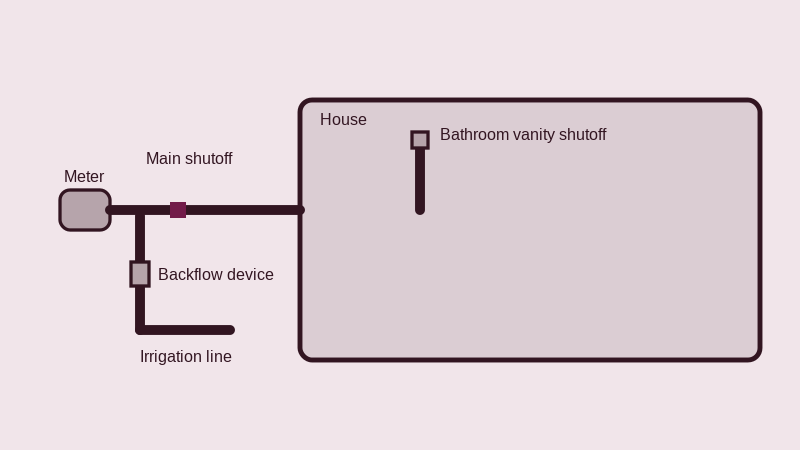
A burst sprinkler or irrigation line is separate from the house plumbing, and the shutoff is typically at the backflow device or the valve near the meter. A broken pipe under the house is common in raised-foundation homes: look for a soaked crawlspace, a musty smell or water pooling at the foundation edge. Most Thousand Oaks homes sit on slabs or raised floors rather than basements, so a "basement burst" here usually means a crawlspace or garage.
If you have a well, as many large-lot homes around Hidden Valley do, switch off the well pump before working on a burst so it does not keep pushing water out. The Hidden Valley plumber page has more on those setups.
Do pipes only burst in winter, and at what temperature?
No. Freezing is one cause, not the only one. Ice takes up more room than water, so a pipe can split once temperatures stay at or below freezing long enough for ice to form, which is why burst pipes cluster in cold snaps in cold climates. In the Conejo Valley hard freezes are uncommon, so most bursts here come from pressure spikes, corrosion or wear.
There is no single temperature at which every pipe bursts. Exposed pipes on an outside wall, attic runs and hose bib lines are the usual victims when a rare cold night does arrive. Insulating exposed lines is cheap and is worth doing; you will find the steps on burst pipe prevention. Summer bursts happen too, mostly from thermal movement and pressure surges.
What happens to your home if a burst is left running?
Water soaks insulation and drywall, lifts flooring, and can reach electrical outlets and light fittings within minutes. Within a day or two, damp materials start growing mold. Water bills climb, and an insurer may question damage that could have been limited by shutting off the main. Quick action is cheaper than every item on that list.
Keep the receipts and photograph everything before cleanup starts. Payout under your policy hinges on the cause and the wording, so read up on insurance and burst pipes before contacting the insurer. For the plumbing side of cost, our guide to plumber pricing explains what shapes a quote.
Common questions
How do I limit a burst while waiting for the plumber?
You can slow it. Shutting off the main valve and draining the line by opening low faucets stops most of the flow. A temporary pipe clamp or repair tape can hold a small split for a short time, but these are stopgaps, not repairs. Leave the actual pipe replacement to the plumber, and keep the main closed until they have finished.
Will the plumber also fix the wall or ceiling?
Usually not. A plumber repairs the pipe and may cut access into drywall to reach it, but patching, texture, paint and flooring are other trades. Ask at the start whether the plumber will leave the opening as is, so you can book drywall and painting while the area is still open and dry.
Is it still worth sending a request once the water is off?
Yes. Closing the water buys time, not a repair. The longer a burst section sits dry but unfixed, the likelier it is that someone reopens the supply and floods the house again. Submit the form describing what is visible and where the shutoff is, so the plumber knows what to bring.
What should the request form say?
Name the affected room, the pipe material if you know it, whether the main is closed, and whether any electrics got wet. Add a description of your photos and the best time to reach you, on a weekday between 9am and 5pm. Clear details let the plumber turn up with suitable fittings.
Does a burst pipe mean the whole house needs repiping?
Not necessarily. One failure in an otherwise healthy line is a local repair. Repeated bursts, pinhole leaks in several places or older galvanized pipe point toward replacing a bigger section, and a plumber can explain why. Compare the options on our repipe pages before you decide.