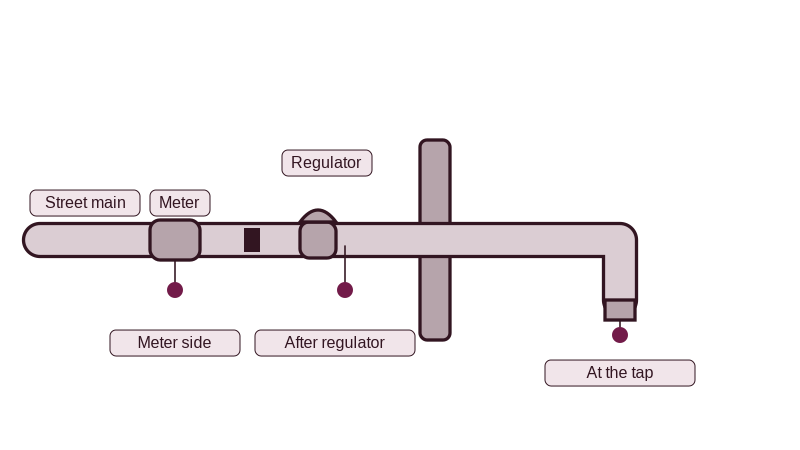
Weak water pressure ranks among the commonest reasons homeowners look for a plumber, and it seldom has a single cause. A weak shower can be a clogged head, a half-closed valve, a failing regulator or a problem on the street side. A plumber sorts these out in order, cheapest check first. Read on for the right time to get help and what to expect. It sits alongside our home page overview of the service.
When should you hire a plumber over weak water flow?
A plumber is the right call when pressure has dropped throughout the house, when the drop was abrupt, or when other warning signs show up: knocking pipes, soggy ground in the yard, a bill that jumped, or discolored water. One weak faucet typically has a local cause that you can often fix yourself. Pressure that is gone everywhere points to the main line, the shutoff valve or the regulator.
A quick test helps you decide. Run a cold tap in two different rooms, then the hose bib outdoors. When only one outlet is weak, the fault is local, for example a clogged aerator, a worn cartridge, or an angle stop beneath the sink that has not been opened all the way. When every outlet is weak, the cause sits upstream of the branches, and that is plumber territory.
Check the easy things before you send a request. Make sure the main shutoff valve is open all the way. You will usually find it on the street-facing side of the house, or next to the water heater. Ask a neighbor whether their flow is also down. If it is, the supply may be the issue and the water supplier is the right first contact, not a plumber.
Can a plumber fix water pressure issues?
Yes, in most cases. Among other jobs, a plumber can swap out a worn pressure regulator, clear or replace a restricted pipe section, swap a stuck shutoff valve, flush sediment from fixtures, and find a hidden leak that is stealing flow. What a plumber cannot change is the pressure your water supplier delivers to the property line, only what happens after it enters your pipes.
The usual order of work looks like this:
- Read the pressure with a gauge screwed onto a hose bib outside, or one put in at the regulator.
- Inspect the main shutoff and any other valves for partial closure.
- Examine the regulator where one is installed, and compare readings upstream and downstream of it.
- Look at the pipe material. Older galvanized lines slowly clog internally, a problem described on the galvanized pipe replacement page.
- Test for leaks, because any loss of water on the stretch from meter to house drains pressure.
If the gauge shows healthy pressure at the main and low pressure at the fixtures, the restriction sits inside the house. If the gauge reads low right at the main, the plumber looks at the regulator and shutoff, then at the supply.
Who is responsible for low water pressure in my house?
The meter is the dividing point. Upstream of it, the street main and the meter itself are the water supplier's. Downstream, you own everything: the pipe running to your house, the regulator, the valves and the fixtures. In a rental, the landlord handles the plumbing, though tenants should report the problem in writing.
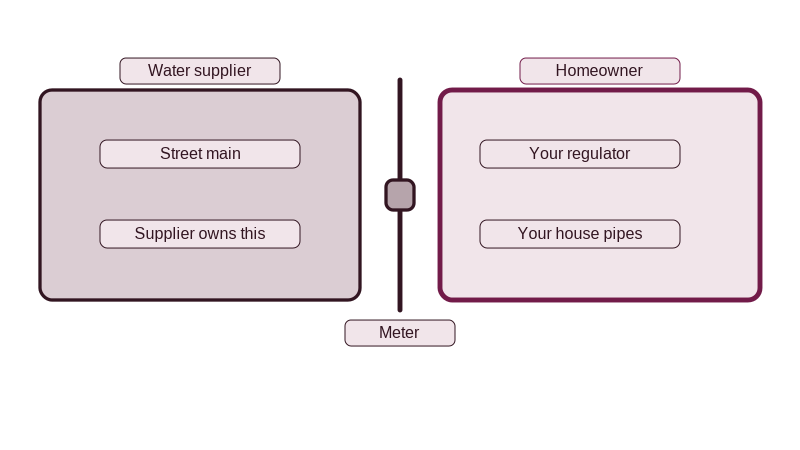
In the Conejo Valley, which provider bills you depends on your street, so check your water bill to see who it is. Las Virgenes Municipal Water District is described as the provider for Westlake Village, and many Hidden Valley homes rely on private wells, in which case pressure comes from your own pump and tank, not a utility. Because of that, a well owner should expect the plumber to inspect the pressure switch and tank as well.
Hilly streets matter as well. Houses sitting low on a slope often get higher pressure than those near the crest, which is why a regulator can matter on a hillside street.
What psi should my house water pressure be?
Most homes feel comfortable somewhere in the middle range of a typical gauge, and plumbers generally aim to keep household pressure below the level at which fittings and appliance hoses start to wear out early. Request the figure the plumber measured, and what the manufacturer of your appliances recommends, rather than relying on a figure from a forum.
Hardware stores sell inexpensive gauges that thread onto a hose bib. Take one reading while nothing is running in the house, then another with a faucet open. A large gap between the two readings suggests a restriction or an undersized line. Very high readings are a different problem: they shorten the life of the water heater, toilets and washing machine hoses, and a regulator is the usual answer.
Pressure also changes through the day. Early morning and late evening readings can differ from midday, so a single reading in the afternoon is not the whole story. Write the numbers down, along with the time, before you send a request.
How long does a pressure regulator usually last?
Wear is built into a regulator. Its spring and diaphragm weaken over time, and scale can jam the seat, so many last a decade or more but some fail sooner. Instead of guessing, have the plumber compare pressure ahead of it and behind it. If the number creeps up over months, or flow falls off, the regulator is the suspect.
Signs of a failing regulator include high pressure that comes and goes, a hissing or humming near the unit, banging when a valve closes, and a toilet that keeps refilling. Signs of the opposite problem, a regulator stuck partly closed, are weak flow everywhere. To track one down, use our guides on finding the pressure regulator and what one looks like. For the work of changing it, see water pressure regulator replacement.
Sudden drop, cold weather and other patterns
Low pressure at one time of day, or only on hot water, points to different causes. Weak hot water only often means a clogged water heater outlet or sediment, while weak cold water suggests the main. A sudden loss gets fuller treatment on the sudden low water pressure page.
Low pressure to sprinklers is a common complaint in dry months. Irrigation and the house often share one line, so a regulator that has begun to restrict can starve the yard first. A drip valve stuck partly open makes the same effect. Weak flow in one bathroom usually comes from that bathroom's own stop valve or a clogged showerhead, and you can read about showerheads on our low water pressure shower head page.
The EPA estimates that a typical home can lose 9,300 gallons or more a year to leaks. Pressure drops and bills rise when a hidden leak runs between the meter and the house, which is why a plumber checks for one early.
Common questions
Is swapping a water pressure regulator a DIY job?
It is possible for a confident DIYer, but think twice. The main line has to be shut off, the old unit unscrewed or cut out, and the replacement adjusted to the correct pressure and verified with a gauge. A leak at the main floods a home fast. If the unit is soldered, brazed or in a tight spot, ask a plumber to do it.
How do I bring low pressure back up at home?
Begin with inexpensive checks: open the main shutoff fully, clean the aerators and showerheads, and test several taps. If every outlet is weak, a plumber reads the gauge, checks the regulator, and tests for leaks or clogged pipes. Old galvanized lines may need replacing in sections. The fix depends on which of those turns out to be the cause.
What is a plumbing technician?
It is another term for a plumber: someone who installs and repairs pipes, fixtures and water heaters. Larger plumbing jobs in California generally go to a contractor, so get a license number from whoever you hire, and check it with the state contractor board online before work begins.
May I supply my own water heater for a plumber to fit?
Often yes, but ask first. Some plumbers will install customer-supplied equipment, others will not warranty the work, and the wrong model, size or vent type can slow the job. Tell the plumber the model before you buy. Replacing a water heater also needs a permit in most places, and the plumber normally handles that.
What does a plumber charge for a water pressure repair?
The cause decides. Clearing a clogged fixture is a short visit, while replacing a regulator, a section of old pipe or a main shutoff valve costs more. We publish no figure that we have not sourced. Describe the symptoms through our quote page, and a local plumbing business quotes in writing once it has seen the problem.
Is low water pressure related to low blood pressure?
No. Water pressure in your pipes and blood pressure in your body are unrelated, and drinking water does not change the force coming from your taps. For anything about blood pressure, talk to a doctor. When flow at home is weak, the plumber is who you need.