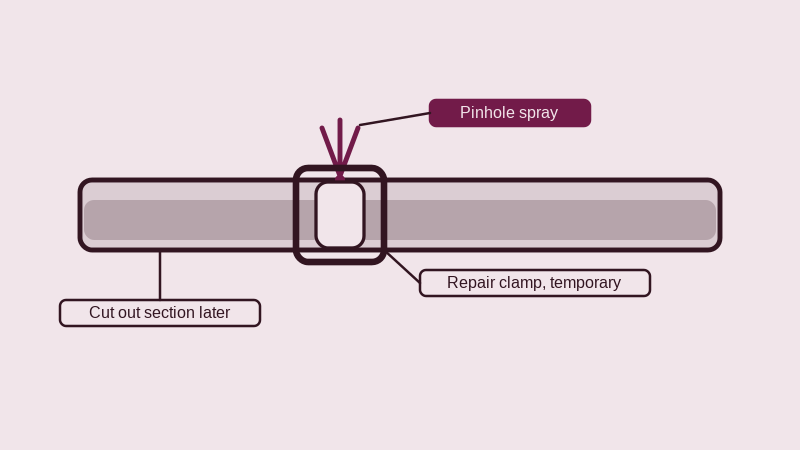
A pin-sized opening in copper can spray a fine jet or leave a weeping green crust. Close the water first, since even a small hole can saturate a wall within hours. After that, choose: a clamp or push-fit coupling is a sound short-term fix, but the lasting answer is to cut away the damaged piece. See the home page for the other jobs we arrange.
What comes first once you spot a pinhole leak?
Close the main valve, or the closest stop valve when the leak is on a branch line, and drain the line by opening the lowest faucet in the house. On the hot side, switch off the water heater too, because running it dry can harm it. Move belongings out of the way, wipe up the water, and put a bucket under the leak.
If the leak is near outlets, the electrical panel or a ceiling light fixture, keep your distance. Switch off that circuit at the breaker only if you can get to the panel while standing on dry ground. Water and electricity are a dangerous mix. If you cannot do it safely, leave and get help. Never touch a wet outlet.
The EPA reports that a typical household can lose more than 9,300 gallons of water a year to leaks. A pinhole looks small, but a pressurized jet wastes plenty within days, and the drywall and insulation damage costs more than the pipe.
Take photos of the damage for your records and put a strip of tape on the spot so the plumber finds it fast. If the pipe runs behind a wall or above a ceiling, ceiling water leaks explains how to interpret the stain.
How can I slow a pinhole leak in a copper pipe until the repair?
Once the pipe is dry and the water is off, you can fit a repair clamp with a rubber pad, a pipe repair sleeve, silicone self-fusing tape wrapped under tension, or an epoxy putty made for pipes. A clamp is the most reliable of these. Each is a temporary measure that buys time for a proper repair.
Steps for a clamp:
- Dry the pipe and clean it with fine sandpaper or a pipe cleaning pad so the pad can seat.
- Center the rubber pad over the hole.
- Tighten the clamp evenly until the pad is compressed, without crushing the copper.
- Reopen the water gradually and look for drips.
Epoxy putty and tape work best on low-pressure lines and often fail on pressurized hot water. Whichever you pick, inspect it again after several hours, and never paint over it or seal it inside a wall. Concealed stopgaps are how small leaks turn into ceiling collapses.
How is a pinhole in copper permanently fixed?
A permanent repair cuts out the damaged section and installs a replacement, joined with a soldered copper coupling, a press fitting or a push-to-connect coupling, depending on the plumber's tools and the room to work. Soldering needs a torch near framing, so fire safety matters. The new section should match the pipe's type and size.
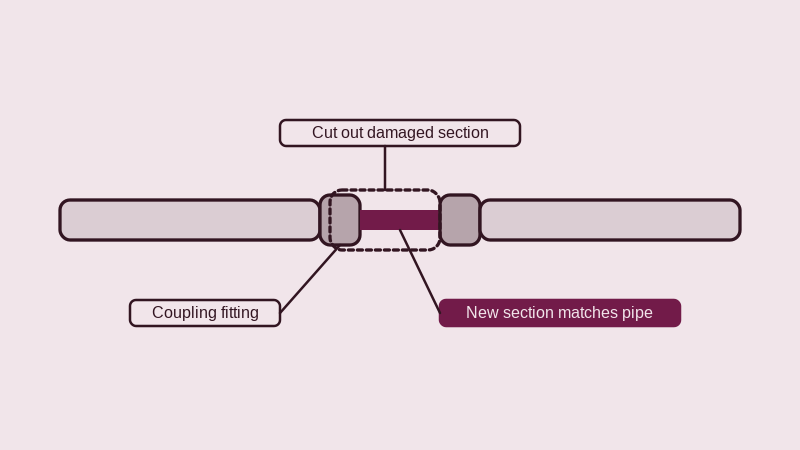
A pinhole marks where the pipe wall has worn thin, so the copper nearby is usually thin too. The plumber inspects the line beside the leak for green or blue staining, pitting, and other weeping spots. With several, one patch only shifts the problem. Swapping a single section and leaving the rest can work as a short-term answer when the remaining pipe is in good condition.
Any plumbing job that involves cutting into walls, moving fittings or touching a gas line belongs with a contractor. When a job costs $1,000 or more, California generally requires a contractor license. If drywall or flooring is wet, drying it quickly helps to stop mold.
When do pinhole leaks mean the whole house needs repiping?
A single pinhole in a house with a solid track record is a repair. Several pinholes within a short span, leaks in separate rooms, blue-green stains at joints, or a pipe that feels rough inside all point to widespread corrosion. At that stage, repiping often costs less over time than a run of repairs and wall openings.
Copper pinholes tie back to water chemistry, flow speed, how old the pipe is and how well it was first installed, and usually several of these combine. A plumber can look at what is happening inside a cut-out piece. Many homes in the Conejo Valley were built decades ago, so the age of your pipe is something to ask about. Older houses may also have galvanized or mixed materials, which a plumber can identify on site.
The pages on repiping a house, the cost of a repipe, and PEX versus copper set out the choices. For a leak beneath a slab, see the slab leak repair or repipe page.
What to do next
With the water shut and the leak contained, decide between repairing it yourself and asking for help. If you cannot fix it safely, use the quote page and describe where the leak sits, how long it has been running, and the pipe's age. Photos of the pipe and the damage let a plumber bring suitable parts. A leak detection visit finds hidden ones.
Common questions
How long will a pinhole leak repair take?
Replacing one simple section is usually a short visit once the plumber has parts in hand. Awkward pipe runs, soaked walls or opening drywall add time, and so does drying the area. Should the plumber spot more corroded sections, a larger repair may be advised, which takes longer and is quoted separately.
What should I ask a plumber before a leak repair starts?
Ask how they will locate and fix the leak, which costs the visit price covers, whether patching the wall is part of the job, how they will check the rest of the pipe, and the warranty terms on the work. Request the plumber's California contractor license number. A good plumber will say whether this is a one-off or a sign of corrosion.
Do I have to be at home during the repair?
Yes. An adult should be home to show where the leak is, approve any cutting into walls, and sign off on the finished repair. Expect the water to be off for part of the visit. Before the plumber arrives, clear furniture from the wall and take photos of the area for your insurance records.
Is a pinhole leak covered by insurance?
That depends on your policy. Sudden damage is often handled differently from slow seepage, and the pipe repair itself is frequently excluded. Check the policy and tell your insurer before any major repair, and hold on to photos and receipts. General questions are covered in burst pipes and insurance.