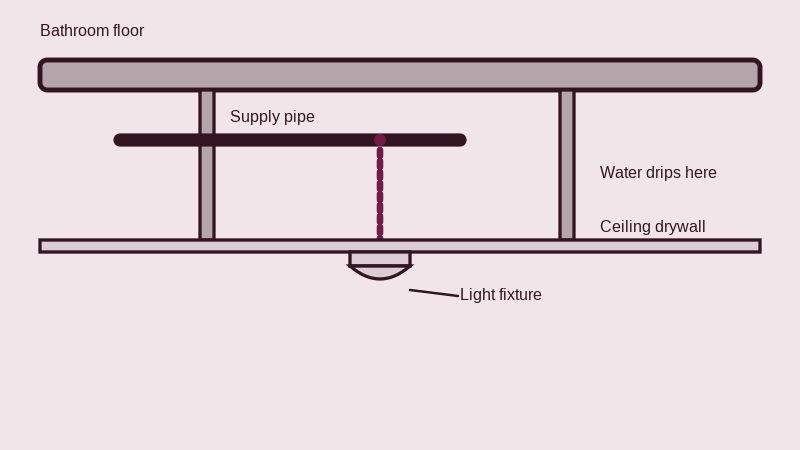
If water is coming down through a ceiling light, stay out from underneath it, cut the circuit at the breaker panel without stepping in water, and keep people and pets out of the room. Next, close off the supply to the likely source. The plumbing repair follows, and an electrician inspects the fixture. The home page has the request form for the plumbing part.
A light fixture is a weak point in the ceiling. Water gathering above the drywall travels along the joists and drips where the ceiling has an opening, and a light is exactly that. So the leak may begin several feet away.
Is a dripping ceiling light a hazard?
Yes. Water in a fixture or its wiring can cause a short, a shock or a fire, and the ceiling beneath a leak may be soaked and heavy. Flip the breaker for that circuit first. If the panel cannot be reached without standing in water, do not go; keep everyone out and close the main water instead.
Never touch the fixture, flip the wall switch or unscrew bulbs while water drips. A bulging ceiling is holding water and may collapse, so stay clear. Set a bucket beneath the stream only when you can do it without stepping into wet areas. Photograph the stain and the fixture from a safe place. With the water and the breaker both off, the danger drops.
Smelling burning, seeing smoke or hearing crackling means you should leave the house and call 911.
Who handles each repair, and in what order?
A plumber finds and fixes the pipe leak. An electrician checks the fixture, wiring and the box, and may replace them. A drywall and paint trade repairs the ceiling after it dries. Do not turn the light back on until an electrician has confirmed that it is dry and safe.
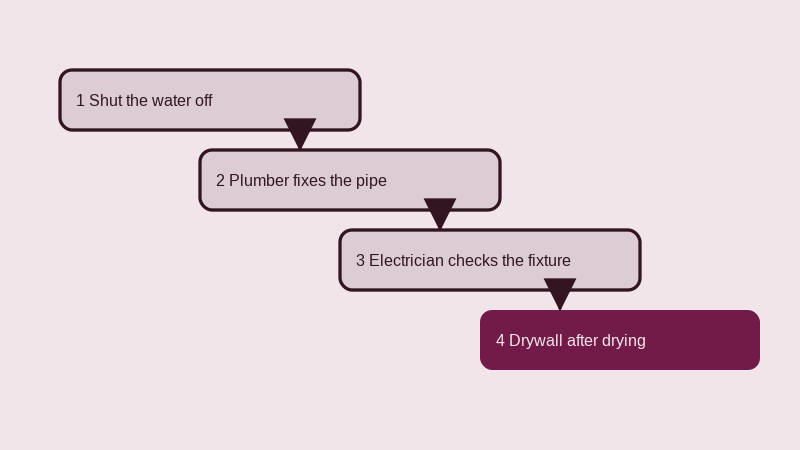
Drying matters before anything is closed up. Wet insulation and drywall grow mold, so many repairs remove the wet material first. Have the plumber keep the access hole open until it has been inspected and dried. Bring your photos and the plumber's invoice to the insurer. The insurance and burst pipes page lists what to ask.
What should you do immediately?
Switch off the light's breaker, close the main water if the source is unknown, and open the lowest faucet to empty the line. Place a bucket under the drip only if you can do so without stepping into water, leave a bulging ceiling alone, and photograph everything from a safe spot. Then send a repair request.
If you can name the source, close its shutoff: the toilet valve, the sink valve or the water heater inlet. Wait for the water to stop. If it does, you found the right valve and the problem becomes a scheduled repair. If water keeps coming, the leak is on a line you have not isolated, and the main stays closed until a plumber arrives.
What is the source of the water?
Usual sources are a bathroom or kitchen above, a drain or supply pipe running through the ceiling cavity, an air conditioner condensate line, an attic water heater and the roof. Think about what sits directly above the light. With a bathroom there, a shower pan, tub drain or toilet seal is a strong suspect.
One test helps: note whether the leak shows up when the upstairs shower or washer runs, when the heater fires, or only in rain. Leaks that appear only in rain point to the roof, so a plumber may not be the right call. Timing tells you more than guessing. The page on clues to a leak in the ceiling goes through the clues, and the ceiling water leak guide covers next steps.
How does water reach the fixture, and what counts as a burst pipe?
Burst means a pipe has split under pressure and passes a lot of water fast. A slow leak from a corroded fitting or small crack drips over weeks. Either one collects in ceiling cavities and shows at fixtures. Bursts are urgent; slow leaks are quieter and do hidden damage over time.
Corrosion often explains a failed ceiling pipe in older homes. Pressure spikes finish the job. The EPA puts the yearly loss from leaks in an average household at over 9,300 gallons of water, and a slow leak above a ceiling is often part of that. See why pipes burst for the full list.
Common questions
Is the light safe to use once it dries?
Not until an electrician checks it. A soaked fixture can carry corroded contacts or damp insulation in the box, and a short may only appear later. Keep the breaker off until the electrician has looked at the fixture, the wiring and the box.
How can I trace the leak above a ceiling light?
Begin with the room above and the timing of the drip. Look for running fixtures, a soft or stained ceiling spot and a damp smell. A plumber's moisture meter or thermal camera can follow water past what you can see. Our leak detection page explains how detection is priced.
Is it a roof leak or a plumbing leak?
A drip that starts only following rain points to the roof. A drip that follows the upstairs shower, toilet or washer, or appears in dry weather, suggests plumbing. A constant drip with no pattern may be a pressurized supply line, which is more urgent.
Is closing the water main the right move?
Yes, when the source is unknown or the leak is heavy. Closing the main stops supply to every pipe. Empty the lines by opening a low faucet. After you find and close the right local valve, you can reopen the main for the rest of the house.
What is the expected repair time?
The plumbing part is often a short visit once the source is reached. Drying, ceiling repair and fixture checks add days. Ask each trade for a time estimate and arrange them in the order plumber, electrician, drywall. Finding the source can take the longest part of the visit, so keep the area clear and the light switched off until it has been checked.