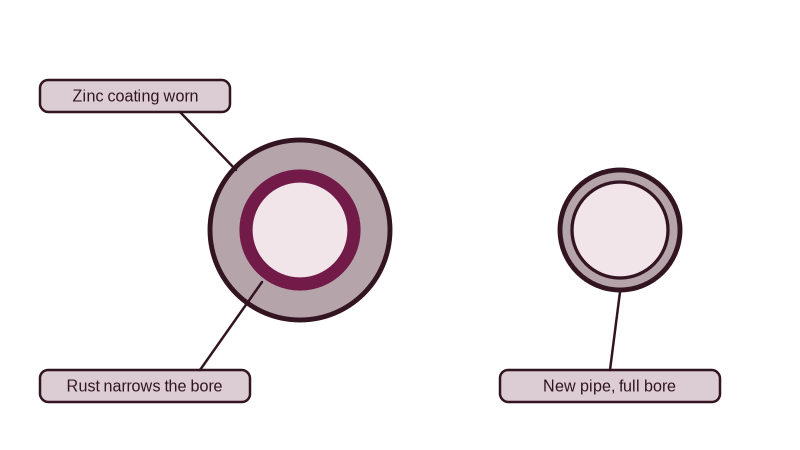
Galvanized steel pipe was a standard for home water supply for decades. It is steel wrapped in a zinc coating that wears away in time. After that, rust builds on the inside wall and the opening narrows. If your home is old enough to have it, the question is not whether it will need replacing but when. This guide belongs under our wider page on repiping a house from Conejo Plumbing Pros, and it focuses on the signs, the choices and the practical questions.
How do I know if my pipes are galvanized?
Expect dull gray, rigid pipe, threaded at the joints, which attracts a magnet. Scratch the surface lightly: gray steel under a dull coating is galvanized, while copper shows a pinkish color and plastic is obviously not metal. Look at the pipe near the water heater, under the sink and at the point the main comes into the house.
Brown or rusty water when you first run a tap after a rest, low pressure at faucets that used to run fine, and pressure that drops when two fixtures run together are typical symptoms. Leaks tend to show at threaded joints, and they can be small weeps for a long time before a failure.
Older homes, such as the 1960s houses in Casa Conejo and some early tract homes in Thousand Oaks, are the places to check for it. Later builds more often have copper, and newer ones frequently have PEX. On a first visit a plumber can name the pipe type and tell you what is hidden behind walls.
What about polybutylene pipe, and is there a replacement program?
Polybutylene is a gray or blue flexible plastic pipe used in many homes in the decades before it was dropped, and it has a reputation for failing at the fittings. We could not confirm an active program that pays for replacement. Check with the maker, your insurer and the court records before you assume any money is on offer.
Many plumbers treat polybutylene as a pipe to replace on your own schedule, before it leaks. A whole-house repipe with PEX or copper is the usual fix. Look near the water heater, at the main shutoff valve and under sinks for gray flexible pipe with a code stamped on it.
When buying a home with polybutylene, ask a plumber to inspect it and quote a repipe before closing. Some insurers charge more or decline to cover homes with it, so ask before you commit. Our page about burst pipe prevention lists other ways to cut the risk meanwhile.
How should you get ready for the plumber?
Clear a route to the water heater, the main shut-off valve, the sinks and any closet walls the plumber will open. Shift furniture and valuables well clear of the walls where holes will be cut, cover floors, and plan for water being off. Tell the plumber about pets, alarms and any rooms you want left alone.
Take photos of walls and ceilings for your records, and agree where dust and debris will go. A repipe is messy, and an honest plumber will tell you so. Ask about patching: some quotes include drywall repair and some leave it to you or another trade.
Stock drinking water, plan to shower elsewhere on a day or two, and have a place for pets. Appliances connected to the water supply, such as the dishwasher and washing machine, will be disconnected and reconnected. Ask who handles that.
Which materials can replace galvanized pipe?
The pipe can be replaced with copper, PEX or, less often, CPVC. PEX is flexible and easier to run through walls, so it is often faster and cheaper to install. Copper is rigid, durable and has a long track record. A plumber may mix the two, putting copper at the heater and PEX within the walls.

Which is better depends on your house, budget and preferences. We cover that choice in PEX versus copper. The plumber will propose the type that suits your layout, and the permit office decides finally what it accepts.
Another option is a partial replacement, swapping the worst runs and leaving the rest. That can make sense if only one bathroom is affected, but a mix of old and new metals can speed corrosion at the joints, and the remaining galvanized lines will still age. Ask for a quote on both full and partial work so you can compare.
Is a permit required to repipe?
Usually yes. In California a repipe typically calls for both a plumbing permit and a final inspection, because it affects the whole water system. The office that issues it depends on your address: City of Thousand Oaks Building and Safety, City Hall in Westlake Village, or the Ventura County Resource Management Agency for unincorporated areas. Ask the office to confirm for your address.
The plumber normally handles the permit, and the fee shows on the quote. Do not agree to unpermitted work. An unpermitted repipe can cause problems at a home sale, and it may affect an insurance claim. An inspector will want to see the new pipe before the walls close, so the schedule should leave room for that visit.
Homes in Lake Sherwood and Hidden Valley fall under the county rather than a city, so the Resource Management Agency is the office to ask. Ask whether your project can be handled online before you drive to the counter.
How long does a repipe take?
A single-story home is typically repiped in a few days. Larger or two-story homes need more time, and the supply is shut for part of each day, usually restored overnight. Opening and patching walls is a large part of the time, so access and finish work matter as much as the pipe itself.
Timing varies with the number of bathrooms and kitchens, the wall and ceiling types, whether the home has a slab foundation, and whether patching and painting are covered. A home with a crawl space or accessible attic is simpler than one with finished walls everywhere.
Ask any plumber for a day-by-day plan covering the hours the water will be off, the places where access holes get cut, who patches the drywall, and whether you will need somewhere to stay. Slow low-pressure complaints are covered under water pressure problems.
Common questions
Will flushing rescue galvanized pipe?
Flushing may clear loose sediment for a while, but it does not repair the narrowed or rusted pipe. If the pipe is corroded inside, pressure and water quality will keep sliding. Flushing can sometimes help you tell whether the pipe is the cause, but it is rarely a lasting answer.
Is galvanized pipe a health risk?
Old galvanized pipe can carry rust and may also hold deposits of other metals, and in some older homes it was joined with lead-containing solder or fittings. If you are worried, ask your water supplier or a lab about testing, and ask a plumber to inspect. Health advice is outside what we offer.
What should I ask before hiring a repipe contractor?
Ask which pipe they suggest and why, if the permit is included in the quote along with wall patching and painting, how long the water will be off, how extra damage found along the way is handled and who arranges the inspection. Get every answer in writing, and compare quotes covering the same scope.
Do I need to be home during the repipe?
Yes, an adult should be home on day one to show the plumber the shut-off and the water heater, and again on the last day to check the work. In between you may be able to leave, but agree on access, pets and valuables first. Ask the plumber about their daily plan.