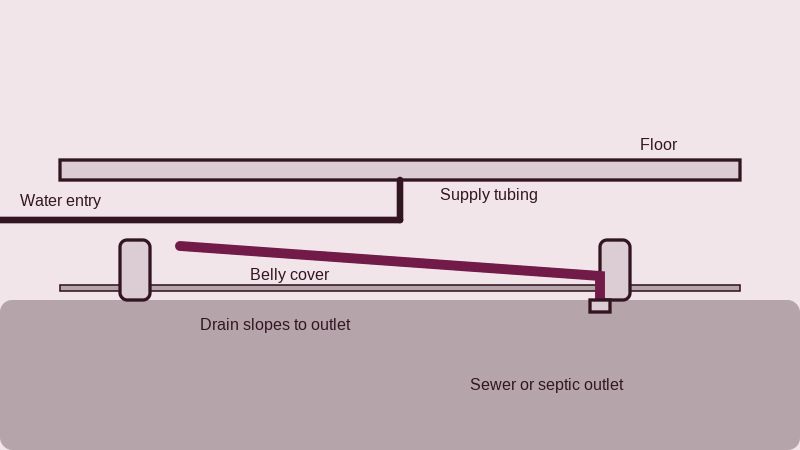
A mobile or manufactured home sits on piers with a crawl space below, and the water lines, drain lines and often the heating ducts run through the belly under the floor, protected by a thin sheet. Installing or replacing that plumbing means working in a tight space with the right supports, slopes and connections, and it comes with rules about permits and park approvals. This page is a plain overview. For other jobs and a quote request, start from the home page.
What does the plumbing layout look like beneath a mobile home?
Supply lines run through the belly in the joist space, usually in flexible plastic tubing, with branch lines up to each fixture. Drain lines are larger plastic pipe that slope toward a single connection to the sewer or septic outlet near the home. The belly cover keeps the lines clean and holds insulation.
Each fixture has a supply stub and a drain stub through the floor. The water heater often sits in a closet with its own access. The water enters at a connection point near the home's edge, typically with a shutoff and sometimes a pressure regulator. Because the lines sit in a thin cavity, small leaks stay hidden, and wet insulation is the first clue. The signs of a break you cannot see are listed on the page about knowing if a pipe burst.
Is mobile home plumbing a DIY job?
Small jobs, such as swapping a faucet or a fixture supply line, are reasonable for an owner. Replacing belly lines, changing drains or touching gas belongs to a contractor, partly for the tight space and partly for permit rules. Know your limit and stop at it.
Working beneath a home is physically hard and can be unsafe: low clearance, insulation, sharp edges and sometimes pests. Wear gloves, eye protection and a dust mask, bring good light, and never crawl under a home while someone runs water above. On finding a wet area, shut off the supply first. A hasty fix can leave a hidden leak that rots the floor, a worse problem than a pipe. A related fixture repair is covered in dealing with a pipe leaking below a sink.
How can I tell if a plumber is overcharging me?
Set the written quote beside two others for the same scope, confirm each line is itemized, and have the plumber explain anything unclear. Warning signs include a quote that will not be written down, a price far above the rest, pressure to decide at once and a deposit demand for most of the total.
Time and materials work should come with an hours estimate and a cap, and the plumber should ask before going past it. Find out which parts are going in and whether you can see the old ones. The way quotes are put together is explained in what a plumber costs, and the inspection cost guide shows how a diagnostic visit is priced. A second opinion on a large job is reasonable.
Is there a permit or park approval needed?
Often yes. Work on a mobile or manufactured home can fall under state housing rules, local building rules and the rules of the park. Which one applies depends on whether the home is in a park, on private land, and what the work involves. Check with the park manager and the local building office first.
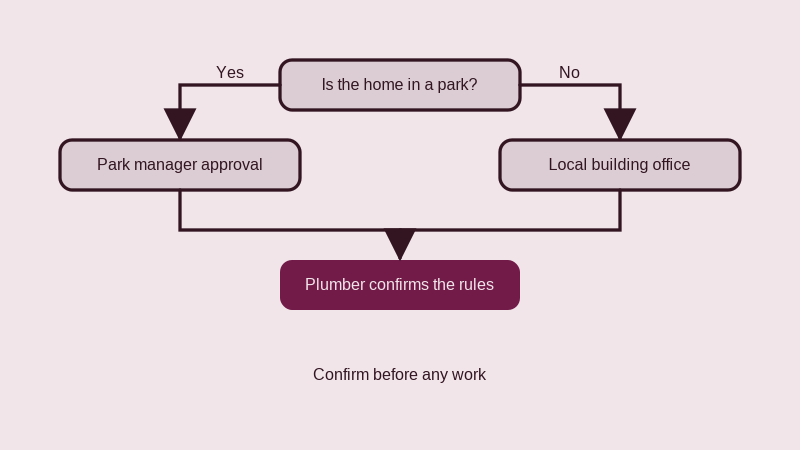
In the Thousand Oaks area, the office is the City of Thousand Oaks Building and Safety for addresses inside the city, and the Ventura County Resource Management Agency for unincorporated land. We cannot say which rule covers a particular home, and the plumber should confirm it. Gas piping is regulated work reserved for a contractor, and any change to gas lines needs a permit. Never skip this step, because work done without a permit can cause trouble at sale time or when an insurer asks.
Which steps does a plumber follow for new plumbing beneath a mobile home?
First the belly is opened up and the existing lines located. The plumber then plans new routes, fits supply tubing and drain pipe on supports at regular spacing, connects each fixture, pressure-tests the water side and fills the drains to check for leaks, and finally restores the insulation and the belly cover.
Several details need care. Drain pipes need a steady downward slope, and long runs need proper venting so fixtures drain well. Supply tubing needs support so it does not sag, and it needs protection where it passes through framing. Where lines sit close to exhaust or heat sources, spacing matters. Connections to the park's service lines may be controlled by the park, and some parks require specific approvals. Ask the park manager before any work. The plumber should state in the quote how the belly will be restored.
What marks a good plumber?
A good plumber shows an active contractor license from California that you can look up, explains the cause in plain words, provides a written scope, answers questions without rushing you and takes responsibility for permits. Online reviews help, but a clear quote and a verifiable license say more.
Ask how long the plumber has worked on manufactured homes, which materials get used and how the belly is restored. Search the license number on the state contractor board's site before you agree to anything. Request proof of insurance. Run these checks yourself on any plumber before work begins. To send details, use the quote form; the areas page shows where we arrange visits.
Common questions
How long does replacing plumbing under a mobile home take?
A small repair may need a few hours, while new supply lines and drains for the whole home can take a few days. Access, the belly's condition and park rules set the pace. Ask the plumber for a schedule that shows when the water will be shut off.
What should I ask before hiring someone for mobile home plumbing?
Check whether the plumber has done manufactured home work, how the belly will be restored, who handles permits and park approval, and what the price covers. Ask for the contractor license number and confirm it with the state board. Answers in writing prevent surprises once the crew is under the home.
Which pipe goes under a mobile home?
Flexible plastic tubing is common for supply lines because it bends through tight spaces, with plastic drain pipe for waste. The best choice depends on how old the home is and what the rules require. Ask the plumber which product is planned and the reasoning.
Does the belly insulation need replacing?
Wet, torn or missing insulation should be replaced after plumbing work, and the belly cover should be sealed again. Damp insulation hides leaks and invites pests. Ask the plumber to include restoration in the quote and to photograph the work.