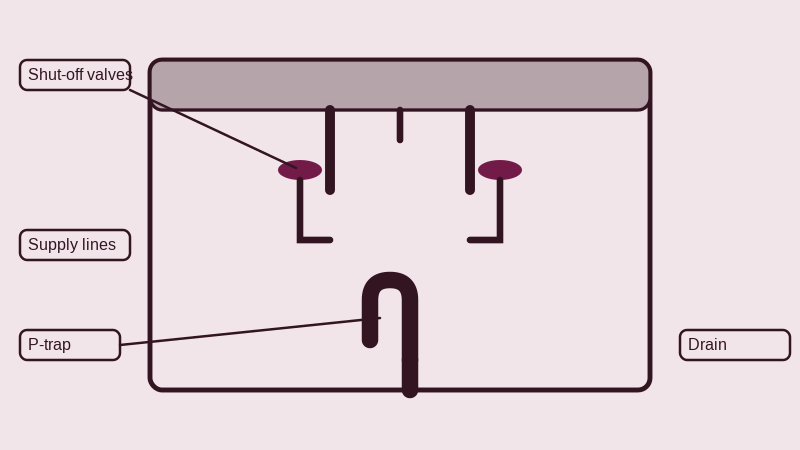
Four spots account for a leak beneath a sink: the supply lines feeding the faucet, the faucet's own connections, the drain pieces known as the P-trap, and the disposal or dishwasher hookup. Dry everything, set paper towels under each joint, and run the water to see which one gets wet first. The wider service is described on the page about repairs to taps, sinks, showers and disposals. Further down are the repairs a handy homeowner can manage, the ones to avoid and how to cope until a local plumber arrives.
Where is the water escaping from beneath the sink?
Clear out the cabinet, wipe each pipe with a towel, then wind dry toilet paper about every joint. Turn the faucet on, then fill the basin and let it drain while you observe. Whichever spot darkens first is the source. Supply-line leaks drip only with water running, drain leaks appear when the sink empties.
Use a flashlight and a mirror for tight cabinets. Check the shut-off valves on the wall, the nuts at both ends of each supply line, the faucet base, and the drain basket seal inside the sink. Water follows pipes, so a drip you see at the bottom may start above. Feel upward for the wettest point.
If the cabinet floor is swollen or smells musty, the leak has been going a while. Dry it with a fan. Soft or stained wood may need replacing, and mold is a sign to be careful.
How do I repair a leaking drain pipe or P-trap?
Snug the slip nuts by hand, then add a quarter turn with pliers, because plastic fittings crack when overtightened. If water still escapes, unscrew the trap and inspect the rubber or plastic washers for flattening, cracks or twisting, then reseat or replace them. Check that each washer's bevel points the correct direction before you tighten.
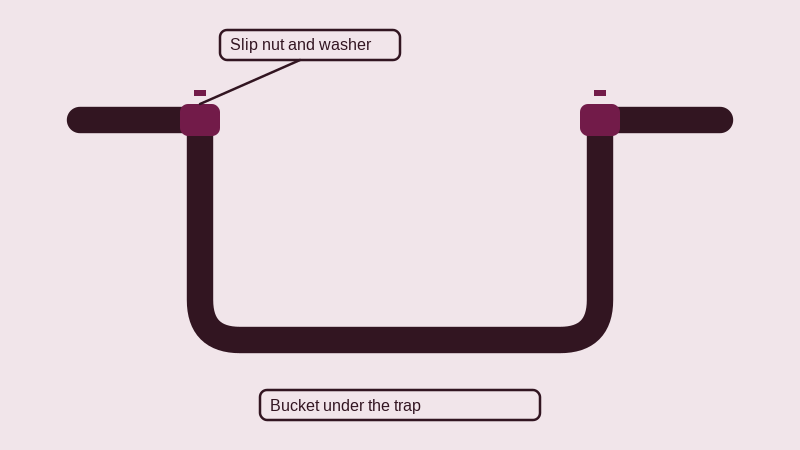
Put a bucket under the trap, since it holds water. Loosen both slip nuts, drop the trap and look inside for blockages. Clear any gunk. Reassemble the pieces in the same order with the washers sitting flat against their seats, hand-tighten, then run water and check dry paper under every joint.
Plastic traps are cheap and easy to replace as a set if the threads are stripped. A metal trap eaten through by corrosion must be replaced. Should the leak sit at the wall where the trap meets the drain pipe, or should the pipe inside the wall be wet, the work belongs to a plumber. Our clogged toilet and drains page covers blockages that cause slow drains and overflow.
How do I deal with a leaking supply line or shut-off valve?
For a leak at a supply line nut, close the shut-off, take off the line and fit a new braided one of matching length and connection size, tightened by finger plus a quarter turn. Never reuse an old line whose rubber washer is damaged. A shut-off valve that drips itself is plumber territory, unless you can close the main and sweat or compress a new valve in place.
Braided stainless supply lines wear out. Many plumbers advise changing them every few years, and always alongside a new faucet. A burst line often floods the space below a sink, so a worn or kinked one deserves swapping before it fails. Our guide on faucet replacement costs mentions this.
Copper stub-outs can corrode too. Green crust at the wall is not something tape will cure. Turn off the water and ask a plumber.
Do tape, putty or epoxy work for a leaking pipe?
Plumber's putty seals a basket drain, thread tape aids threaded joints, and a pinhole in metal pipe may be slowed by epoxy putty. All are stop-gaps. A leak from a cracked pipe, a corroded fitting or a failed joint needs replacement. Wrapping a pipe with tape and hoping rarely lasts, and trapped moisture hides damage.
Use the right product for the right part. Plumber's putty seals the basket in the sink and is not for threads. PTFE tape goes on tapered metal threads, not on compression nuts. Epoxy putty is a temporary fix for a pinhole while you wait for repair. If you use any of them, the pipe still needs proper replacement.
For water dripping through a pinhole in copper, our pinhole leak in copper pipe guide has the steps.
How do you stop the water first?
Turn both small oval shut-off valves under the sink, hot and cold, clockwise until they stop. When they will not turn or they weep, close the home's main valve instead. After that, open the faucet to bleed off pressure and set a bucket below the leak.
Old shut-off valves are a common trouble spot in older houses, which includes many Thousand Oaks and Newbury Park homes. They can seize, or leak when moved. Do not force a crusted valve, because it can snap and unleash full line pressure; shut the main valve and call a plumber.
Many emergencies shrink into minor ones when you know where the main shut-off is and test it yearly. If the water will not stop, treat the situation as urgent. What to do is laid out on the emergency plumber page.
When should a plumber take over?
Hire a plumber if the leak is in the wall or the floor, if shut-off valves refuse to close, if pipes are corroded, if the leak comes back after repair, or if water has reached electrical outlets. A leak you cannot trace may be concealed, and a concealed leak can inflate a bill and rot a cabinet.
Under-sink repairs rarely need permits, though tying into main supply or drain lines in walls can. We do not do plumbing ourselves. Conejo Plumbing Pros forwards your request to a local plumbing business, and that business visits the home, quotes the work and carries it out. Once a job passes a set size, California generally requires a contractor license; you can verify one at cslb.ca.gov. Send the details through our quote form, with photos of the cabinet and the leak.
A shower or tub leak at the same time is covered under plumber for a shower leak. Fixtures, shower valves and faucets share supply lines with the sink, so one problem can show up in several places.
Common questions
How much time does an under-sink repair need?
Minutes are enough for a slack nut or a trap washer. Swapping a supply line or trap takes most people under an hour. One visit is often all a plumber needs, although a corroded valve or a leak behind a wall runs longer. Ask for a time estimate at booking.
Which questions help when choosing a plumber for a leak?
Find out the call-out fee, whether pricing is flat or hourly, whether parts are included and whether worn supply lines get replaced during the same visit. Ask for the contractor license number and check it at cslb.ca.gov. Get a written quote before any work starts, so the figures cannot drift.
Must I be home?
Generally yes, at least at first, so the plumber can view the leak, settle on the price and reach the cabinet and the shut-off. Empty the cabinet beforehand. If you cannot attend, have someone you trust give access.
Why does my sink leak only when the water runs?
That points to the supply lines or faucet connections, because they carry pressure only when the tap is open, or to the drain when the sink empties. Check where the first drops appear. If the leak is only under the faucet base or the basket, a seal may have failed.
Is a slow drip under the sink worth fixing?
Yes. A slow drip rots cabinets, feeds mold and wastes water; the EPA estimates that leaks in an average home waste over 9,300 gallons a year. Caught early, a small drip is normally an inexpensive repair. Fixing it now also means you will not have to replace a swollen cabinet floor later.