What it costs to plumb a new house turns on the count of bathrooms and fixtures, the pipe material, the distance to the water and sewer connections, and what the building office requires. Bids are normally split into rough-in, trim-out and permits. No figure appears here that we cannot source, so this page explains how the pieces add up. Through Conejo Plumbing Pros a local plumber can be lined up to quote your project in Thousand Oaks or elsewhere in the Conejo Valley, and the sections below help you read the quotes you receive.
What is included in a new-house plumbing bid?
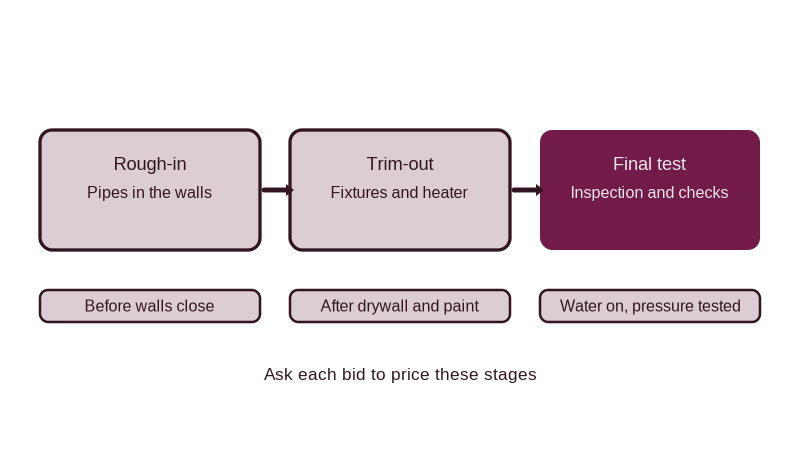
A new-house plumbing bid usually covers three stages: rough-in, which is the pipes and drains in walls and under the slab, trim-out, which is fixtures, faucets and the water heater, and final testing with inspections. Permits, gas piping and connection to utilities may be included or priced separately, so ask.
Understanding the stages helps you compare. Rough-in happens before walls close, and the building inspector checks it. Trim-out comes after drywall and paint. A bid that lists only one total makes comparison hard. Ask each plumber to break it down by stage and by number of bathrooms, kitchens and laundry connections.
For a house in Thousand Oaks CA, as anywhere, some bids exclude fixtures, which you buy yourself. Others include a fixture allowance. The difference can swing the total by a large amount, so confirm who buys what. A plumber should also state which water heater is included, since a tankless water heater and a tank are priced differently.
What changes the price the most?
Top factors are the bathroom count, the home's size and layout, the pipe material, whether it is slab or crawl space, the gas connection, the water heater type and the site: hillside lots, long runs and rock cost more. Fixture choice also moves the total, as does the permit and inspection schedule.
On the hillside lots common around Thousand Oaks, Newbury Park and Westlake Village, long sewer runs and grading affect cost. Estate lots near Lake Sherwood and Hidden Valley may rely on wells or private septic, which changes the work: a well pump and treatment, or a septic design, may sit outside what the plumber bids and fall to separate trades.
City rules matter too. Digging near a protected oak tree can need approval from the city, so ask the plumber or builder to check before trenching. We have not verified specific tree rules for each area, so confirm with City of Thousand Oaks before you dig.
How do you compare plumbing bids fairly?
Hand every plumber the same plans and request the same breakdown: rough-in, trim-out, permits, water heater and gas. Check that fixtures, allowances and warranties are stated the same way. Verify the contractor's license on cslb.ca.gov, and be suspicious of any bid far under the rest, since missing items usually return as extras.
Establish who takes out the permit, who books inspections and what follows if the inspector fails a stage. Get change-order rules in writing. A clear contract names each bathroom, the water heater model and the exact fixtures or allowance.
The plumbing itself is not done by us. Your request goes from us to a local plumbing business, which visits and writes up a quote; the choice is yours. To start, use our quote form and include the plans, the address area and the number of bathrooms. Our general plumber cost guide and hourly cost guide cover the rate side.
How much are permits and utility connection fees?
Permit and connection fees are set by the building office and the water and sewer provider, not by the plumber, and they vary by project. Within the city of Thousand Oaks, permits go through City of Thousand Oaks Building and Safety, while unincorporated areas use the Ventura County Resource Management Agency. Get current fees from each office or from the plumber.
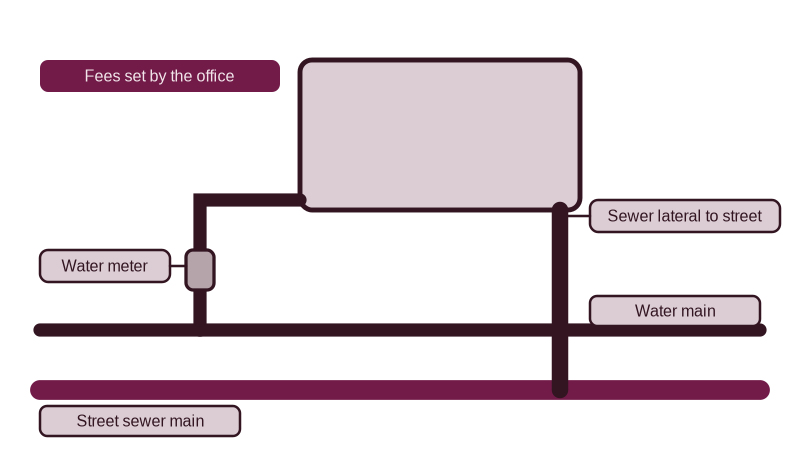
Fees cannot be listed here because the current schedules were not available to read. Also find out which water supplier will serve the lot and whether a new meter or connection charge applies. For a new house this can be a large separate item, billed by the supplier. The supplier differs from street to street, so confirm with the city or the provider directly.
Gas service to a new house comes from the gas utility, and a meter and line may carry a separate fee. If your street has gas, SoCalGas handles the service connection. Confirm availability early. If you ever smell gas, leave the building and contact SoCalGas at 1-800-427-2200 once outside.
What should you do if you have just bought a house and want it checked?
Anyone buying or newly owning a house can use a plumbing inspection to reveal old pipe, a failing water heater, low pressure or hidden leaks before they become expensive. A plumber can run a pressure test, check the regulator and inspect fixtures and drains. What it covers is described on the plumber inspection cost page.
Older houses in Thousand Oaks and Newbury Park may have aging copper and, in some, polybutylene. Ask the seller or inspector what the home's age suggests. Look first at what the pipes are made of and how old the water heater is, since those are the big-ticket items. Read when an older house needs repiping.
For a bathroom addition or remodel in an existing house, see the bathroom remodel plumbing guide; that work is priced differently from new construction.
Common questions
How long does plumbing a new house take?
Rough-in time follows the house size and the site, and trim-out comes after drywall, tile and cabinets. Inspections add waiting between stages. Request a schedule tied to the builder's timeline. The water heater and fixtures typically go in toward the finish.
What should I check before hiring a plumber for a new build?
Get the contractor license number and look it up at cslb.ca.gov, plus an itemized bid by stage, the fixtures and water heater that are included, who obtains the permit and schedules inspections, and how extras are priced. Ask for references you can contact, and have everything in writing.
Do I have to be on site while the work happens?
Rarely all day, but you or the builder should be reachable for decisions, especially at rough-in when fixture locations get set, and at the final inspection. The general contractor or builder often coordinates. Agree beforehand who gives the plumber access and answers questions.
Is a pressure regulator standard in a new house?
Often yes, because supply pressure can exceed what fixtures are built for. A regulator on the main protects fixtures and appliances, and many new builds include one. Ask whether the plan includes one and what pressure it will be set to. Our guide to finding the regulator shows where to look.
Does a warranty cover plumbing in a new home?
Builders and plumbers may offer their own warranties, and their terms vary. Ask for the terms in writing, including what is covered and for how long. We cannot state what any warranty offers, so check the contract and ask the plumber directly.