A good slab leak repair service locates the leak before cutting anything, describes the options plainly, and commits the price to paper. A poor one begins by breaking the floor or pushes a whole-house repipe with no evidence. You are hiring someone who may open your floors and walls, so judge method first and price second. Describe the symptoms in the quote form at Conejo Plumbing Pros. We pass your request to a local plumbing business, and a plumber from it visits and writes the quote.
What does a slab leak repair company actually do?
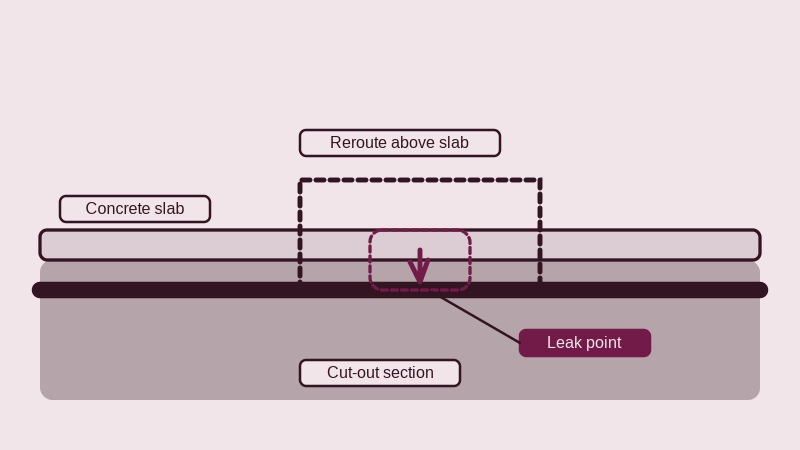
It finds a leak in a pipe beneath or within the concrete floor, using listening equipment, pressure tests or thermal imaging, then fixes it one of three ways: breaking the slab and replacing the section, rerouting the line around the slab, or repiping. A good one also tells you what the repair leaves behind in terms of flooring and finishes.
The work happens in stages: confirm that a leak exists, find it, choose a method, repair, test and close up. Water damage cleanup and flooring are usually separate jobs. Ask who handles each piece. On how costs are structured, see slab leak repair cost, and on what detection costs, plumber leak detection cost.
Telltale signs include a warm patch on the floor, the sound of water running while every fixture is off, a meter that keeps turning with all taps closed, an abrupt rise in the water bill, and flooring that is damp or cracked. The search itself is walked through in the guide to slab leak detection and repair.
Which questions should you ask a slab leak company before hiring?
Start by asking how they will locate the leak and how certain they are before they cut. Then ask which method they propose and the reason, what the price covers, who patches the floor, whether a permit applies and who obtains it, and how a second leak would be handled. Insist that each answer appears in a written quote ahead of the work.
Ask about schedule and mess too: the number of days, where dust and water end up, and whether you must move out. Find out if the price shifts should a second or third leak turn up, and if the plumber will pressure test the remaining system during the same visit.
California generally requires a contractor license when a job costs $1,000 or more. Ask for the license number, then check it on the website of the California Contractors State License Board. Check the board's current rules for your job. The board also publishes guidance on hiring a contractor that is worth reading before you sign.
How do I compare quotes for a slab leak repair?
Compare the same things: the method, the number of leaks covered, the scope of opening and closing, who handles floors and walls, and the warranty terms on the work. A lower number that excludes finish work is not cheaper. A higher number that includes testing and patching may be the better value.
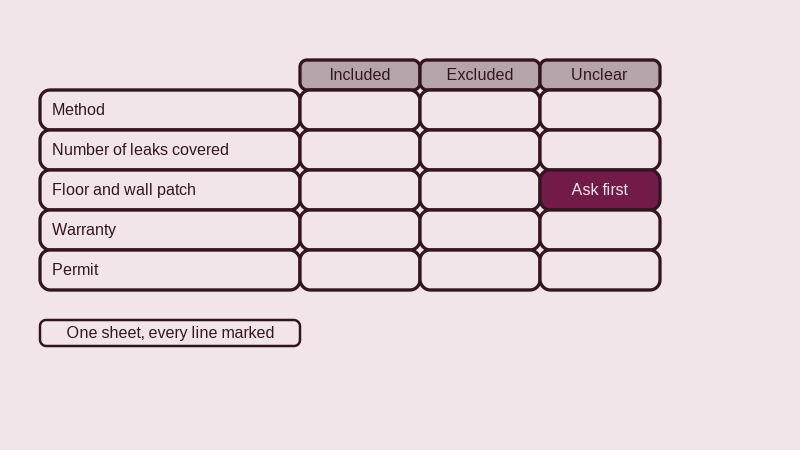
Lay the quotes side by side on a single sheet. Label every line included, excluded or unclear, and question the unclear ones. Treat with suspicion any quote that leaps to repiping without a reason, or that cannot explain how the leak was found. A repipe may be the right answer when pinholes keep appearing in old copper, but it should be a conclusion, not an opening bid.
For repair versus replacement, see repiping cost and the comparison of slab leak repair or repipe.
What should I expect when a plumber comes to my Thousand Oaks home?
An assessment comes first. The plumber reads the meter, shuts fixtures, listens along the floor and may pressure test the lines. A written quote follows. Work starts after you agree. A plumber who opens your floor should protect the rest of the house, tell you how the slab will be patched and mention any permit.
Older homes in Thousand Oaks and Newbury Park may have copper under the slab, and tile or hardwood on top. Ask how those finishes are handled, because matching old tile is rarely perfect. In newer areas such as Dos Vientos and North Ranch, the piping may be different, and the plumber should inspect what your house actually has rather than assume.
We are not a round-the-clock dispatch. The inbox is checked on weekdays from 9am to 5pm. When water is flooding the house right now, shut the main valve before you send anything.
Does insurance help, and who pays for what?
A policy might pay for some water damage caused by a sudden leak, yet frequently leaves out the pipe repair and the expense of locating the leak. Terms differ, so read yours or ask the insurer before work begins. Hold on to photos, the report from the plumber and every invoice, since insurers request them.
Coverage questions are answered in the guide on whether insurance covers a burst pipe. Tell your insurer promptly if there is visible damage, and ask whether they require a particular process or document before repairs begin. Often the most helpful document is a written note from the plumber describing the cause and location of the leak.
Water loss adds up. According to the EPA, an average home can lose over 9,300 gallons a year to leaks, so a slab leak running for weeks is an added cost on top of the repair.
Common questions
How long does a slab leak repair usually take?
Once the leak is found, a spot repair commonly takes a single day, with extra time for the concrete to cure and the floors to be restored. Rerouting and repiping take longer. The plumber's estimate appears in the written quote, and finish work may be scheduled apart from the plumbing.
Can a slab leak be repaired with no cutting of the floor?
Sometimes. Rerouting the line through the walls or attic avoids breaking the slab, and certain lining methods work from inside the pipe. Whether an option is feasible depends on where the leak sits and the pipe's condition. The plumber must inspect your layout before confirming.
Is a slab leak an emergency?
Yes, treat it as urgent, because water can undermine the slab, damage flooring and push the bill up. Shut the main water valve when you hear water running or notice damp patches, and book a plumber quickly. If you smell gas, leave the house and call SoCalGas on 1-800-427-2200 once you are outside.
How do I know whether a leak is in the slab or the wall?
A plumber narrows it down by listening, pressure testing and tracing. Hot patches on the floor, running noises with fixtures off, or a meter that moves while everything is closed hint at a slab leak. Wall leaks usually leave stains or soft drywall. Only testing separates them reliably.