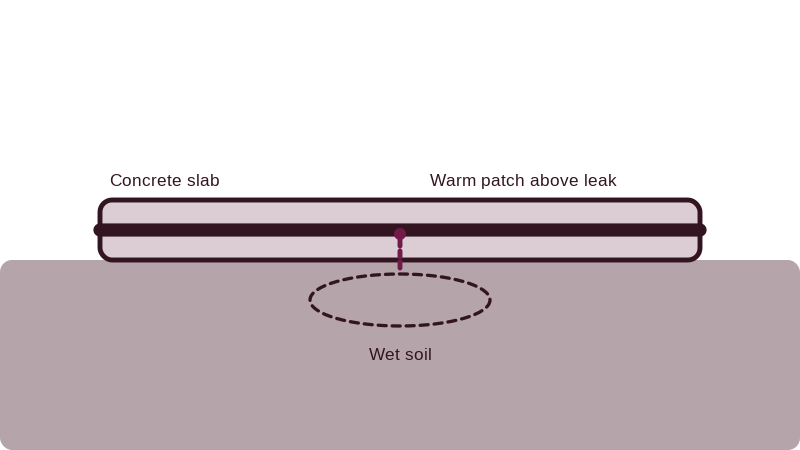
A slab leak happens when a water line that runs in or beneath a concrete foundation cracks, corrodes through or loosens at a joint. Water then escapes into the soil or the slab, and you notice the effects before you see the pipe: a bill that climbs, a warm spot in the floor, the noise of running water when nothing is on. Detecting it is the first job, since opening concrete in the wrong place is expensive. Requests start at the home page or the quote form, and the work itself is done by a local plumber who has leak-finding equipment.
How do you recognize a slab leak?
Watch for a higher water bill with no change in use, the sound of running water while everything is off, a warm or hot spot on the floor, soggy carpet or flooring, cracks along walls or tile, and weaker pressure at taps. One sign proves nothing, but two or three together justify a professional check.
Try a simple test. Turn off all taps and appliances, note the meter reading, then leave the water unused for two hours, as the EPA suggests, and look again. A moving dial or low-flow indicator means water is going somewhere. A hot line leak can leave a warm patch on the floor, while a cold line leak often shows only as a climbing meter. Bills are covered in detail on the pages about reasons for a sudden jump in the water bill and a steep bill when no leak is visible.
What causes slab leaks in Conejo Valley homes?
The common causes are corrosion of copper pipe from the water or the soil, abrasion where a pipe rubs on concrete, high water pressure, and movement of the foundation. Pipe age and material matter, and confirming the cause in one particular house takes an inspection.
Water chemistry plays a part, and it depends on the supplier, so ask your supplier for the water quality report. High pressure stresses joints, and a pressure regulator is an inexpensive protection; see water line pressure regulators. Foundation movement can also stress a line, especially on sloping lots. What the evidence shows is for a plumber to say.
What should you do right away with a suspected slab leak?
Shut the main valve, then read the meter again. If the dial stops, the leak is on the house side, and the water can stay off until a plumber arrives. Keep an eye out for water near outlets or appliances, and switch off power at the breaker panel solely if you can get to it dry and safely.
Do not step into standing water near electrical equipment. Leave the building and cut power only from a dry spot. If a gas smell appears at any time, get outside first, then contact SoCalGas on 1-800-427-2200, and use 911 if anyone is in danger. Photograph any damage for insurance. The article on insurance and burst pipes lists what to document, and telling whether a pipe burst underground covers lines outside the house.
What does slab leak repair cost, and who can help?
Cost varies widely with the repair route, the slab, the flooring above and the number of lines. After detection, expect the plumber to provide a written quote. The guide to slab leak costs and the article on slab leak repair companies set out what drives the price and what to ask.
When submitting the quote form, include the house's age, the signs you have noticed and the meter test result. Leaks in an average home squander more than 9,300 gallons of water each year, says the EPA, and a slab leak can lose far more than a dripping tap, so do not leave it. We read the form on weekdays between 9am and 5pm, and the plumber sets the visit time.
How do plumbers find a slab leak?
Plumbers combine several tools: a pressure test to confirm a line leak, acoustic equipment that hears escaping water through the floor, thermal imaging for hot-water lines, and sometimes tracer gas. Together these narrow the leak to a small area before any concrete is cut.
Leak detection is a separate service from repair, and a plumber may charge for it even if you do not go ahead. See what leak detection costs for how pricing is structured. Ask whether detection is included in the repair quote and what the plumber will do if the equipment cannot find the leak. A written finding of the location and the likely cause is useful for insurance and for deciding on the repair route.
How is a slab leak repaired?
There are three common routes: break the slab over the leak and replace that section of pipe, abandon the damaged line and run a new one through the walls or attic, a reroute, or repipe the whole house. The right one depends on where the break is, how many lines are weak, and what the slab covers.
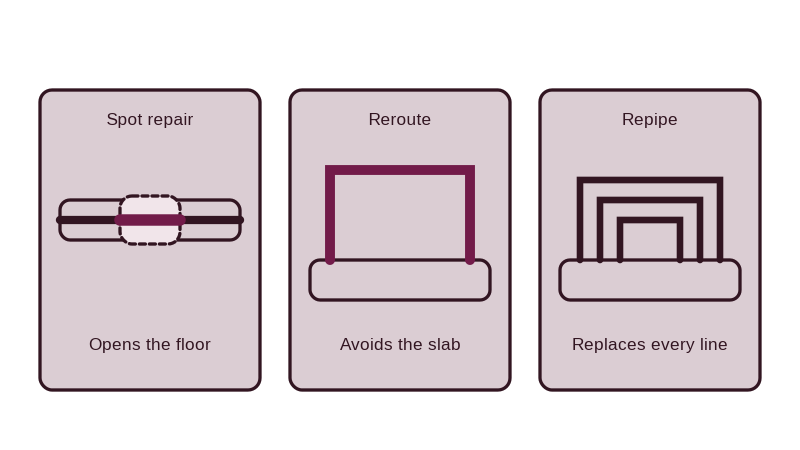
A spot repair is the fastest and cheapest when the pipe is otherwise sound, but it opens the floor and needs flooring repair afterward. A reroute avoids the slab and is often chosen when one line has failed and the rest are aging. A repipe handles every line at once and suits homes with widespread corrosion; the article titled repair or repipe for a slab leak compares them. Some contractors also offer pipe lining; ask if it fits your pipe and whether the work meets local code. Permits may apply, so ask who handles them.
Common questions
How long does slab leak work usually take?
Detection often needs a visit of a few hours. A spot repair can wrap up in one day, whereas a reroute or repipe runs several days. Flooring repair and permits add time. Request a schedule from the plumber that lists the plumbing and finishing work separately.
Which questions help when choosing a slab leak plumber?
Find out how the leak will be located, whether detection is priced separately, which repair routes are recommended and why, who pulls permits, and how flooring will be restored. Also get the contractor license number and check it with the state board. Insist on a written quote.
Can I leave a slab leak until later?
That is risky. A leak can undermine soil, damage flooring and push your bill higher each month. If a plumber cannot come at once, keep the main valve closed whenever you are not using water, and take photos. Quick detection costs far less than long-term damage.
Will insurance pay for a slab leak?
Frequently the policy pays for the water damage that follows but excludes the pipe repair itself, though policies differ. Read your policy and ask the insurer before work begins. Hold on to the plumber's written finding, photos and receipts, since they support a claim. Asking early avoids a denied claim, because some insurers want to inspect the damage or approve the method before it is repaired.