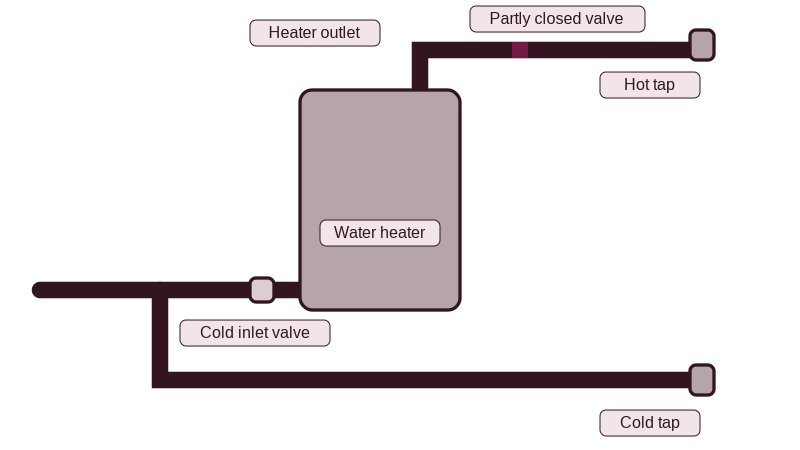
When hot water alone runs weak, the supply into the house is fine, so the fault lies in the water heater, the valves around it or the hot-side piping. Likely suspects are a half-closed valve at the heater, sediment in the tank or outlet, mineral scale in a faucet or showerhead, or old galvanized pipe that has narrowed inside. Start at the nearest tap and trace back toward the heater, which usually turns it up. Related reading is our water heater repair guide. If you want a local plumber to look at it, send the details to Conejo Plumbing Pros through the quote form.
Why is hot pressure weak while cold is normal?
Cold water runs straight to the tap, whereas hot water first goes through the heater and a longer run of pipe. A half-shut valve, sediment choking the heater outlet, scale in the fixture or a narrowed hot pipe each restrict only the hot side. So the search narrows to the heater, its valves and the pipes after it.
Begin by comparing. Run only the hot tap at several fixtures. Every hot tap weak means the restriction is near the heater or in the main hot line. One weak fixture means that fixture is at fault, through a clogged aerator, a worn cartridge or a faulty stop valve beneath the sink. The page on weak pressure at the kitchen sink handles the single-fixture case.
When hot and cold are weak everywhere, the cause probably sits upstream of the heater, a different search. Read a sudden pressure drop across the house and the plumber for low water pressure page.
What is the first check at the water heater?
Look at the cold inlet valve on top of the heater and any other valve on the hot outlet. A gate or ball valve that was left partly shut, perhaps after earlier work, throttles hot flow while the cold side runs normally. An open valve has its handle lined up with the pipe. Ease it fully open and test a hot tap again.
Then inspect the flexible connectors on the heater. A kinked connector, or one with a collapsed liner, restricts flow. In an older tank, sediment can come loose and block the hot outlet or a dip tube, as covered in replacing a water heater dip tube. A heater that rumbles or pops and heats slowly often carries heavy sediment.
Never open the drain valve on a hot tank without a hose and a safe place for discharge, since the water can scald. Cut power or gas before touching the tank. When in doubt, leave the heater to the plumber.
Could scale or sediment be blocking the hot water?
Yes. Minerals in the water collect as scale inside the tank, the outlet fitting, the mixing valve and the aerators. A shower that loses pressure over months, or sputters, often has scale in the showerhead or the valve cartridge. Soaking the aerator or showerhead in vinegar for an hour can restore flow and is worth trying before anything bigger.
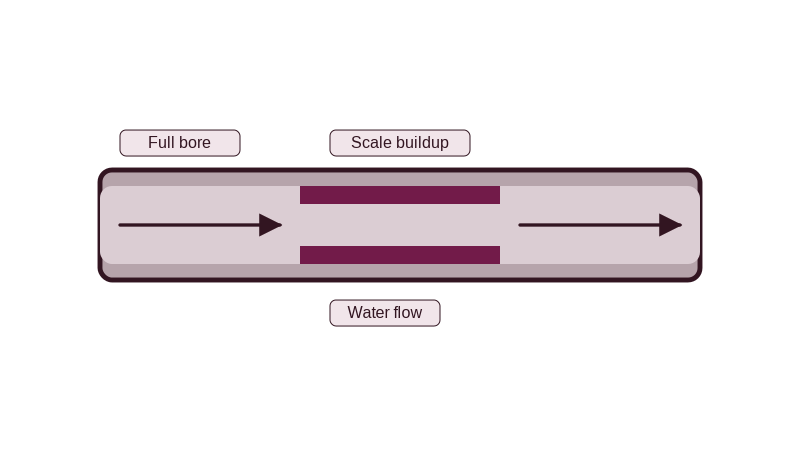
Where scale builds quickly, a heater can show it first. The anode rod helps protect the tank from corrosion, though its job is not to prevent scale, and an old rod can leave a tank in worse shape, as explained in swapping a water heater anode rod. For fixtures, our page about taking off hard water scale offers a gentler method than strong acids.
Tankless units are more sensitive: scale in the heat exchanger cuts flow and may set off error codes. If you own one, a descaling service may be due. See Navien, Rinnai or Rheem tankless repair pages for model-specific signs.
Can old galvanized or polybutylene pipe cause low hot water pressure?
Galvanized steel pipe corrodes internally, and hot lines scale faster than cold, so a house with galvanized pipe may show weak hot flow long before the cold side drops. Polybutylene is a different issue, a failure risk more than a flow one. Either way, a plumber can confirm by looking at the pipe and testing flow.
Some older Conejo Valley homes may still have galvanized lines that were never replaced, and older homes in Thousand Oaks, Newbury Park and Casa Conejo are where a plumber might look first. A magnet sticks to steel pipe but not to copper, and at an exposed section a gentle scratch shows dull gray metal if it is galvanized. Replacing it is a bigger job covered by galvanized pipe replacement and, for the gray plastic type, polybutylene pipe replacement.
If a pipe replacement is on the cards, the choice between PEX and copper matters too, as laid out in PEX vs copper.
Is the pressure regulator or a mixing valve to blame?
A failed pressure regulator lowers pressure through the whole house, hot and cold. A failing mixing valve or thermostatic cartridge in a shower touches only hot water and can cut flow at one shower. Where the heater has a mixing valve at its outlet, a stuck or scaled one can restrict hot flow house-wide.
Test one shower and the kitchen sink. A weak shower beside a healthy sink makes the shower valve the suspect. Weak hot water at several fixtures with strong cold makes the heater's valves or its mixing valve likelier. A whole-house drop affecting hot and cold alike implicates the regulator or the supply. The water pressure regulator replacement page and the one on the hot water pressure regulator cover that case.
If the problem started right after plumbing or heater work, tell the plumber. A forgotten open valve or a kinked connector is more likely than a new failure.
Common questions
Why is shower hot pressure low when the sink is fine?
Probably scale in the showerhead, or a worn cartridge or mixing valve. Remove the head and let it sit in vinegar; better flow afterward identifies the cause. If nothing changes, the cartridge may need replacing. A healthy sink rules out both the water heater and the main supply.
Will flushing the water heater fix weak hot pressure?
It can help when sediment is to blame, especially for a tank untouched for years. Run a hose to a safe drain, and let the water cool beforehand. Skip it if the tank is very old or leaking, since stirring up sediment can expose a weak spot. Ask a plumber if unsure.
Can an ailing water heater cause low hot pressure?
Yes. Sediment, a collapsed dip tube, a blocked outlet or internal corrosion can all restrict flow out of the tank. If you also see rusty hot water, a heater over a decade old and falling flow, replacement may be the sensible option. The water heater replacement cost guide helps with planning.
Could weak hot pressure be a leak?
Seldom, though a hot-line leak can lower pressure before any water shows. The EPA estimates an average household loses over 9,300 gallons of water to leaks each year. Read your meter with everything off and look for damp walls, ceilings or warm floor spots.
At what point is a plumber worth booking?
Book one when hot water is weak at every tap, the heater is loud or leaking, or you suspect old galvanized pipe. A problem at one fixture deserves a DIY check first. Send the details with the quote form, then a local plumber is lined up for a visit; requests are read on weekdays, 9am to 5pm.