Nothing is dripping, nothing is stained, and yet the bill is double last month. That puzzle has a short list of answers, and most can be sorted in an afternoon with the water meter as your witness. This guide from Conejo Plumbing Pros is built around that meter, then walks through the usual culprits in order, from toilets and irrigation to slab and wall leaks that need a plumber with detection equipment. For the broader story on bill spikes, what pushes a water bill up explains the general causes.
How can you locate a leak that is out of sight?
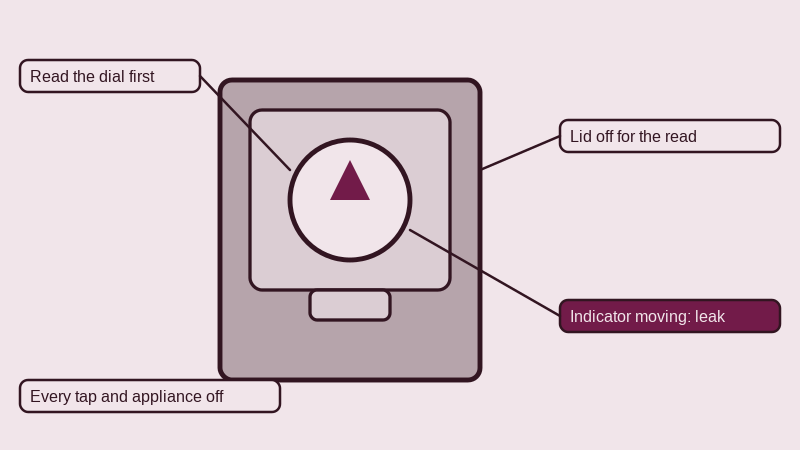
Use the water meter as your guide. Make sure every tap and appliance is off, note the reading and watch the small leak indicator, often a triangle or dial, for movement. Wait two hours without using any water, then check again. Any change shows water flowing somewhere, and the steps after that narrow down where.
Most meters live in a box near the street under a liftable lid. Photograph the dial before and after so memory is not your only record. Certain meters have a small dial that turns even for a tiny leak, which speeds the test up.
A still meter means the leak may be intermittent, or the high bill may come from heavier use such as irrigation, guests or a pool fill. Compare the billing period dates against the season.
Does higher water pressure raise the bill?
Sometimes. Strong pressure drives more water through every open fixture, strains pipes and can worsen small leaks. A cheap gauge threaded onto a hose bib shows the static pressure. A high reading can be lowered by a pressure regulator near the main.
Pressure also affects how long toilets and valves last, and a worn-out regulator can cause both a high reading and leaks. Our page on water pressure explains what a regulator does, and burst pipe prevention lists the checks that go with it.
Normal readings with a meter that is still busy make a leak the likely answer. One visit lets a plumber test the pressure and hunt for the leak together.
Could the irrigation system or an outdoor tap be the cause?
Yes, and frequently. A sprinkler valve stuck open, cracked lines beneath the lawn, a drip system with a broken emitter or a hose bib leaking inside the wall can together produce a hefty bill. Shut the system off at the controller and the valve, then check the meter again. A dial that stops points to irrigation.
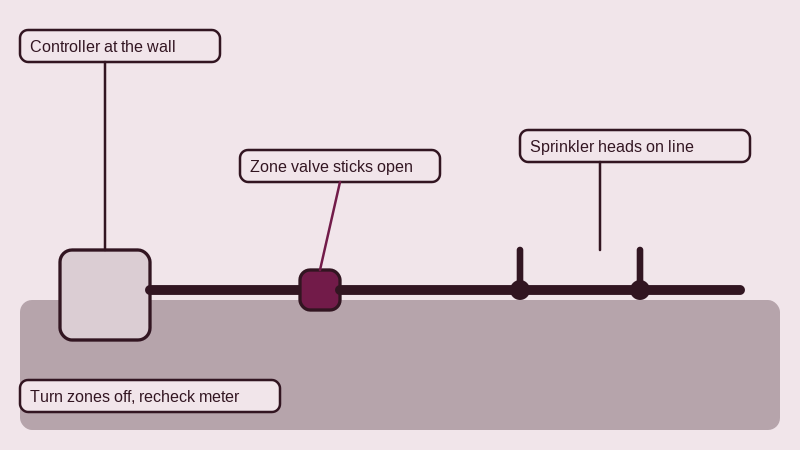
Irrigation can be a big water user on a lot, especially on slopes where lines are long. A broken line may not show as a puddle if it drains downhill or into a planter, so look for lush patches, soggy ground or low pressure at the sprinklers.
A leaking outdoor faucet is another quiet waster, and one you can often fix. Our guide to a leaky exterior faucet covers the repair. A leak along the supply line from meter to house means digging, which is plumber work.
How should you deal with the bill itself?
Repair the leak first, hold on to the repair invoice and the meter photos, then ask the water provider if it offers a leak adjustment or a payment plan. Policies differ by provider, so ask whoever bills you. Do not stop paying without talking to them, since late fees and shutoff notices follow.
Check the bill for the billing period, the read dates and any estimated reads. An estimated read can make one month look high and the next low. Ask the provider to check the meter if you think the reading is wrong.
Write down what you found and when. If the leak was hidden and you fixed it promptly, say that. Once a plumber is what you need, describe your tests in the quote form.
Might the water heater or a softener be wasting water?
A water heater with a failing relief valve or a leaking tank can send water down a drain, and a softener that cycles too often, or one whose regeneration never ends, can waste plenty. Check the heater's drain pan and relief pipe, and the softener's drain line, for steady dripping or flow.
A heater that runs nonstop can raise the energy bill as well. Water pooling beneath the tank signals a failing heater, so read about water heater leaks. A softener that regenerates daily instead of weekly may need its settings checked by whoever serviced it.
A dishwasher or washing machine with a stuck inlet valve can also let water in or out. Look for water on the floor behind and under them, and for hoses that are bulging or old.
Is it your toilet?
A toilet that leaks silently into the bowl is the commonest hidden waster. Add a few drops of food coloring to the tank, leave it ten minutes without flushing, then watch the bowl. Color there means the flapper or the fill valve is letting water through, and the fix is cheap.
A silent leak can run all day, and at a gallon every few minutes, that adds up. On average, the EPA reports, a household loses upwards of 9,300 gallons per year to leaks, and worn toilet flappers are among the usual culprits. For the fix, read what to do when a toilet keeps running.
Test each toilet in the house, guest bath included. Press the flapper down gently with the tank full and see whether the fill valve stops. A hiss once the tank has filled is another clue.
Could the leak be inside the walls or beneath the slab?
If every fixture, toilet and the irrigation test come back clean but the meter keeps running, the leak is in a pipe you cannot see. Clues include warm floor spots, the sound of running water, a water heater that never stops cycling, damp carpet, a musty smell or a sudden pressure drop.
A slab leak can go on for months before it shows, because soil soaks up the water. A warm floor patch suggests a hot water line, and a damp one a cold line. A plumber uses listening devices, pressure tests, thermal cameras or tracer gas to pinpoint it without breaking up more concrete than necessary.
Read about slab leak repair costs before you book, so you understand how detection work is described and charged. Telling the plumber what you have already ruled out saves time.
Common questions
How many gallons can a small leak lose?
A leak that looks like a drip can waste many gallons a day. A toilet that runs silently can use far more than the same toilet flushed normally, and a pinhole in a pressurized line can lose a large amount over a month. The meter test shows the real figure for your house.
Can a high water bill be a meter error?
It can, though a leak is more common. Meters can fail or be misread, and estimated reads can swing a bill. Run the meter test first. A meter that moves with everything off means a leak. A still one means you should ask the provider to test the meter itself.
Which questions should come before hiring someone to find a hidden leak?
Ask which method they use, the cost, whether the fee covers only locating or repair as well, and what they report if they find nothing. Also ask who handles any permit and how walls or flooring they open will be repaired. Get the answers written down.
Must I be home for leak detection?
Yes, an adult should admit the plumber, show the meter and water heater and describe what you have noticed. Expect noise, since listening devices need quiet. Mention pets and any rooms to leave alone, and keep floors and walls clear near suspect areas.