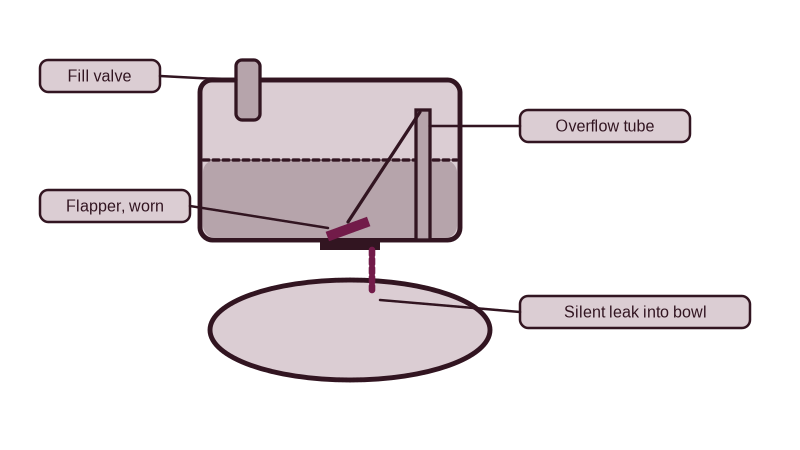
The usual sources of a high water bill are a leak you cannot see, a toilet that keeps refilling, sprinklers running longer than you realize, or a genuine rise in household use. A rate change or a misread meter is rarer but worth ruling out. Begin with the meter test further down, which shows within ten minutes whether water is escaping. If you do find a leak, Conejo Plumbing Pros can arrange a local plumber for homes across Thousand Oaks and the Conejo Valley.
What makes a water bill climb?
Most high bills trace to five things: a leaking toilet, a dripping or hidden pipe leak, irrigation or a pool top-up, a pressure problem that makes fixtures use extra, and real added use such as guests or a new habit. The EPA reports that over 9,300 gallons of water a year can be lost to household leaks.
Toilets top the list. A worn flapper lets water seep into the bowl all day with no sound you would notice. Dripping faucets, showerheads that never fully shut and a running humidifier line come next. Underground leaks along the supply line from meter to house cost the most, and stay invisible until a patch of lawn turns soggy.
Irrigation causes the largest seasonal swing in Thousand Oaks. A summer timer that was never adjusted, a sprinkler head with a crack, or a valve stuck open can add thousands of gallons in a single month. When the bill jumps in spring or summer and the house looks normal, check the yard first.
How do you use the water meter to find a leak?
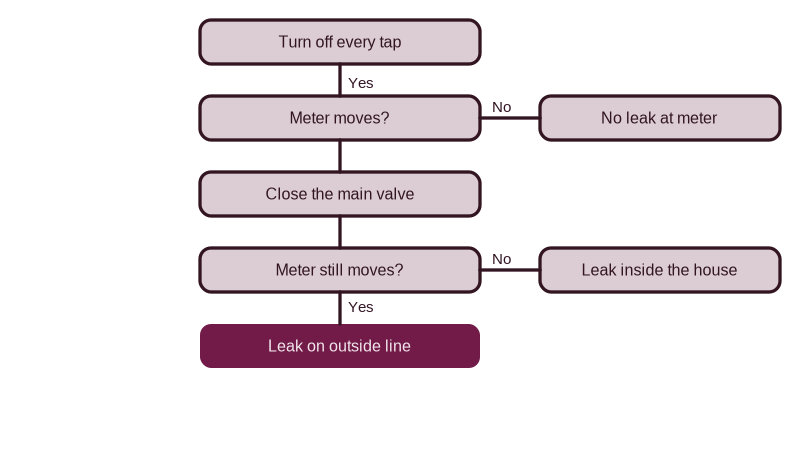
Turn off every tap and appliance, then look at the meter for the leak indicator, a small triangle or dial that turns whenever any water moves, and note the numbers. Leave the water unused for fifteen minutes, then check again. A moving indicator or changed numbers mean water is going somewhere. If nothing moved, the leak is not at the meter.
You will usually find the meter in a box near the curb or toward the front of the lot. Raise the lid with care, since spiders and insects like them. With an irrigation system, its valves must be off too for a fair test.
If the meter moves, close the main valve at the house and test once more. If it stops spinning, the leak is indoors. If it keeps moving, the leak lies in the outdoor run between meter and house and needs a locating visit. The article on a steep bill with no visible leak goes deeper on that case.
Why would a bill jump in winter?
A winter spike when you used less outdoors usually points to a leak, because irrigation is off and ordinary use is steady. A heater running more, extra visitors at holidays, or a long-running toilet leak can all show up. Check for a bill that includes an estimated read.
Estimated reads catch people out. If the supplier could not read the meter one month, it estimates, then corrects the next bill with a catch-up charge. Compare the reading on your bill with the number on the meter itself. A mismatch is a billing question, not a plumbing one.
Also count the days on the bill. A 35-day billing period costs more than a 28-day one at identical daily use. Compare days as well as dollars.
Who sets the rates, and who handles questions about the bill?
The bill comes from whichever provider serves your address, and that depends on the street. Several agencies operate around the Conejo Valley, among them Las Virgenes Municipal Water District, so read your latest bill for the name and contact details. Rate tiers and fees come from the provider, not a plumber.
We do not say which utility serves each Thousand Oaks or Newbury Park street, as we have not confirmed it for every address. The bill is the quickest guide. The provider handles any leak that sits on its own side of the meter. Anything beyond the meter, on your property, is yours to repair.
Some providers will review a bill if you can show a repaired leak, and some offer drought-related rebates for efficient fixtures. Ask your own provider, because policies differ and we have not verified any of them.
Could high water pressure be the cause?
Yes, high pressure makes fixtures and appliances use more water, strains pipes and valves, and can bring dripping and noisy pipes. A failing pressure regulator at the main is a frequent reason. When banging follows a tap closing, the water hammer sound guide explains it, and a plumber can check the pressure using a gauge.
A pressure gauge screws onto an outdoor hose bib and is inexpensive. A plumber reads one in seconds. A high reading usually means replacing the regulator, and the pressure regulator replacement page explains the job.
At what point should a plumber be brought in?
Bring one in when the meter test shows movement and the source stays hidden, when you spot damp walls, ceilings or soft ground, when a toilet runs on even with a new flapper, or when pressure seems very high. Listening equipment and pressure tests let a plumber find leaks without breaking open walls.
Use the quote form to ask us to arrange that. Include the meter numbers you noted both before and after your test, which saves time. Suspect a slab leak? Warm patches on a floor or running-water sounds at night mean you should treat it as a priority. The guide to leak detection costs explains how the work is priced.
Tell the plumber where the meter and main shut-off are, and which bathroom fixtures you have already checked. A gas smell is a separate matter from a water bill: leave the building and reach SoCalGas on 1-800-427-2200 from outside. Requests from Thousand Oaks CA addresses and the nearby Conejo Valley areas all use the same form.
The plumbing itself is done by a local plumbing business, not by us. California generally requires a contractor license for jobs worth $1,000 or more, and cslb.ca.gov is where you can check one.
Common questions
How much time is needed to locate a leak?
A basic meter test needs fifteen minutes. A plumber can often pin down a hidden leak in one visit with pressure testing and listening gear, although slab or underground leaks may run longer. Before starting, the plumber should explain the method and its cost.
What should I ask about a leak before hiring?
Find out the method for locating the leak, whether that step is billed separately from the repair, what the call-out fee is, and if walls or concrete will be opened. Also get the contractor license number and verify it at cslb.ca.gov. Have everything put in writing.
Should someone be home for a leak check?
Usually yes, giving the plumber access to the meter, the water heater, the bathrooms and the yard. If you cannot be there, explain in advance how access will work. Being there lets you hear what the plumber finds, which helps when you decide on the repair.
Could a water softener push my bill up?
It can, since softeners use water to regenerate, and a faulty one may keep cycling. How much depends on the model and its settings. If your bill rose after a softener went in, ask the installer to check the regeneration schedule. Our page on water softeners and high bills covers it.
Will fixing a toilet leak lower the bill?
Often yes, if the toilet was the source, because silent leaks run around the clock. Replacing a flapper is a small repair. Compare the next bill, adjusted for days in the period. The page on a running toilet shows the dye test.