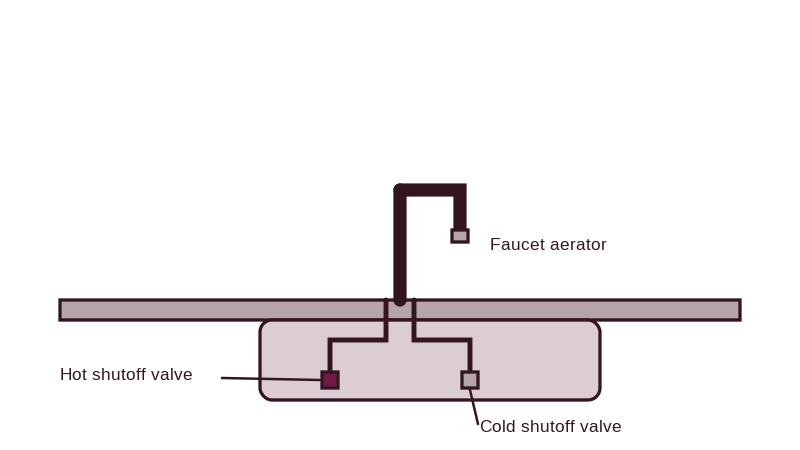
When the shower and bathroom sink run hot but the kitchen sink stays cold, the water heater is working. Something local to the kitchen is blocking the hot side: a closed or clogged valve below the sink, a failed faucet cartridge, a kinked supply hose, or a connection that sends cold water the wrong way. If hot water is missing everywhere, start with the heater, which is covered in our overview of water heater repair in the Conejo Valley. This page sticks to the single-faucet problem, and other services appear on the home page.
Why does only my kitchen sink lack hot water?
The usual reason is a fault at that faucet itself: the hot supply valve below the basin left partly shut, a clogged aerator or inlet screen, a worn cartridge or mixing valve, or a kinked flexible supply line. Test whether other taps are hot to confirm the heater is fine, then work from the faucet back toward the wall.
Begin with the easiest check. Twist off the aerator on the faucet tip and look for grit. Check that the hot valve under the sink, usually the left one, is fully open. Feel both supply hoses for a kink or a collapsed liner. Then run the faucet with the handle in the hot position and see whether flow is weak or none at all. Weak flow suggests a clog or a failing cartridge, while no flow suggests a closed valve or a blocked line.
When is it really the water heater?
If all the hot taps in the house are weak or cold, suspect the heater, a shutoff on its outlet, or a failed internal part. Hot water that reaches the kitchen sink only after a long wait may simply reflect distance from the heater rather than a fault. Larger houses have long pipe runs, so hot water takes time to travel.
Plenty of homes have the water heater in a garage at one end and the kitchen at the other, so a lengthy wait for hot water can be normal. The usual remedy is a recirculation pump or a small point-of-use heater, not a repair. If water starts hot and turns lukewarm everywhere, see causes of no hot water in a house and the dip tube. For a leak around the tank, use plumber for water heater leak.
When should a plumber take a look?
Bring one in if the cartridge needs replacing and you cannot identify the model, if a valve will not turn or leaks, if water shows up behind the cabinet wall, or if the cause stays unclear. The same goes for a pipe behind the wall that might be blocked or crossed, because that means opening up.
A plumber can test with gauges, find a crossover, and replace the faucet if repair parts are unavailable. For an old faucet, replacing it may cost less than hunting for parts; the page on faucet installation cost shows what drives the price. California requires plumbing contractors to hold a license, so request the license number and verify it. To send details, use the quote form, and tell us what you found at the aerator and valve.
Might the faucet cartridge or the dishwasher be to blame?
Yes. In a single-handle faucet, a worn cartridge can block hot water even when the supply is full. A dishwasher connected to the hot line sometimes has a check valve fault that lets cold water back toward the faucet. Both are less common than a clogged aerator, but both are real.
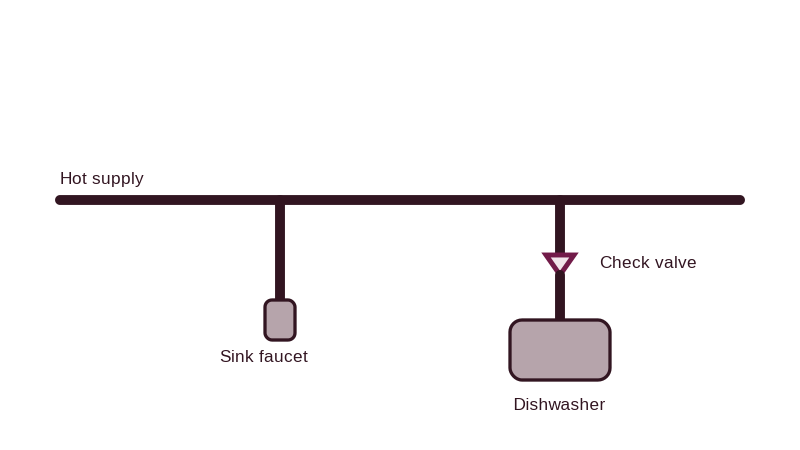
To test the cartridge, note whether the handle feels loose or gritty and whether the temperature range is odd, with hot only at the extreme end. Replacement cartridges match a brand and model, so photograph the faucet and find the manufacturer's name on the body. If you suspect the dishwasher, close the hot valve on the dishwasher branch, where one exists, and see whether the sink improves. Faucet leaks in the same cabinet follow related steps, which are described in our dripping faucet repair guide.
How do I check the valve and supply hose under the sink?
Open the cabinet and find the two small shutoff valves leading to the faucet. Turn the hot one fully counterclockwise, then run the tap. If flow is still weak, shut that valve, disconnect the hose over a bucket, and open the valve briefly to check that water flows freely, then reconnect.
Take care with old valves. Many multi-turn stop valves have sat unmoved for decades and can leak at the stem when turned, so be ready to close the main. A valve that will not turn, or drips once moved, should go to a plumber for replacement. Braided stainless hoses can crimp at a bend and close partly. Replacement hoses are cheap and sold in standard lengths, but carry the old one along to match the thread size.
Common questions
Why is hot water cold at the kitchen sink when the bathroom is fine?
The problem is local to the kitchen. Likely causes are a clogged aerator, a closed or clogged valve, a kinked hose, a worn cartridge or a plumbing crossover. A hot bathroom tap means the heater is not at fault. Check the aerator first, then the valves.
How can I tell whether the hot and cold lines are crossed?
When cold water flows from the hot handle at a single faucet, the supply lines may be reversed or a cartridge fitted backward. It often happens after a faucet replacement. Compare the hose connections with the hot and cold markings, and check the cartridge orientation.
Is the supply hose a DIY replacement?
Often yes. Close the valve, put a bucket under the connection, unscrew the old hose, then snug the new one finger-tight and add a quarter turn with a wrench. Look for drips. If the valve is old or leaks when moved, leave it alone and let a plumber swap out the valve.
Must a plumber swap a kitchen faucet?
Not always. A confident owner can change a faucet with basic tools. A plumber helps when shutoffs are seized, when the sink needs new holes, or when a disposal and dishwasher must be reconnected. Ask for a written quote that names the faucet model.