A water heater element is the electric heating rod inside an electric tank. If the water goes lukewarm or runs out fast and your heater is electric, a failed element is a likely cause, and replacing one is usually a quick repair compared with a new heater. Gas heaters and tankless units do not have these elements. A gas heater falls outside this page, so begin with our water heater repair page instead. Everything below concerns electric tank models.
Which element usually goes bad first in a water heater?
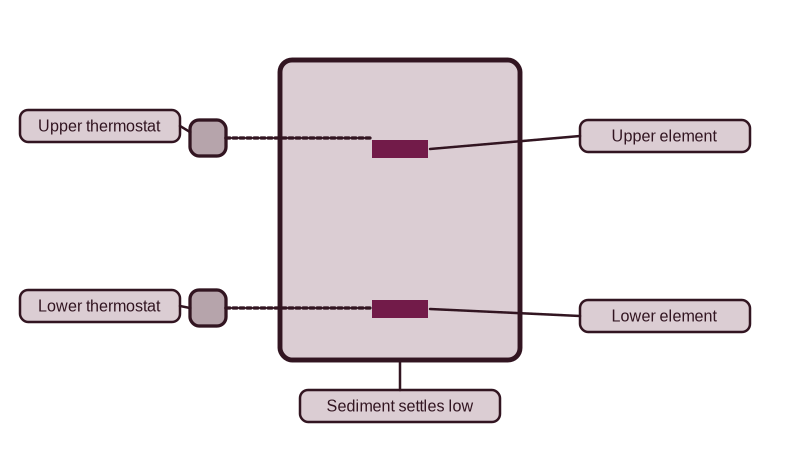
Either can fail, but the lower element often fails first because sediment settles around it, causes overheating and shortens its life. The upper element fails when it runs without enough water around it, or just from age. Most tanks hold two elements, one near the top and one near the bottom, and each has its own thermostat.
How they operate matters for diagnosis. The upper element warms the top of the tank first, then passes the work to the lower one. A dead upper element can mean no hot water whatsoever. A dead lower element gives a small supply that fades fast, because only the top section of the tank is being heated.
Local water adds to the picture. Hard water leaves scale and sediment, and that is the main enemy of elements. We do not state hardness figures for any Thousand Oaks address, because we have not checked a supplier report for it. If you see sediment when you drain the tank, that tells you what your own water does.
How can you tell it is the element and not something else?
A failing element shows up as cold water, tepid water, a supply that fades after a few minutes, or a breaker that trips the moment the heater tries to heat. A bad thermostat or tripped reset button produces the same symptoms, and only testing separates them. A plumber checks with a meter.
Before contacting anyone, try two simple things. Look at the heater's breaker in the panel and reset it once if it tripped. Then, with the breaker switched off first, find the red reset button on the top thermostat behind the access panel. Our guide for a heater that runs yet gives no hot water holds the full checklist.
If the breaker trips again right away, stop. A repeated trip usually means a short in an element or wiring, and resetting it again is a hazard.
What does the job involve for a plumber?
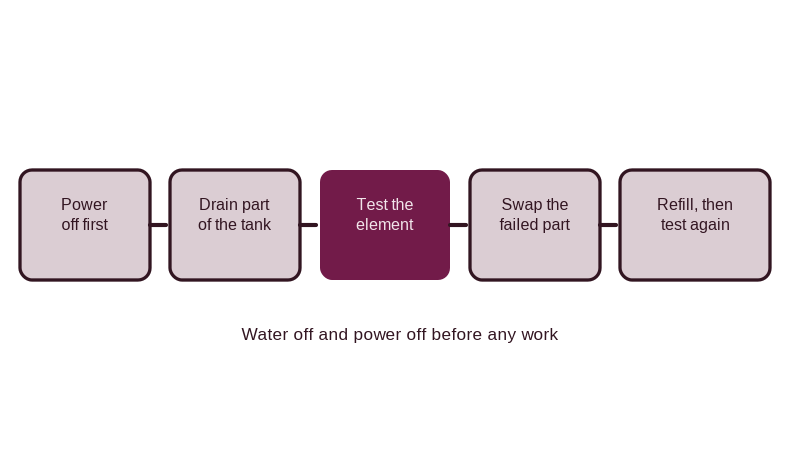
A plumber turns off power, drains part of the tank, tests the elements and thermostats, swaps the failed part, flushes sediment where it is practical, refills and tests the heater. It is normally a single visit. Parts and labor are quoted before work starts, and you should confirm the price first.
Permits are usually tied to replacing a whole water heater, not an element swap. For a full replacement, the permit office depends on where you live: City of Thousand Oaks Building and Safety inside the city, or the Ventura County Resource Management Agency for unincorporated areas. Have the plumber confirm that the new tank gets strapped or braced against earthquakes as local rules require.
We do not do repairs ourselves. Your request goes from us to a local plumbing business, which visits; whether to go ahead is up to you. Once a job reaches a set size, California generally requires a contractor license, and one can be looked up at cslb.ca.gov. For heater trouble the plumber can also look at related problems, such as low hot water pressure.
Is it worth replacing the element or should you replace the heater?
A young tank that is dry and otherwise sound usually makes a new element the sensible repair. When a heater is old, leaking or rusted at the base, the money is better spent on a new unit. A plumber can advise which applies, and our replacement guide tackles the age question.
One handy rule is to check the tank's age on its label. Its serial number frequently encodes the build date. Older tanks deserve a hard look, although some last much longer. We cannot put a price on either option here, because quotes vary by plumber and heater.
Inspecting the anode rod costs little while the heater is open. Once the rod is used up the tank corrodes from within, and a swap extends its life. The anode rod replacement page has the details.
What should you do next?
Start by checking that the heater is electric, then copy its make and model from the label, write down the symptoms and check the breaker. After that, enter the details in the quote form, which lets the plumber arrive with the correct parts. If you ever smell gas, step outside and reach SoCalGas at 1-800-427-2200 from there.
Plenty of Conejo Valley garages and closets leave little room around the heater, so say so if yours sits in an attic or small closet. Conejo Plumbing Pros can include that in the request.
Can you replace the element yourself?
Experienced DIYers manage it, yet the work means 240-volt power and a tank of water, so for most people the safe route is hiring a plumber. Anyone going ahead alone should switch off the breaker, confirm with a tester that the power is dead, drain the tank, and never energize a tank that is not full.
In outline: switch the breaker off, open the access panels and test for voltage. Close the cold supply, attach a hose to the drain, open a hot tap and lower the water below the element. Pull the wires, back the element out with an element wrench, fit the matching replacement and its gasket, fill the tank completely, and only then bring the power back.
The replacement must match the heater's voltage and wattage, and the thread or flange type as well. The tank label tells you what is needed. A wrong element can overheat or trip the breaker. If the tank is old, corroded or leaking, stop here, because a new element will not fix those problems.
Common questions
How long will an element replacement take?
Roughly an hour or two is typical for a plumber, with draining and refilling adding time. Afterward the heater must reheat, often for an hour or more. A seized element or a badly scaled tank can stretch the job. Request an estimate when booking.
What should I ask before hiring someone to replace an element?
Find out whether the price covers the part, if both elements get tested, if the thermostats are checked, and how a leaking tank would be handled. Get the contractor license number and look it up at cslb.ca.gov. Make sure the price is in writing before any work starts.
Must a person be at home during the repair?
Yes, someone needs to be there to give access to the heater and the electrical panel, and to agree the price once the cause is confirmed. Keep the route to the heater clear. A heater in a locked garage or attic needs access arranged beforehand.
Can I use a higher-wattage element for faster heating?
No. The element must match the heater's rated wattage and voltage. A higher wattage can overload the wiring, trip breakers and damage the tank. Check the label on the tank and replace like for like, or ask a plumber what the heater is built to take.
Do tankless heaters have elements?
Some small electric tankless water heater models have heating elements, but gas tankless units do not. They are different repairs, usually handled by a plumber familiar with the brand. Gas models use a burner and a heat exchanger instead, so the parts and the diagnosis are not the same as for a tank heater. See our guide to Rinnai tankless repair for one example.