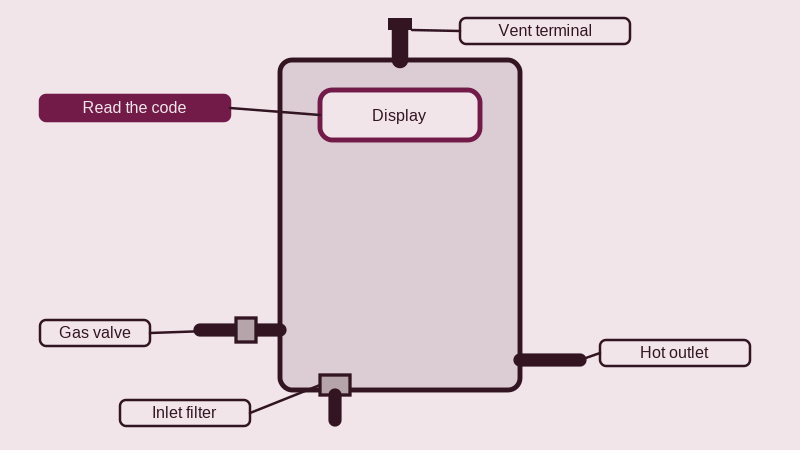
When a Rinnai tankless unit stops delivering hot water, its display is usually telling you why. Read the code, check the simple things such as gas supply, power and filters, and stop there if the fix involves gas piping, the burner or the vent. Those jobs are for a plumber. The water heater service page explains how repairs work, and you can send a request with the code you saw through the quote form.
Why is my Rinnai tankless water heater not giving hot water?
The usual reasons: gas or power has been interrupted, the inlet filter is blocked, scale has coated the heat exchanger, the vent or air supply is obstructed, the igniter or a sensor is faulty, or flow is too low to start the unit. The display code points to which. Try the simple checks first, then arrange a plumber for anything touching gas, venting or the burner.
Walk through the list in this order:
- Is the unit powered, with a lit display?
- Is the gas valve to the unit open, and do other gas appliances work?
- Does at least one tap run at a decent flow? A very low flow will not fire the burner.
- Are the cold and hot supply valves on the unit fully open?
- Is any code showing?
Many failures turn out to be a closed valve or a tripped breaker. If the answers to all five are fine and there is still no heat, the unit needs a professional.
What do Rinnai error codes mean?
Each code is a short number shown on the remote or the unit's display, and its meaning is in the manual and on a label fixed to the unit. We do not reproduce a code table here because we have not checked it against the maker's current documents. Note the number and the model, then look it up in your manual or give both to a plumber.
Useful details to record when a code appears:
- The code number and whether it repeats after you turn the unit off and on
- Whether the fault appears when you open a tap or while it is running
- The model number and serial number on the side label
- The date you last had the unit serviced or descaled
Photograph the display. A plumber who sees the photo can bring the likely part with them and save a second visit. Resetting a unit once by turning off power briefly is acceptable. Repeated resets without finding the cause are not.
Can scale cause problems, and how do I descale it?
Yes. Mineral scale gradually lines the heat exchanger and narrows the water passages, which cuts flow, triggers overheating codes and strains the unit. Descale by circulating white vinegar or the maker's recommended solution through isolation valves using a small pump, for the time given in the manual. Units without isolation valves need them added first.
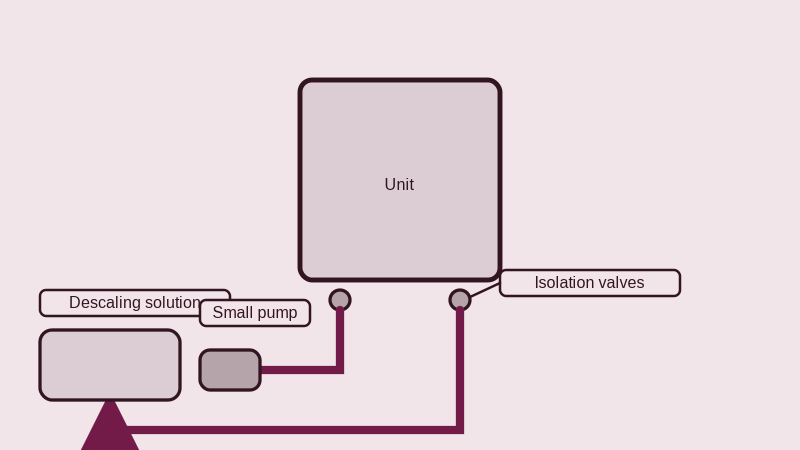
Descaling is a regular maintenance task, with more frequent need where water is hard. Your water provider's report shows hardness. We cannot state a local hardness figure, because we have none from a source. A softener lessens the problem, so hard water scale prevention and softener installation may be worth reading.
Before descaling, close the gas and shut off power. Connect the hoses to the service valves, run the solution, flush with clean water and then restore normal operation. If you are unsure of the steps, hire a plumber, since a wrong valve position can leave the unit running dry.
What can I check safely myself?
You can check the gas valve position, the breaker, the display, the inlet filter screen, taps and faucet aerators for blockage, and whether the vent terminal outside is free of leaves or a nest. Do not remove the front cover, adjust the gas pressure, or work on the burner. These steps cost nothing and sometimes fix the problem.
The inlet filter is a small screen at the cold-water inlet. Close the cold valve, carefully unscrew the filter cap with a bucket ready, then rinse the screen and put it back. Also check that your faucets are not clogged with scale, since a clogged aerator reduces flow below the level that fires the burner.
If you smell gas, do not touch any switches. Get out of the building, then reach SoCalGas on 1-800-427-2200 once you are outdoors, or 911 for any danger to people. Gas piping and burner work require a contractor.
When should a plumber be called out?
Arrange a visit if a code returns after a reset, the unit shows ignition or flame errors, you see leaks or soot, the vent is damaged, or you smell gas. Book one too if an old unit keeps failing. A plumber can test gas pressure, clean the burner, replace sensors and confirm combustion.
Larger jobs belong with a contractor, and the permit rules for water heaters apply when a unit is replaced. In Thousand Oaks the office is City of Thousand Oaks Building and Safety, and in unincorporated areas such as Lake Sherwood or Hidden Valley it is the Ventura County Resource Management Agency. Repairs normally need no permit but a replacement does, so ask.
A tankless unit that replaced an old tank often reuses the original location, and the venting from that switch can be a source of faults, so describe where the unit sits when you ask for help.
Should I repair or replace the Rinnai?
Repair it when the unit is not old and one part is at fault, such as the sensor, igniter, fan or filter. Replacement makes sense when a crack has formed in the heat exchanger, the unit has failed repeatedly, or the repair bill comes close to the price of a new unit. Ask the plumber for both numbers in writing so you can decide with facts.
A unit that has not been flushed in years and shows overheating codes may recover with descaling. A unit that leaks inside, however, has a damaged exchanger. For an idea of how replacement is priced, see tankless installation cost, and for new work with this brand Rinnai installation. Our tank vs tankless page helps if you wonder about a change of type.
Common questions
How long does a Rinnai repair usually take?
Easy repairs like a filter clean, sensor swap or descale typically need one to two hours. Parts that must be ordered push the job to a second visit. At the first visit the plumber should explain what they found, what they need and when they can return. Get the findings in writing.
Does a Rinnai need an annual service?
Many makers recommend a yearly inspection and flush, especially in hard water. A service covers the filter, descaling, the vent, the combustion check and a look at connections. Leaving it out is a frequent cause of errors in older units. Check your manual for the recommended interval and whether warranty terms depend on it.
Can I replace a Rinnai part myself?
Replacing a filter is fine. Anything involving the gas valve, burner, fan, heat exchanger or vent should go to a plumber, since gas work and combustion safety are regulated. A wrong repair can create a gas leak or release carbon monoxide, so do not take chances. Fit a carbon monoxide alarm close to the unit as a sensible precaution.
Why does my Rinnai turn on and off, giving hot then cold water?
Often the flow is too low, so the unit cycles, or it senses temperature swings as demand changes. A clogged filter, scaled exchanger, partly closed valve or a recirculation setup can cause it. Clean the filter, open valves fully and test again. If cycling continues, a plumber can check sensors and flow.
How do I request repair?
Use the price request form and include the model, the code, a photo of the unit and your area. We arrange for a nearby plumber to visit and quote, and staff go through requests on weekdays from 9am to 5pm. Browse the rest of Conejo Plumbing Pros while you wait.