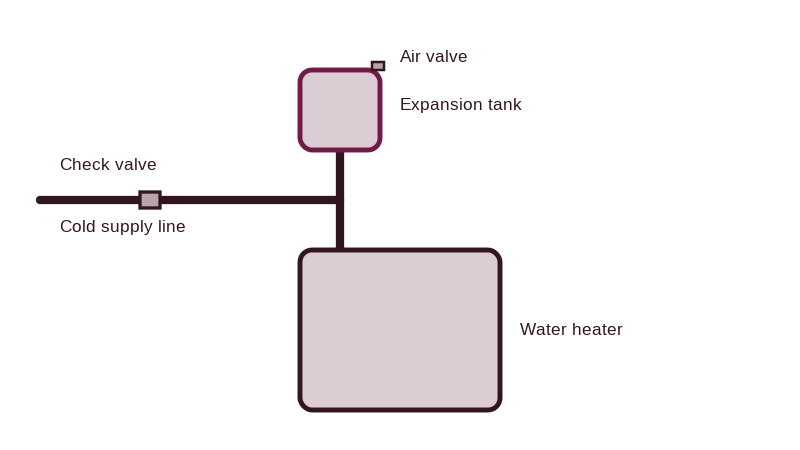
A water heater expansion tank is a small pressure vessel on the cold supply line, with a rubber diaphragm inside that gives heated water somewhere to expand. When it fails, pressure spikes every time the heater runs. Replacing one is a short plumbing job. It sits above the heater, so start with our water heater repair overview if you are unsure what is wrong.
Water grows slightly in volume as it heats. With an open system, the surplus flows back toward the street main. In a closed system, a check valve or pressure regulator blocks that route. The extra water is stuck, and pressure climbs, unless the tank absorbs it.
What does a water heater expansion tank do?
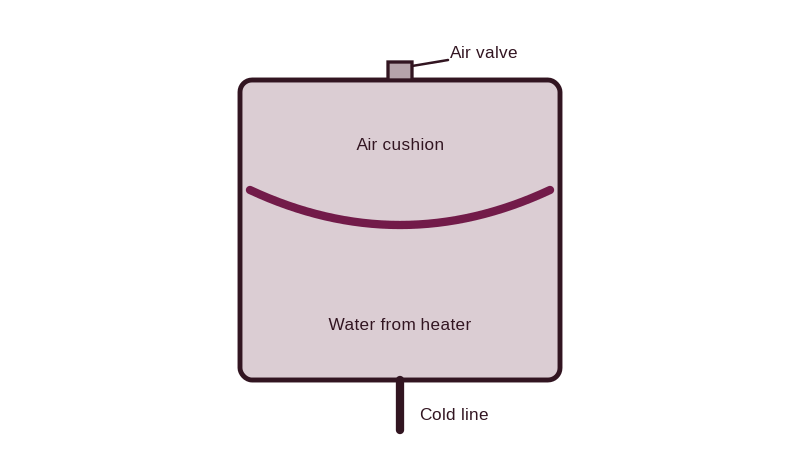
It gives the extra volume of heated water a place to go. A rubber diaphragm inside divides the water from an air cushion. As water heats and swells, it flows into the tank and squeezes the air; when the heater cools, the air sends the water back. Without one, pressure rises with every heating cycle.
A regulator or check valve on the incoming line is the reason many homes need one. Code rules about when one is required vary, so we say "often needed", not "always". A plumber looks at your supply line and tells you whether yours is a closed system. The other half of that arrangement is described on our water pressure regulator page.
How can you tell the expansion tank has failed?
Signs include a dripping or discharging temperature and pressure relief valve, pressure that spikes as the heater fires, banging pipes, leaks at fittings, and a tank that sounds waterlogged if you rap on it. A good tank sounds hollow at the top and heavier at the bottom. Water from the air valve means the diaphragm is torn.
Try a simple test with the tank cool and the water supply shut off and drained from the line. Press the air valve on the tank, as you would a tire valve. If water spurts out, the diaphragm has failed. If air comes out, check that the pressure matches the home's water pressure, which a plumber sets with a gauge and a pump. Cap it again afterward.
Check the pressure at an outside faucet with a cheap gauge. A reading that climbs when the heater runs points to expansion trouble. A weeping relief valve discharge pipe is the visible sign; see relief valve replacement to separate a worn valve from a pressure problem.
When should the plumber replace it along with the heater?
Replace the expansion tank with the heater if the old tank is waterlogged, undersized or of similar age to the old heater, or if the new heater is bigger. Many plumbers fit a new one with every replacement, because the part costs little next to the risk of overpressure.
Tanks usually last about as long as the heater, but bottom rust or a failed diaphragm can bring failure sooner. Heater scale matters here too: the USGS notes that hard water leaves calcium carbonate scale when heated, and that scale shortens how long equipment lasts; if scale worries you at your address, check the supplier's hardness report. For ways to protect the tank, see our guide to anode rod replacement.
Can you replace the expansion tank yourself?
Some homeowners do, with a shutoff, a pressure gauge and an air pump, but you must drain the line, cut or unthread the old connection, support the new tank and set its air charge to match the house pressure. A mistake can leak or leave pressure unchecked, and some local rules treat water heater work as permitted. Hiring a plumber is safer.
A tank installed hanging off a copper line needs support, since the full weight strains the joint. Setting the air precharge to match static pressure before installation is the step most people miss. If the heater is gas, the work stays away from the gas piping, but anything that moves the heater needs a contractor. See our replacement cost page if the heater itself is old.
What is involved in replacement, and is a permit needed?
Work begins with the water shut off and the line drained. The plumber takes out the old tank, sets the air pressure on the new one, mounts it with a support and checks for leaks. The job is short. A standalone swap might or might not need a permit depending on the office, so ask. A full heater replacement generally does.
For most of Thousand Oaks the office is City of Thousand Oaks Building and Safety; for unincorporated areas such as Oak Park and Lake Sherwood it is the Ventura County Resource Management Agency. We have not confirmed fees or counter hours for the city. Find out from the plumber who handles the permit and whether an inspection follows.
Common questions
How long does an expansion tank swap take?
Alone, a replacement is typically a brief visit, often about an hour of work after the water has been shut off and the line emptied. Calendar time depends on when a plumber can come. When the heater is being replaced too, the tank swap adds little to the job.
What should I ask before booking?
Ask whether your home truly needs one, whether the quote includes setting the air charge and a support bracket, and which permit applies. Check if the plumber will test house water pressure too. Have the price written down, and ask how cracked old fittings would be handled.
Does a dripping relief valve always point to the expansion tank?
No. The cause can be a worn relief valve, high street pressure, a failed regulator or a failed tank. A plumber checks pressure with a gauge and the tank at its air valve, then decides which part to replace. Never plug the discharge pipe.
Which expansion tank size suits my home?
Both the heater's capacity and the house pressure decide the size. A plumber picks a tank with enough volume and sets its air charge to match your pressure. The label on the tank lists its capacity. A wrong size can leave the relief valve dripping.
Is an expansion tank needed with a tankless heater?
Tankless units hold little water and often go without one, though a closed system with a recirculation setup may call for one. Read the maker's manual and consult the plumber, since requirements differ by model and plumbing. The logic is simple: an expansion tank takes up the surplus volume of heated water, and a unit that heats on demand stores very little.