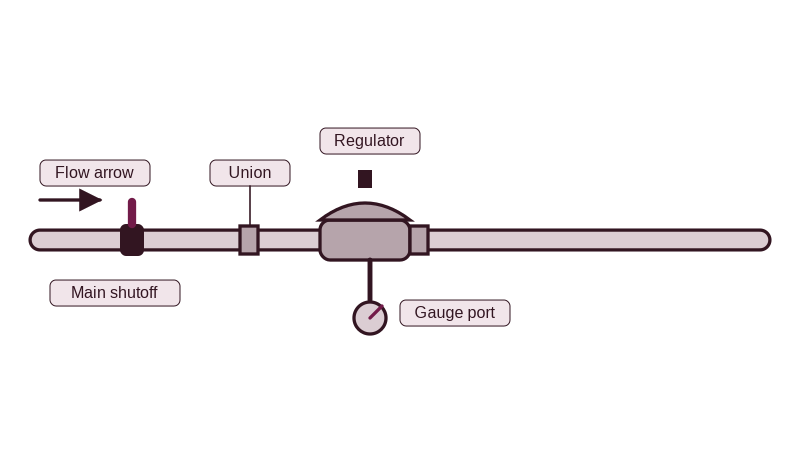
Sitting on the main line in the shape of a bell, the water pressure regulator lowers street pressure to something the house plumbing can handle. Wear eventually takes its toll. Banging pipes, leaking fixtures, a hissing noise or weak flow can all follow. A plumber can finish a swap quickly, and the new valve shields every faucet, hose and appliance in the house. The wider picture is in our low water pressure guide, and a visit can be requested through the quote form.
What are the signs the regulator has failed?
Look for pipes that bang when taps close, faucets or toilets that start leaking without cause, a dishwasher or washing machine that dies early, a gauge showing far more than normal, or weaker flow. Any of these can implicate the regulator, and a gauge fitted to a hose bib settles it quickly.
Check the signs:
- High pressure: a hiss or bang, dripping fixtures, or a weeping relief valve at the water heater.
- Low pressure: weak flow at every fixture, even after cleaning aerators.
- Creeping pressure: a gauge that climbs overnight when nothing is running, a sign the regulator is not holding.
- Age: many regulators wear out after years of service, and the diaphragm hardens.
A gauge costs little. Screw it to an outside hose bib, close all taps and write down the number. Repeat the reading at night and again early in the morning. A rising reading indicates trouble. If the house has banging pipes too, see water hammer sound.
How do I locate and identify the regulator?
Follow the main water line to where the supply enters the house. The regulator is usually just downstream of the main shutoff, in the garage, a basement-like utility area, a front hose bib box or an underground meter box. Expect a brass bell or rounded bulb topped by an adjusting screw. Not every house has one.
When none turns up, a plumber can determine whether the house has no regulator or has one outside in a box near the meter. For locations, read finding the regulator, and for a visual guide, what a regulator looks like.
What happens during a regulator replacement?
Work starts with the plumber shutting the main and releasing pressure, after which the old regulator is unscrewed or cut out. Its replacement, matched for size and type, is fitted with unions or compression fittings. The plumber then sets pressure on a gauge and checks the joints for leaks. Visits are often short, and water is only off for a portion of them.
Steps, as a plumber carries them out:
- Shut the main, then drain the line through an open tap.
- Take the old regulator off at its unions, or cut it out if it is soldered in.
- Fit the new regulator in the same direction of flow, which is marked by an arrow on the body.
- Reconnect, usually with unions that make a future swap simple.
- Open the main slowly, bleed the air from taps, and read the gauge.
- Adjust the setting and test with fixtures running.
- Inspect the relief valve and expansion tank on the water heater, in case pressure had been high.
The plumber should state the final setting and record it on the quote or invoice.
Which size and type of regulator fits?
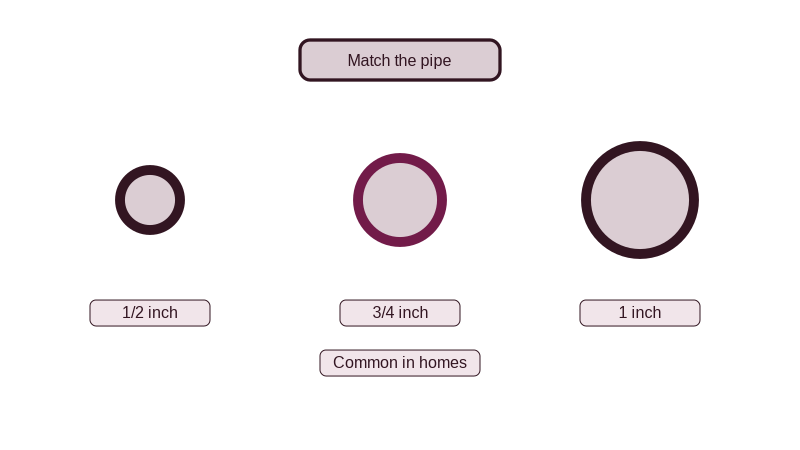
Match the regulator's connection size to your main line, commonly three-quarter inch or one inch, then pick a type with enough flow capacity for the house. An undersized regulator chokes flow, while an oversized one is less accurate. Bring the old unit's label to the plumber, or photograph the pipe and the model number.
Our pages on one inch regulators, three-quarter inch regulators, half inch regulators and the best regulators for a home explain each. Look for a model with a gauge port, a union connection and a lead-free body suitable for drinking water, and ask whether the brand supplies repair kits.
Why do hillside homes often need one?
Pressure at a house depends on the supply system and on elevation. A home low on a slope may see higher static pressure than one at the top, so hilly neighborhoods can have wide differences from street to street. A regulator evens out the swings. Measure your own pressure rather than assuming, and do not rely on a neighbor's number.
Thousand Oaks and Newbury Park have many hillside homes, and an original regulator in an older house may be past its working life. Newer homes may have a regulator from the start. Estate lots on wells around Hidden Valley have a pressure tank and a pressure switch instead; that is a different system, and the plumber needs to examine it separately. Water suppliers differ by area, so check which provider bills you.
Does replacing the regulator need a permit?
Some jurisdictions treat a like-for-like regulator swap as maintenance, and others want a permit for any work on the water service. Rules differ. Ask City of Thousand Oaks Building and Safety for city addresses, or the Ventura County Resource Management Agency for unincorporated parts of the Conejo Valley, before the work starts.
A regulator located on the water provider's side of the meter is not yours to replace; ask the provider. California generally requires a contractor license once a job reaches $1,000 or more. When you hire out, ask for the license number and look it up with the state board.
Can I replace it myself?
A handy owner can, provided the regulator has unions, the main shutoff works and the pipe is copper or similar in good condition. You need a gauge, wrenches and the right replacement. Leave it to a plumber if the main shutoff refuses to close, the pipe is aging galvanized steel, or the regulator is soldered in. A bad swap can flood the garage.
Before you start, test the main shutoff. A stiff or leaking valve is the reason many owners give up midway. Use thread sealant correctly, and set the pressure only after air is out of the lines. Afterward, check the water heater's relief valve. Our water heater page covers that part.
Common questions
How long does a regulator typically last?
Many last around a decade or more, though the range is wide, and hard water, high pressure and debris shorten it. A failing regulator often gives warning signs such as noise, slow creep or fixtures leaking. A figure for your house is not something we can offer, but a pressure gauge reading shows its current state.
Which pressure setting is right?
Ask the plumber, who will choose a setting suited to the house and its fixtures and state it in writing. Check the maker's label for the range the regulator allows. Too low causes weak showers and too high wears fixtures. A gauge left installed on a hose bib lets you recheck every few months.
Will a new regulator fix banging pipes?
Often yes, when the cause is high pressure. If the noise persists, the cause may be loose pipes or exhausted air chambers, and arrestors help. A plumber can test each possibility. See our water hammer page for the steps. Combine the checks into a single visit to save time.
Do I also need an expansion tank?
Often, since a regulator can turn the water system into a closed one, leaving heated water nowhere to expand. The plumber can check the pressure while the heater is on. We cannot call a tank mandatory, but one is frequently necessary. Water dripping from the heater's relief valve is a clue.
How can I request a quote?
Use the price request page and mention any gauge reading you have, the noise or flow problem and your neighborhood. A nearby plumber comes out and writes up a quote. Staff go through requests on weekdays from 9am to 5pm. Browse Conejo Plumbing Pros for related pages while you wait.