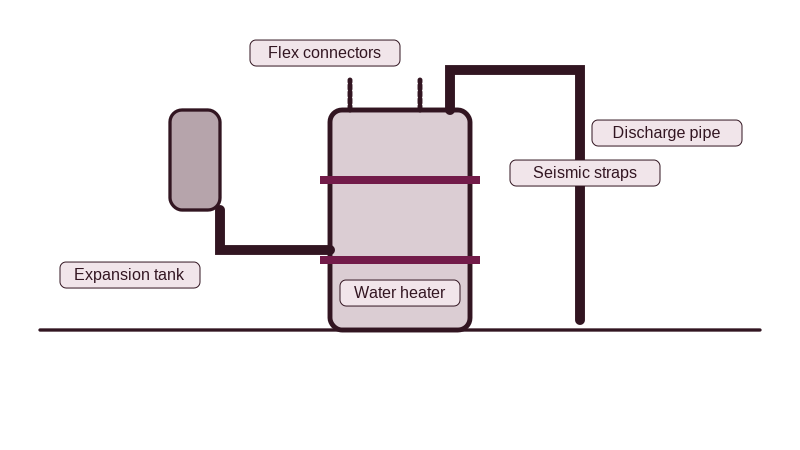
A new 50 gallon water heater adds up to the tank, the labor and the extras that California codes and your garage layout call for. No sourced dollar figures are available to us, so none are printed. A written quote after a visit is the only honest number. This page belongs to our water heater service section, and the quote form starts the process.
What does a 50 gallon heater replacement include?
A full job covers draining and hauling out the old tank, placing the new 50 gallon unit, hooking up water, gas or electrical supply, venting on gas models, a relief valve with discharge pipe, earthquake bracing, a permit and a test. Some quotes add new shutoff valves, flex connectors, an expansion tank and haul-away. Always ask what is left out.
Hold this checklist against any bid:
- Taking away and disposing of the old heater
- The new tank, named by brand and model
- New flexible water connectors and a shutoff valve at the inlet
- Gas flex line and shutoff, or electrical whip and breaker check
- A new relief valve and a discharge pipe run to a safe spot
- Seismic strapping
- An expansion tank, if the system calls for one
- The permit and inspection
- Cleanup and testing
A bidder who omits the permit or the strapping is not offering a bargain, only a deferred cost.
Why does the cost differ from house to house?
The tank itself changes little between houses. The difference is access, fuel, venting and code upgrades. A heater in an open garage with good gas and venting is simple. One in a tight closet, an attic or a second floor needs more work. A change of fuel or location multiplies it.
Several factors show up again and again:
| Factor | Why it moves the quote |
|---|---|
| Gas or electric | Gas needs venting and gas connections, electric needs the right circuit |
| Efficiency level | High-efficiency and condensing models cost more and vent differently |
| Location | Garage, closet, attic or outdoors changes access and venting |
| Old vent condition | A corroded or undersized flue has to be replaced |
| Code items | Bracing, expansion tank, relief valve discharge, platform |
| Unit warranty | Longer warranties cost more up front |
A heater in a garage with a flue to the roof is one common layout, while a heater in a closet or utility room built for it is another. Which you have changes the venting and access work, so photograph the heater and its surroundings for the plumber.
Is a gas or an electric 50 gallon heater cheaper to replace?
Keeping the same fuel is almost always the cheapest route, because supply and venting are already in place. Moving from gas to electric needs a dedicated high-amp circuit, and moving from electric to gas requires a gas line plus a vent. Running costs differ too, so the lowest install price is not the lowest lifetime cost.
SoCalGas supplies gas wherever your street has service. Hooking up gas appliances is regulated work for a contractor. If you smell gas, go outside first, then reach SoCalGas on 1-800-427-2200, and use 911 if someone is in danger. For homes on larger lots, such as some around Lake Sherwood and Hidden Valley, confirm which fuel is available before comparing, since not every property has the same options.
For electric replacements, ask the plumber to check that the existing circuit and wire size suit the new unit, and that the panel has capacity. An electrician may have to join the job.
What code items add to the cost in California?
Expect lines for earthquake bracing, a permit, a relief valve with discharge pipe, and sometimes an expansion tank, a drip pan, or a garage platform. These are not upsells. They belong to a compliant install. Have the plumber explain which ones apply to your house and why, and ask for them on the quote.
Some detail on each:
- Bracing. In California, water heaters are expected to be strapped down against earthquake movement. The plumber installs the straps in the positions the code and the maker specify.
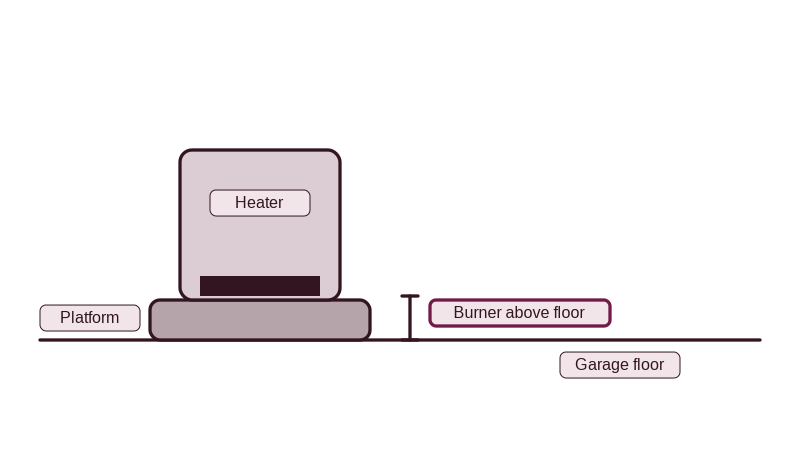
- Garage placement. Gas heaters in garages commonly need to be raised so the burner sits above floor level, to lower the risk from flammable vapors. Ask the plumber what applies.
- Expansion tank. Frequently needed where the system includes a regulator or a check valve, because heated water then has nowhere to expand. Frequently needed, not always required.
- Relief valve and drain line. The pipe must run to a safe place, never capped.
- Permit. Replacements usually need one. The office for city addresses is City of Thousand Oaks Building and Safety. For unincorporated areas such as Lake Sherwood and Hidden Valley, ask the Ventura County Resource Management Agency.
Ask who pulls the permit and if an inspection has been scheduled. Our guide to the lifespan of a water heater may help you decide whether replacement is due.
Should you repair instead of replace?
Repair when only a small part has failed, the tank is dry and the unit is young. Replace when the tank leaks, shows rust, or has failed repeatedly. Weigh the repair cost against a share of a new unit, and factor in age. A heater close to ten years old that needs major work is usually better replaced.
Our pages on element replacement, thermocouple replacement and relief valve replacement cover the common repairs, and the general replacement cost page takes a wider view across sizes.
How can you compare bids on a 50 gallon heater?
Have each bidder price the same tank size, fuel and efficiency level, and itemize every line. Compare totals only after matching the lists. Study the warranty terms for tank, parts and labor, since they differ. Look the contractor up on the California state board's website to verify the license, and ask who will do the work.
Be wary of a very low figure that omits the permit, strapping or haul-away. Be wary too of a bidder who will not name the model. Two bids that look alike in summary can differ greatly once all lines are counted, and nearly always the gap is scope. If a quote has an allowance, ask how it is settled.
Common questions
Is 50 gallons the right size for my household?
Fifty gallons suits many family-sized households. More useful than the gallon count is the first-hour rating on the label, which tells you how much hot water the unit can deliver during its first hour. Large households, big soaking tubs or heavy laundry use may need more. A plumber can size it from your habits.
How long does a 50 gallon replacement take?
Many replacements finish within half a day to a day, depending on access, venting and any new work. A gas swap with a working vent and connections goes faster. A change of fuel or location takes longer. Expect no hot water during the job, and the tank needs time to heat up afterward.
Is an expansion tank needed with a 50 gallon heater?
Often, though it depends on whether your plumbing is a closed system, for example a main fitted with a regulator or a check valve. In a closed system, heated water cannot flow back, and pressure rises. The plumber can test pressure and advise. Often needed, but not something we can say is always required.
Can I buy the heater myself to save money?
Sometimes, but the plumber may offer no labor warranty on a unit you supplied, and the wrong model can cause delays. A unit from a general retailer may differ from contractor grade. Ask first, and get the labor warranty terms in writing before buying.
How do I get a price for my house?
Submit details on the price request page: fuel, tank age, location and photos of the heater and its label. Naming your area helps, such as Newbury Park or Oak Park. The form is read weekdays, 9am to 5pm. Visit Conejo Plumbing Pros for other pages.