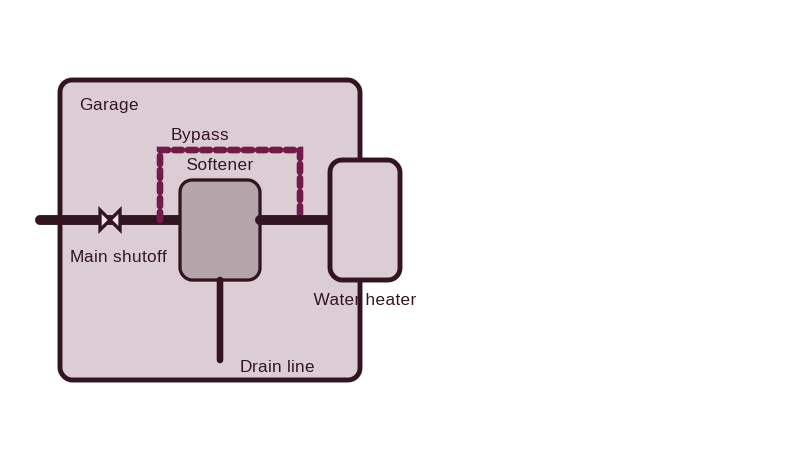
A water softener installation service places the softener on the main supply line so each tap delivers softened water, hooks up a drain for the regeneration discharge, arranges power and a bypass, and tests the result. The plumber handles the pipework. You can send a request from the home page; we arrange the visit, and the softener maker's manual supplies the details for your model.
Plumbers get asked two things: where does it go, and where does the wastewater go? Those two answers shape the whole job.
What does a softener installation service include?
The plumber closes the main, cuts into the supply line, adds a bypass valve and joins the inlet and outlet, lays a brine drain with an air gap, plugs the unit into power, fills the brine tank with salt and programs it to your hardness. The system is then flushed and checked for leaks.
With a bypass you can isolate the unit for service. Some homes already have a loop, which shortens the job. The plumber also confirms that your water heater and fixtures sit downstream of the softener. Ask whether the quote covers the first bag of salt and a lesson on the control head, since both small things matter.
How is a whole home softener installed?
A whole home installation places the unit beyond the main shutoff and meter, upstream of the water heater and branch lines. Outdoor hose bibs are often left on hard water to save salt. The plumber needs room, a drain, a nearby outlet and level ground, so a garage or utility closet is typical.
Tell the plumber about any irrigation on the same line and whether you want outdoor taps softened. Sizing depends on your water hardness and household use. The USGS calls water very hard above 180 milligrams per liter of calcium carbonate, and your supplier's report gives your number. See how a softener installation goes step by step for the sequence.
What is the air gap on a softener for?
The air gap is a physical space separating the drain hose from the drain it empties into, so wastewater cannot siphon back into the softener or the house supply. Plumbing rules require backflow protection on drains like this. A quality install shows a clear gap, not a hose pushed deep into a standpipe.
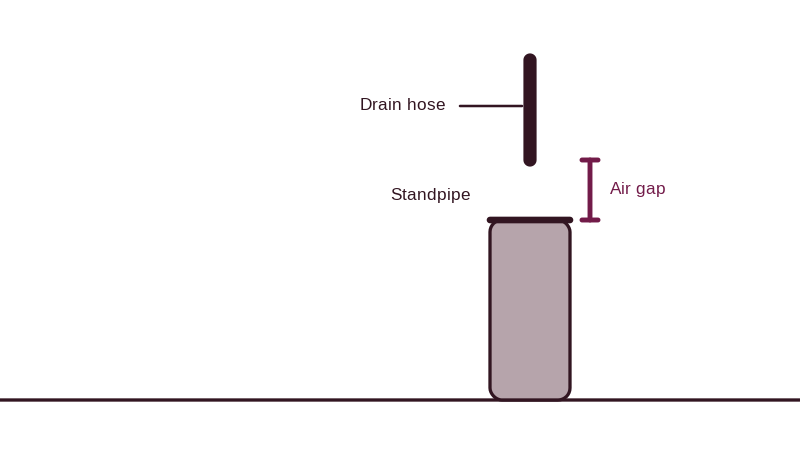
Typically the drain goes to a floor drain, a utility sink or a laundry standpipe, and the overflow line from the brine tank also needs a safe route. Ask the plumber where the drain will go and how it meets local rules. A permit may apply; for most of Thousand Oaks that is City of Thousand Oaks Building and Safety, and for unincorporated areas the Ventura County Resource Management Agency.
What changes with a well, a new home or a commercial building?
A well often brings iron, sediment or low pressure, and a softener alone may not cope, so a sediment filter or iron treatment ahead of it is common. New homes may have a pre-plumbed loop. Commercial installs use larger units and different rules. Name your property type in the request.
Many homes in Hidden Valley rely on wells, and the pump and pressure tank interact with the softener's flow rate. See the Hidden Valley plumber page for context. For a business, expect larger capacity, a three-phase or dedicated circuit and possibly a permit from the building office.
How do manuals from Whirlpool, Rheem or others fit in?
The maker's installation manual gives the plumbing diagram, the minimum and maximum pressure, the drain rules, the electrical requirements and the program steps for your model. A good plumber follows it. Keep the manual and the serial number, since they matter for warranty claims and later service.
Whirlpool, Rheem and Aquasure-type manuals differ in details, such as the way the control head programs hardness and when the unit regenerates. If you already own a unit, hand the plumber the model number and manual. If not, ask which models the plumber is comfortable servicing afterward. We do not recommend any maker.
What should you ask a plumber who will install it?
Find out whether the plumber installs units bought elsewhere, what the quote includes, who pulls any permit, how the drain and air gap will be done, how leaks will be tested and what happens if the existing pipe is in poor shape. Have the answers in writing.
Set the quote beside our page on what installation costs and the broader whole house softener cost page. Ask too how salt is delivered and who will service the unit afterward, since delivery and service are separate from the install.
Common questions
How long does a softener installation typically take?
An easy install on an accessible line is often half a day. It runs longer if the plumber builds a loop, lays a new drain or repairs old pipe. Permits can add calendar time. Ask for an estimate and find out how long the water will be off, since both depend on how accessible the pipe is.
What should I ask first when hiring?
Ask about the unit model, what the quote covers, the drain and air gap, permits, testing and whether packaging gets taken away. Request a written quote, and learn who to contact if a leak shows up later. Clear answers up front make it easier to compare bids on the same scope.
Is a DIY softener installation realistic?
Some people do it, but the job involves cutting into the main, soldering or fitting connections, a code-compliant drain and electrical work. A leak or a bad drain can cause damage. Hiring a plumber is the safer path. Mistakes tend to show up later as drips or stains, so a plumber's pressure test is worth having either way.
Does the home need to be occupied during installation?
Yes, someone should open the door and point out the water main. The water is shut off for part of the job, so plan to manage without it for a while. Mention pets and alarms to the plumber. Keep the space around the softener location clear beforehand so the work area is easy to reach.
Must the softener be bought before the visit?
Not necessarily. Some plumbers supply the unit, others install yours. Decide which you prefer before requesting quotes, and tell us on the form so the visit is arranged correctly. A supplied unit comes with one party responsible for both the product and the fit, while your own unit lets you choose the model. Either way, ask about the warranty.