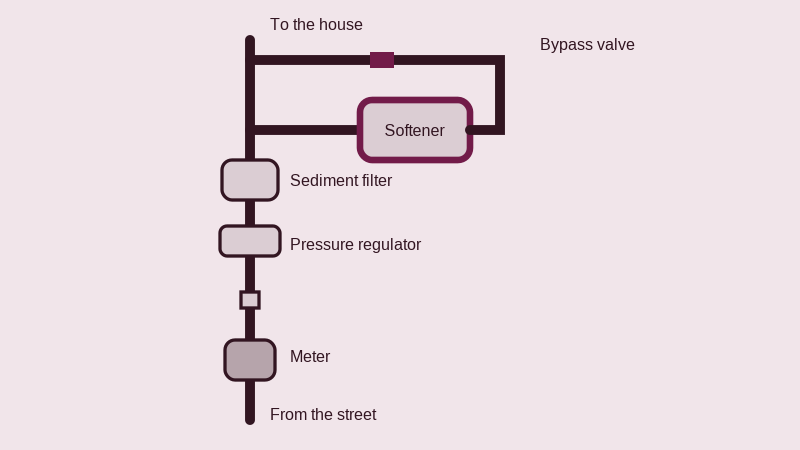
A whole-house water softener quote has three parts: the equipment, the installation labor and plumbing, and extras such as a drain connection, an electrical outlet, a bypass and, where required, a permit. We do not print a single price here, because the total depends too much on the house and the unit for one number to be fair. What we can do is show what each line covers, which lets you set two quotes side by side. The home page lists other jobs, and our guide to water softener installation covers the work itself.
What goes into the cost of a whole-house softener?
Four things: the kind and capacity of the unit, the labor to connect it to the supply pipe, the drain and electrical hookups, and any permit or extras like a bypass valve, sediment filter or pressure regulator. Larger households and harder water call for bigger units, which cost more.
The unit is usually the largest line. Salt-based ion-exchange softeners remove the minerals that cause scale, while salt-free systems condition the water instead and do not remove hardness in the same way, so you should compare what each claims to do. Labor varies with how far the unit sits from the main line, and on whether the plumber must cut into copper, PEX or galvanized pipe. Ask for the model number and the scope in writing so you can check the specifications yourself.
How should I compare quotes for installing a softener?
Have each plumber price the same unit or specification, then compare line by line: equipment, labor, drain, electrical, bypass, permit, haul-away and any warranty terms. Ask what happens if the unit fails and who services it. A lower total is only lower if the scope is the same.
Check the contractor license through the state board's website, and ask for proof of insurance. Beware of in-home sales that press you to sign the same day. Take time to read the contract. For general guidance on reading quotes, see plumber pricing in Thousand Oaks. For a quote on your own house, send the quote form, and the areas page shows where we arrange visits.
How is a whole home softener sized, and does size change the price?
Size depends on your water hardness, the number of people in the house and your daily water use. An undersized unit regenerates too often and wastes salt, while an oversized one costs more than it needs to. Have the installer show the sizing calculation, not just a model.
To find your hardness, ask your water supplier for its water quality report. Hardness is usually listed in grains per gallon or milligrams per liter. We have not stated a figure for any part of the Conejo Valley, because it differs by supplier and by year. Your supplier is the source. Household size and bathrooms also matter. A plumber may also test a water sample at your tap, since pipe materials and wells can change the result, which matters for estate properties on private wells.
What installation costs get missed in a softener quote?
Common extras are a drain line for the discharge, an electrical outlet near the unit, a bypass valve, a pressure regulator, new shutoff valves, taking out the old unit and a permit where one is required. A quote that lists only the unit and a flat labor line may leave these out.
Ask for a line-by-line price. Where the unit goes matters: a garage with a nearby drain and outlet costs less than a location that needs new lines and a drain run. Existing pipe condition matters too. If the main line is old galvanized steel, cutting into it can reveal corrosion that needs more work; see galvanized pipe replacement. A regulator guards the unit and the fixtures where pressure runs high; see regulators on the water line.
Do local rules affect water softener installation?
Possibly. Brine discharge into the sewer system leads some California communities to restrict or discourage salt-based softeners. Rules differ by city, sanitation district and water supplier, so ask yours before you buy. Permits for the plumbing may also apply, through the local building office.
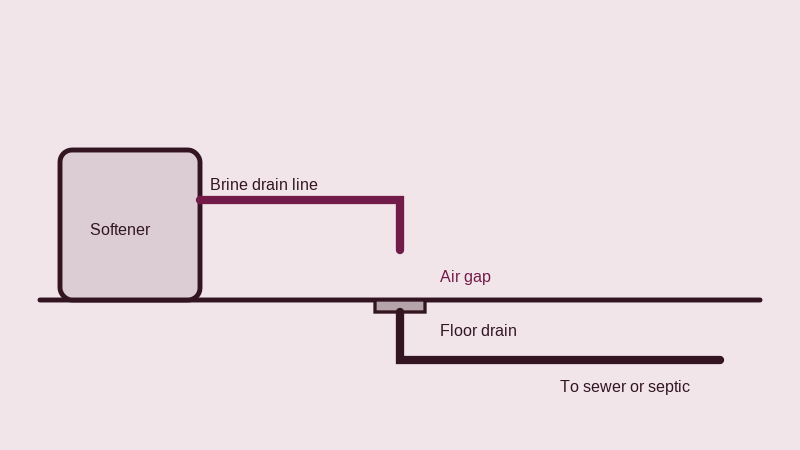
For addresses in the city, ask the City of Thousand Oaks Building and Safety, and for unincorporated areas, the Ventura County Resource Management Agency. Your water or sanitation provider can tell you about discharge rules. Do not assume a rule is missing because the retailer did not mention it. A plumber who knows the local rules should state whether the model you picked is allowed. Where a house is on a private septic system, high salt discharge may affect the system, so ask before installing.
Is a softener worth the cost?
It hinges on your hardness and on which problems you actually notice. Crusted fixtures, spotted glassware, shorter appliance life and soap that will not lather are the usual reasons. If you do not see those problems, the equipment, salt and maintenance may not repay themselves. Ask your supplier for the report first.
Weigh the ongoing costs: salt, water for regeneration, electricity, and occasional service. Compare against simpler fixes such as scale prevention for a water heater; see preventing scale in hard water and scale removal. Another point people raise is the bill; softeners and high water bills answers it. Remember that softened water may not suit every use, such as watering some plants or anyone on a sodium-restricted diet, so check with a doctor if that applies.
Common questions
How much does a whole-house softener cost to install?
It varies by unit, house and plumbing, and a reliable figure is not possible without a site visit. Ask for a written quote that itemizes equipment, labor and extras. Compare two or three quotes for the same specification before you decide. A quote that lumps everything together hides the details.
How long does installation take?
A simple install next to the main line, with a drain and outlet close by, often takes part of a day. A new drain run, a long pipe route or repairs to old pipe add time. Get an estimate from the plumber and ask if the water will be shut off.
What should I ask an installer before hiring?
Ask for the sizing calculation, model, and a line-by-line price. Ask about drain and discharge rules, permit handling and warranty. Verify the contractor license number on the state board's site before signing anything. A plumber who answers these plainly is easier to trust, and the written answers protect you if a question comes up later.
Is a DIY softener install a good idea?
Some owners do, but cutting into the main line, handling a drain and following local rules call for care. A mistake can flood a garage. If you choose to do it yourself, check permit and discharge rules first, and have a plumber review the connection.