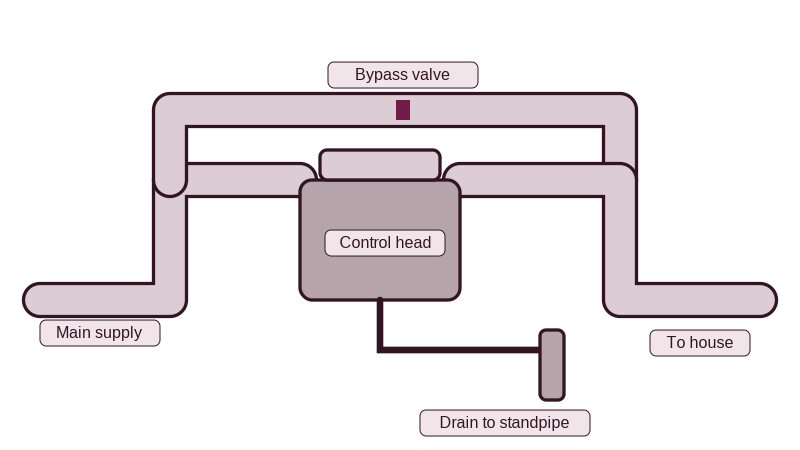
Installing a water softener means cutting into the main water line, fitting a bypass valve, running a drain hose for the regeneration cycle, connecting a brine tank, and plugging the head into power. An owner handy with soldering or push-fit fittings can manage it. Anyone unsure about cutting into the supply should hire out. To have a local plumber set it up, start at Conejo Plumbing Pros or ask through the quote form.
Is a DIY water softener install realistic?
Yes, many homeowners do, provided the house plumbing is accessible and in good shape. The work is mostly plumbing connections, not specialist trade skills. You need to shut the supply, cut the line, fit the bypass, run the drain and set the controls. The risks are leaks at joints, a wrongly sited drain, and cutting into old pipe that is brittle or corroded.
Be honest about three things before you start. First, the pipe material: copper can be cut and fitted with push-connect fittings or soldered, PEX takes crimp or clamp tools, and old galvanized steel is a warning sign that you may be opening a can of worms. Second, access: a garage wall with a clear run is easy, a cramped crawl space is not. Third, your patience for troubleshooting after the first fill, because small drips show up late.
If any answer is shaky, ask for a quote. Hiring the job out costs less than repairing a flooded garage.
What should be in place before I begin?
You need a site on the main line after the hose bibs you do not want softened, a power outlet nearby, a drain that the regeneration discharge can reach with an air gap, floor space for the tank, and tools to cut and connect your pipe type. Buy the connection kit that matches your pipe size. Read the manual of the specific model before the first cut.
A practical shopping list:
- The softener unit, with its brine tank and head controls
- A bypass valve, typically supplied with the unit
- Pipe or flexible connectors matched to your supply line size
- Fittings suited to your pipe material
- A drain hose, hose clamps and an air-gap fitting
- Thread seal tape and a pipe cutter
- Salt or other regenerant for the first fill
Plan the plumbing so outdoor taps, and ideally the kitchen drinking-water tap, stay on unsoftened water. Many homeowners prefer that arrangement, and a plumber can tee in a branch ahead of the softener for outside use.
How do the steps of a typical install go?
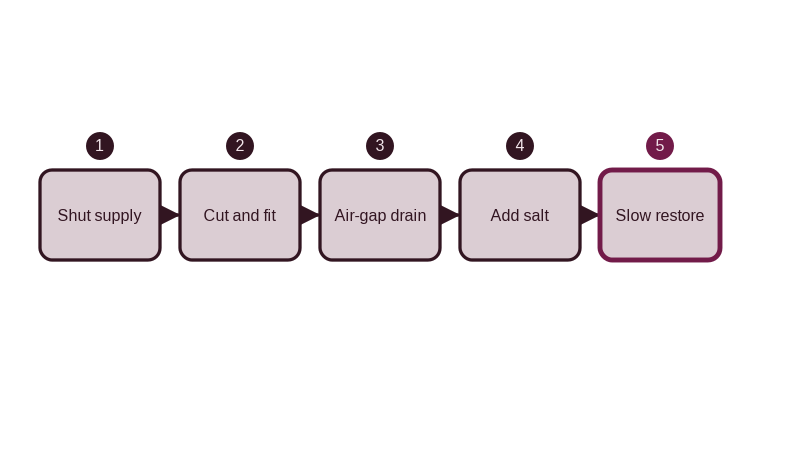
The job follows a fixed order: shut the supply and empty the lines, cut the main, connect the inlet and outlet via the bypass, attach a drain line that ends in an air gap, place the brine tank and add salt, then slowly bring the water back and program the hardness setting. Check every joint for drips over the following days.
- Close the main supply and drain the line through a tap at a low point.
- Cut the pipe where the softener will go. Leave room for the bypass.
- Connect the inlet and outlet. Mind the arrows, because reversing them is a common error.
- Run the drain hose into a standpipe or a floor drain and keep an air gap so wastewater cannot siphon back.
- Connect the overflow line from the brine tank if the model has one.
- Add salt to the brine tank, plug in the head and set the hardness and time of day.
- Open the bypass slowly, let air escape, and inspect each joint.
- Trigger a manual regeneration to check that it drains correctly.
Write down the date and the settings. When you test your water hardness later, you will know whether adjustments are needed.
When should a plumber take over from you?
Hand the work to a plumber when the main line is old galvanized pipe, the garage lacks a good drain, a pressure regulator on the supply would have to move, or local rules call for a permit. Gas or electrical changes also belong to a contractor. California requires a contractor license for work above a modest value, so check the current threshold before hiring.
Some places restrict discharge from salt-based softeners into the sewer. Rules differ by water district, so ask your provider whether yours has any. In Westlake Village and Agoura Hills, Las Virgenes Municipal Water District is likely the agency to ask, though confirm which provider bills you. In Thousand Oaks, check which provider bills you.
If your house has polybutylene or galvanized pipe, a softener install is a poor moment to disturb it. Read about replacing polybutylene pipe and replacing galvanized pipe before cutting.
How do I get rid of scale that has already built up?
Scale on fixtures softens in a mild acid such as white vinegar left in place for an hour and then wiped off. Scale inside a water heater is removed by flushing the tank. A homeowner cannot reliably clean scale from inside pipes, and heavy buildup signals a need for softening, or in worse cases replacement.
For showerheads, tie a bag of vinegar around the head for an hour. For faucet aerators, unscrew them and soak. A softener will slowly stop new scale from forming, and it can in some cases loosen old deposits over time, though results vary. The scale removal guide has more detail on each fixture.
What does hard water look like in the Conejo Valley?
Expect white crust on taps, spots on glasses and a film on shower doors where water is hard. We have no water quality report for any area here, so we cannot give a hardness number. Your water provider publishes an annual report that lists hardness. Read the report for your address, or use a home test strip.
Many older homes in Thousand Oaks and Newbury Park have copper plumbing, and scale there can show up as falling hot water flow. Newer homes in Dos Vientos and North Ranch may have PEX in the walls. Homes on private wells, such as many in Hidden Valley, need a water test before any softener choice, because well water can contain iron or other minerals that a softener alone does not fix.
Will a softener make my water bill go up?
During regeneration a softener draws a little water, so the bill can nudge up slightly, though it should not jump. A large increase points to a leak, a stuck valve, or a cycle that regenerates too often. Softeners and high water bills walks through the checks.
How do I look after it once it is in?
Check the salt level monthly and top up before it runs low. Break up crusting or bridging in the brine tank. Clean the brine tank once or twice a year if the manual says so. Check the drain line for kinks. Retest water hardness yearly and adjust the setting if the number moves.
Common questions
How much time should a softener installation take?
Most owners need an afternoon, or a full day for a first attempt. A plumber with the parts on hand often finishes in a few hours. Extra time goes on access problems, drain work and finding a clean place to cut the line. Expect the water to be off for part of the day and schedule accordingly; run a test cycle before you leave.
Does installing a softener require a permit?
It depends on the city or county and on how much work is involved. Some jurisdictions treat a softener as a minor install, while others want a permit if the plumbing changes substantially. Ask City of Thousand Oaks Building and Safety, or the Ventura County Resource Management Agency if you live in an unincorporated area, before you start.
Can I put the softener on my hot water only?
It is better on the whole supply except outdoor taps, because softening only the hot side leaves cold fixtures, the dishwasher and the washing machine inlet exposed to scale. The heater is the main place scale causes damage, and it takes cold water in, so softening the inlet to it matters most.
What salt should I use?
Use the type named in your manual, usually pellets or solar salt in the amount the brine tank calls for. Avoid very cheap rock salt, which can leave insoluble residue. If you cannot or do not want to use salt, there are potassium alternatives and salt-free conditioners, which behave differently and do not truly soften.
Is it worth having a plumber check my pipes first?
If the house is older, yes. A plumber can check the pressure, the condition of the pipes and the main shutoff, and warn you about problems before extra fittings go into old pipe. A visit can be requested through the quote form. The softener installation service page explains how that is arranged.