Fixing a leaky kitchen faucet comes down to closing the water under the sink, plugging the drain, taking the handle apart, swapping the worn part (typically a cartridge, washer or O-ring) and putting everything back together. Which part it is depends on the faucet type. If you would rather not, a plumber can handle it, and disposal repair help in Thousand Oaks lists the nearby jobs.
The EPA reports that a faucet dripping roughly once a second can waste more than 3,000 gallons per year. Even a slow drip merits stopping, and this is one of the more forgiving plumbing repairs to try yourself.
Where does the kitchen faucet leak from?
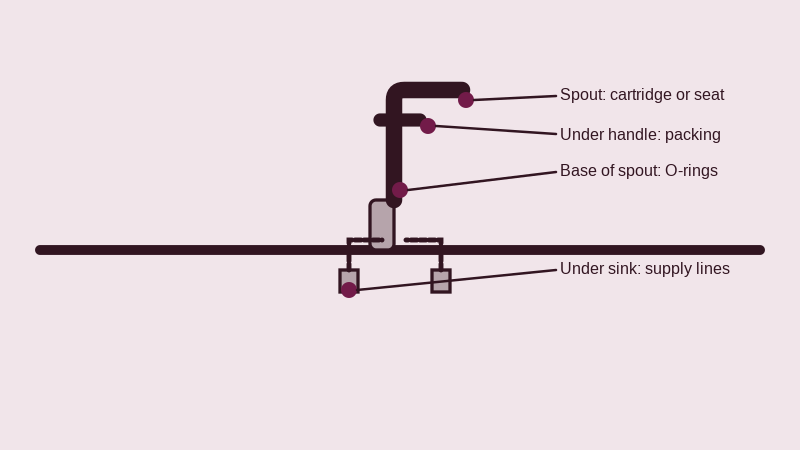
Establish where the water appears: the spout, the spout base, beneath the handle, or under the sink. A dripping spout points to a worn washer, cartridge or seat. Water at the base implicates O-rings. Water beneath the handle implicates a loose cap or packing. Water under the sink may be the supply lines.
Dry everything with a towel, then run the water and watch. Open the cabinet and press a dry paper towel against the shutoff valves and hoses, because a small leak leaves a damp mark. Water from a supply line will not be cured by faucet repair. The most useful check is the one you do first.
Which type of faucet do you have?
Single-handle faucets moving up and down and side to side use a cartridge or a ball. Two-handle faucets use compression washers or ceramic discs. A ball faucet shows a rounded cap; a cartridge faucet has a pull-out stem; a disc faucet has a tall cylinder under the handle. Find a maker name to source parts.
Take the old part with you to the hardware store so it can be matched. Photograph each step during disassembly. With no maker name, matching the cartridge by size and shape is possible but slower. Swapping out a newer faucet can cost less than repairing it; check faucet replacement pricing.
What are the repair steps?
Shut both supply valves beneath the sink, then open the faucet briefly to bleed off pressure. Block the drain with a rag. Remove the decorative cap and screw, lift off the handle, undo the retaining nut and pull the cartridge or stem out. Replace worn washers, O-rings or the whole cartridge, reassemble and reopen the supply slowly.
Smear plumber's grease on new O-rings. Lay the parts in order on a towel. A stuck cartridge responds better to a cartridge puller than to force. Check for drips after a few minutes at full flow and again on a cold-water-only test. If the drip persists, the valve seat inside the body may be pitted; a seat tool can resurface it, or a plumber can replace the faucet.
The same steps apply, with small changes, to bathroom sinks and showers. See our guide to a leaky faucet and shower faucet repair for those versions.
What should I do if water pools at the base or inside the cabinet?
Seepage around the spout base usually means worn O-rings on the swivel, replaceable once the spout is lifted off. Leaks inside the cabinet can trace back to a loose supply line nut, a cracked hose, a failed shutoff valve or a leaking drain. Tighten gently, swap a cracked hose and test the shutoff.
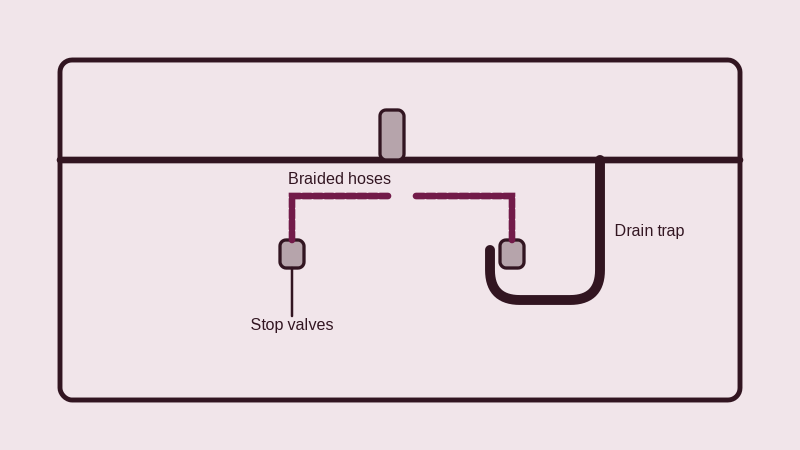
Braided supply lines last for years, but they do fail, and a burst line can flood a kitchen. If a line is bulged, rusted or old, replace it. If a shutoff valve drips when you turn it, replace the valve, and consider having a plumber do it, because forcing an old valve can break it. For more, read mending a leak in the pipe below the sink.
When does replacing the faucet make more sense?
Choose a new one if the faucet body is corroded or cracked, parts are discontinued, repairs have failed twice, or the finish has worn off. A new faucet is a sensible choice with an old one in poor shape. Match the hole count and the sink thickness to the new faucet.
Choose a faucet with a solid brass body and a ceramic cartridge for longer life. A pull-down spray head adds convenience. Consider water use as well: low-flow aerators cut water use without changing the feel much. If the new faucet needs different holes or the countertop is stone, a plumber should do the install. Read what installing a faucet costs for pricing.
When should a plumber be asked to step in?
Send a request if the shutoff valves refuse to close, parts will not come loose, the leak persists after a fresh cartridge, water sits in the cabinet from an unknown source or the faucet is set in a stone countertop. Older homes can have stiff valves that break when turned.
A plumber can replace the shutoff valves, supply lines and the faucet in one visit. If you also have a disposal that leaks, tell them so the visit covers both. Our home page has the form; mention the faucet type, what you have tried and whether the cabinet is wet.
Common questions
How much time does fixing a leaky kitchen faucet need?
A cartridge or washer swap usually takes 30 to 60 minutes when you already have the part. Seized parts or corroded fittings run longer. A plumber can install a new faucet in a short visit. Budget extra time for buying parts if the model is unknown.
Must the main water be shut off?
No. The two valves under the cabinet are enough. Close them, open the faucet to relieve pressure and confirm the flow stops. Should those valves fail to close or leak, shut off the main and replace them. That keeps the rest of the house running while you work, and a plumber can handle a stuck valve if you would rather not force it.
Why does it still drip after fitting a new washer?
A worn or pitted valve seat can stop the new washer sealing. The cartridge could be the wrong size, or the O-ring may sit crooked. Resurface or replace the seat, or replace the faucet. A seat that is rough keeps the washer from closing fully, so water slips past even when everything else is new. Matching the parts to the faucet type helps.
Can a leaky faucet raise my water bill?
Yes. The EPA figure for a faucet that drips about once per second is more than 3,000 gallons of lost water a year. The repair costs little next to the water lost. Check other fixtures too, as leaks often appear in clusters. A steady drip also stains the sink and can wear the finish over time, so stopping it early saves both water and the fixture.
Is a leaking faucet an emergency?
Not normally. Closing the shutoff valves beneath the sink stops it, and the fix can wait for a regular visit. A leak under the sink that keeps getting worse, or water that reaches the floor, needs faster action. A simple drip can wait for a convenient time, but a growing puddle or a wet cabinet should be dealt with the same day.