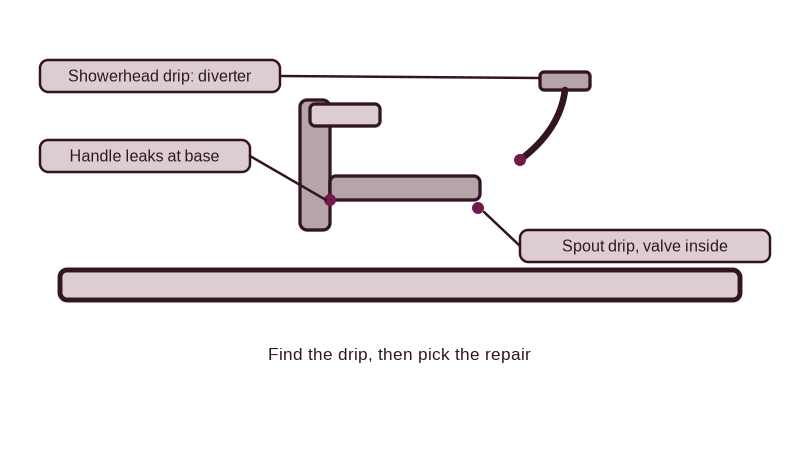
Note where the water shows up. A spout that drips with every tap off has a worn washer, seat or cartridge inside the valve. A drip at the handle base signals a worn seal. If the showerhead gives off water while the tub spout is running, the diverter is failing. Each is a small repair. For other fixture jobs, see plumbing fixtures and repairs.
Here, tub leaks are sorted by where the water appears, followed by the repair steps. Original tub valves are often still in place in Thousand Oaks and Newbury Park homes from the 1960s to the 1990s, which makes worn parts likely. Our home page shows the other jobs we arrange.
Which part of the tub faucet is leaking?
Wipe the faucet dry and observe it for a minute. If the spout drips, suspect the valve cartridge or washer. Moisture around the handle implicates the stem seal or O ring. Beads of water on the wall behind the tile mean a leak from a pipe or valve body in the wall, which needs a plumber. A showerhead drip while the tub runs points to the diverter.
The EPA notes that a faucet dripping about once a second can lose over 3,000 gallons a year, so deal with a drip soon. It adds that a showerhead leaking about ten drips a minute can waste over 500 gallons annually.
Quick sort:
| What you see | Likely cause |
|---|---|
| Drip from the spout, all handles off | Tired cartridge, washer or seat |
| Moisture where the handle meets the wall | Aged O ring or packing |
| Showerhead flows while tub runs | Failing diverter |
| Stain or dampness on the wall outside the tub | Valve body or pipe leak in the wall |
How can the showerhead be stopped dripping while the tub runs?
Water still leaving the showerhead while the tub spout runs means a worn diverter. A diverter on the spout lifts a pin or knob to send water up; if it will not seal, replace the spout. A diverter in the wall valve means a new cartridge or valve section. The spout is the easier fix.
Check the spout first. Look for a small set screw underneath or a threaded connection at the wall. Unscrew the spout and match the type: slip fit or threaded, with or without a diverter. Fit the new spout, run a bead of silicone along the wall gap, and test.
When the diverter sits in the handle or wall valve, you need a plumber or a careful cartridge swap. Another common cause of a showerhead drip is a worn cartridge letting water bypass. Our page on repairing a leaky shower faucet addresses that.
When does replacing the faucet beat repairing it?
Choose a new valve when the body is corroded, parts are discontinued, the handle wobbles on a stripped stem, or the leak is hidden within the wall. A repair that costs a large share of a new valve's price, or one that fails twice, also tips the balance toward replacement. Replacing a valve in the wall is plumber work.
Replacing a tub valve often means opening the wall from behind, via a closet or hallway, or cutting the tile. That is why some plumbers favor a cartridge swap when possible. Ask for both prices. On cost, read the price of faucet replacement.
Hard water scale locks stems and cartridges. If your cartridge comes out in crumbling pieces, mention it to the plumber and consider a water test.
How do you repair a two-handle tub faucet?
Shut off the supply, pry off the decorative cap, remove the handle screw, take the handle away, and use a wrench to loosen the stem. Replace both the rubber washer and the O ring, then check the brass seat for scoring. Reassemble, bring the water back gradually and test. A scored seat can be dressed with a seat tool or replaced.
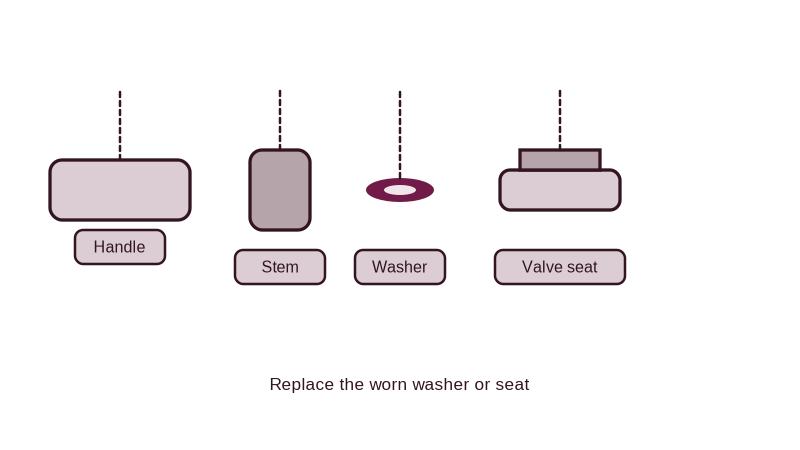
Two handle tub faucets are usually the compression type. The washer presses against the seat as you turn the handle. Hot and cold have their own stems, so fix the side that drips: if the spout drips with hot only, work on the hot stem.
Carry the old stem or washer to a hardware shop to match the size, as several exist. Avoid overtightening the stem on the way back in. If no local stop can isolate the tub, close the whole-house main.
For more on this type, our guide to repairing a two-handle leaky faucet covers a sink version, and the steps carry over.
When is it time to request a plumber?
Send a request if the leak is in the wall, the shut off valve refuses to close, the stem is stuck, the tile around the tub is wet or stained, or the drip persists after you swapped the parts. A leak behind a wall can rot framing or reach a ceiling below. If water gets into a light fixture, switch off that circuit.
Use the quote form to tell us the handle type, where the drip appears and which parts you have already replaced. We pass your request to a local plumbing business, and the businesses that accept pay us a fee. We read requests Monday to Friday, 9am to 5pm, and promise no response time. Should water flow and refuse to stop, close the house main valve.
How do you repair a single-handle tub faucet?
Single-handle valves contain a cartridge or a ball. After shutting the water, detach the handle and trim plate, then free the clip or nut that holds the cartridge and pull the cartridge out. Take it to a shop for a match and install the new one oriented as the old one was. Replace the O rings, coat them lightly with grease and reassemble.
The handle position matters: the cartridge goes in with the notch or flat facing the same way as the old one, or hot and cold will reverse. Some cartridges need a special puller. If it will not come out, do not force it. Mineral buildup can lock it in place, and a plumber has the tools.
Our page on fixing a single handle leaky faucet has more detail for cartridge types. Newer valves need a particular brand's cartridge, so look for the brand name on the trim plate or the valve body.
Common questions
How much time does a leaking tub faucet repair need?
Replacing a cartridge or washer often takes under an hour when the right part is on hand. Allow longer for an old, corroded or cramped valve. A plumber who must open the wall to replace a valve takes longer still. Ask for a time estimate together with the quote.
Which questions are worth asking a plumber about a tub faucet?
Check if the quoted price is for a repair or a full replacement, whether the cartridge is included, how the plumber will test for leaks and what happens if the wall must be opened. Ask who patches tile or drywall, and get every answer written down.
Must an adult be home during a faucet repair?
Yes. An adult should be home to point out the tub, give access to the shut off valves and approve changes. Clear the bathroom of towels and clutter, and cover the tub if you can. You need not stay in the room the whole time.
What makes a tub faucet drip on the hot side only?
A worn hot-side cartridge, washer or seat is the likely cause, or hot water pressure may be high enough to force water past a weak seal. Replace the hot stem or cartridge. If pressure is the cause, ask the plumber to check it, and see our page on shower pressure regulators.