You remove hard water scale with a mild acid. White vinegar or citric acid dissolves the calcium carbonate deposits on faucets, showerheads and kettles, and a plumber can flush either a tank heater or a tankless one. Keeping it away takes treating the water itself. For the plumbing side, our home page has the request form, and the rest of this page covers what you can do at home.
Scale is not dirt. It is mineral left when hard water evaporates or heats, and it builds in layers. The longer it sits, the harder it is to remove.
What removes hard water scale fastest?
White vinegar, citric acid solutions and commercial descalers dissolve scale. Soak fixtures in vinegar for an hour, or drape a vinegar-soaked cloth over a faucet, then scrub gently with a soft brush and rinse. Thick layers need repeated soaks. Keep acid off natural stone, delicate brass finishes and anything the manufacturer says to avoid.
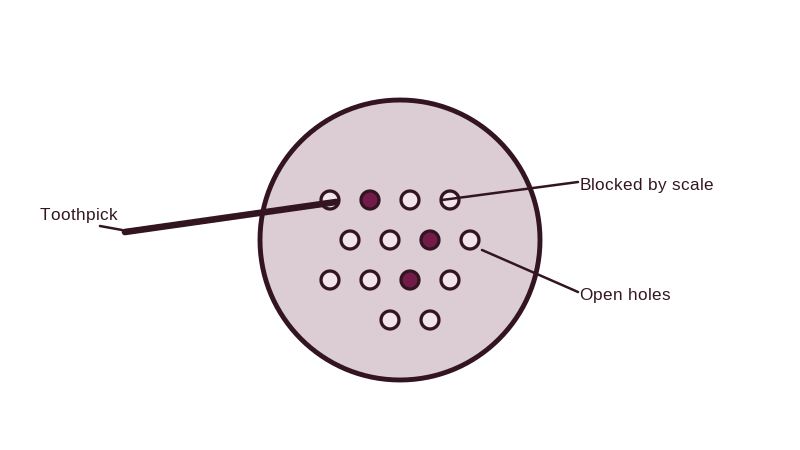
Do not mix acids with bleach or other cleaners, since that can release harmful gases. Ventilate the room and wear gloves. For a showerhead, unscrew it and let it soak in a bag filled with vinegar, then poke the holes clear with a toothpick. For a kettle, simmer water with citric acid, then rinse well. Try a hidden patch first on any delicate finish.
Why does scale form, and how hard is hard?
Dissolved calcium and magnesium in water turn into scale as the water dries or heats, leaving calcium carbonate behind. The US Geological Survey classes water up to 60 milligrams per liter as soft, 61 to 120 as moderately hard, 121 to 180 as hard and above 180 as very hard. Heat speeds the build-up.
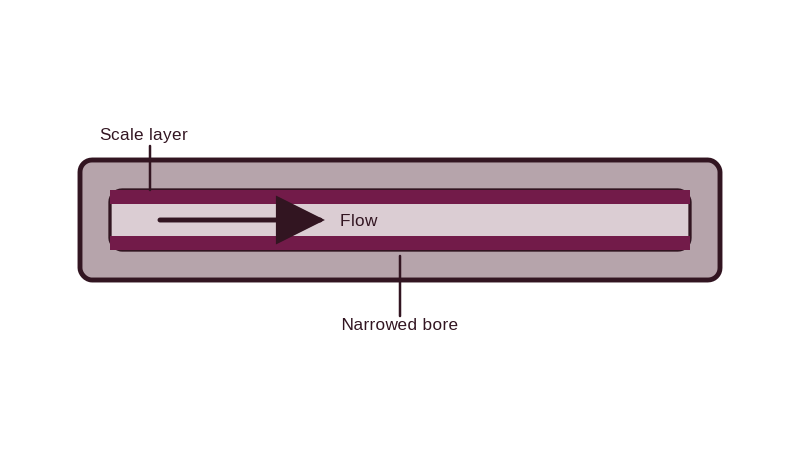
A hardness figure appears in the quality report your water supplier publishes, and that is the number to use. We state no figure for any Conejo Valley address because the report depends on your supplier and street. The USGS says scale can gradually narrow pipes, which lowers flow and pressure, and that deposits in water heaters can cut equipment life and push up heating costs.
How do you descale a water heater?
Tank heaters are flushed through the drain valve to carry out sediment, whereas tankless heaters are descaled through their service valves using a pump and a mild acid solution. Both need water and power or gas switched off first. A plumber does the work properly, since hot water and the gas or electric supply are involved.
When scale causes popping or rumbling in a tank, or falling output in a tankless unit, a flush can help. A tank left unflushed for years may leak once disturbed, which is worth knowing before you open the drain. See anode rod replacement for another maintenance item, and our water heater repair page for the wider job list.
How do you clean scale from glass, tile and sink basins?
Spray white vinegar onto the glass or tile, let it sit ten to fifteen minutes, then wipe with a soft cloth or a non-abrasive pad. Rinse and dry. For a stubborn film, repeat, or rub on a baking soda and water paste. Keep acid off natural stone, marble and grout that is not sealed.
Squeegeeing shower glass after each use is the cheapest prevention, because scale forms as droplets dry. A sink basin with white crust around the drain can be soaked with a vinegar-wet paper towel laid over the crust. If scale returns within days of cleaning, your water is doing the work and cleaning will not keep up. At that point treatment at the main line is the lasting answer, and the softener installation cost page explains what to budget for.
How do you stop scale from coming back?
Treat the water. A salt-based water softener removes calcium and magnesium and prevents most scale. Salt-free conditioners alter the way scale forms but leave the minerals in, so results are more modest. Wiping fixtures dry after use and flushing the water heater on schedule help too.
A softener needs a drain, power and salt, and a plumber fits it on the main supply. Read about water softener installation service, the installation steps and preventing hard water scale. Request a quote that sizes the unit to your water's hardness and your household use.
How do you remove scale from pipes and shower valves?
Visible scale at the ends of pipes and in aerators comes off with vinegar. Inside walls, a plumber may descale with a circulating acid solution, but heavy scale in old galvanized or copper pipe can mean the pipe is thin underneath, so repiping becomes a better choice. Reduced flow at every fixture is the signal.
In hard water areas, clean aerators and showerheads every few months. Weak flow at every faucet may come from scale, but the pressure regulator or a valve left partly closed can cause it too. The checks are on the low water pressure page. A shower valve cartridge with scale can stiffen and leak, and replacing it is the cure.
Common questions
Is vinegar safe on all fixtures?
No. Vinegar can dull some finishes and damage natural stone, grout and some seals. Test a small hidden spot first and keep the soak short. Check the maker's care guide. Chrome and stainless usually cope, but brushed or coated finishes may not.
What is a good descaling schedule for a showerhead?
In hard water, every few months is common, or whenever the spray goes uneven. A quick vinegar soak and a toothpick on the holes is usually enough. If scale returns within weeks, the water needs treatment. Cleaning the showerhead on a regular habit keeps the spray even and stops scale from building into a hard crust that is harder to remove.
Will a softener remove scale that has already built up?
A softener stops new scale. Soft water may slowly loosen some old deposits over the long run, but heavy scale usually needs a descaling treatment. Do not expect a softener to clean pipes quickly. Treat it as protection for the future rather than a cleaner for the past, and plan a separate descaling step for fixtures already coated.
Is scale bad for a water heater?
Yes. The USGS reports that deposits in water heaters can cut equipment life, push up heating costs and reduce the efficiency of electric heaters. Regular flushing, a working anode rod and treated water slow the damage. Scale acts like a blanket between the heat source and the water, so the heater has to work harder for the same result.
When should I get a plumber involved?
When scale sits inside pipes, valves or a heater, when flow has dropped at every fixture, or when you want a softener. A plumber can also check pressure and look for other causes. Send the details on the form. Photos of the scale and the fixtures affected help the plumber judge the job before the visit.