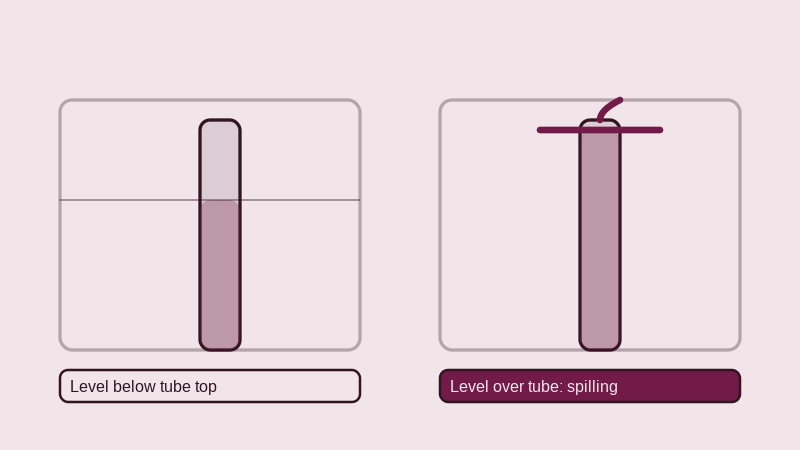
The overflow tube rises from the center of the tank floor and sends any surplus water on to the bowl. If water runs into it nonstop, either the float is set too high or the fill valve cannot shut off. Lowering the float normally cures it. A cracked tube calls for a new flush valve. See our home page for what else we arrange.
This guide suits the homeowner whose toilet will not stop running, who sees water trickling down the tube, or whose tank fills to the brim. It covers the tube's job, how to adjust the level, when the tube itself is faulty and when a plumber should step in.
Why does a toilet tank have an overflow tube?
Think of the overflow tube as a safety drain. Should the fill valve fail and keep adding water, the excess runs down the tube to the bowl and the drain, instead of spilling over the tank rim onto the floor. The tube belongs to the flush valve assembly, which also carries the flapper and sits at the center of the tank floor.
The water should stop about an inch below the top of the tube. Once it reaches the top, it pours down the tube without pause and the fill valve keeps refilling, wasting water and keeping the valve running. A small refill tube also clips onto the tube's upper end, sending a trickle into the bowl after each flush.
Put plainly, the tube should stay dry at rest. If it does not, one of three parts is at fault: the fill valve, the float setting or the tube.
How can you check whether water is spilling into the overflow tube?
Lift the lid from the tank and look in. A water surface level with the tube's top and a thin stream over its rim mean the level is too high. Use your ears as well, because a constant hiss shows the fill valve is open. A faint ripple at the top suggests a slow flapper leak rather than a tube problem.
For a flapper leak test, add a few drops of food coloring to the tank water and let it sit unflushed for ten minutes. The EPA recommends this test. Color appearing in the bowl places the leak at the flapper seat, not the overflow. See toilet flapper repair. If the water stays clear but the level is still too high, suspect the float or fill valve.
Flush right away once you finish so the dye cannot stain the tank.
How do you bring the tank water level down?
Locate the adjustment on the fill valve. Many models use a screw or clip on the float arm, while cup type valves use a slide or twist. Drop the float slightly, flush, and watch where the water settles. Aim for about an inch below the rim of the overflow tube, checking again after each change.
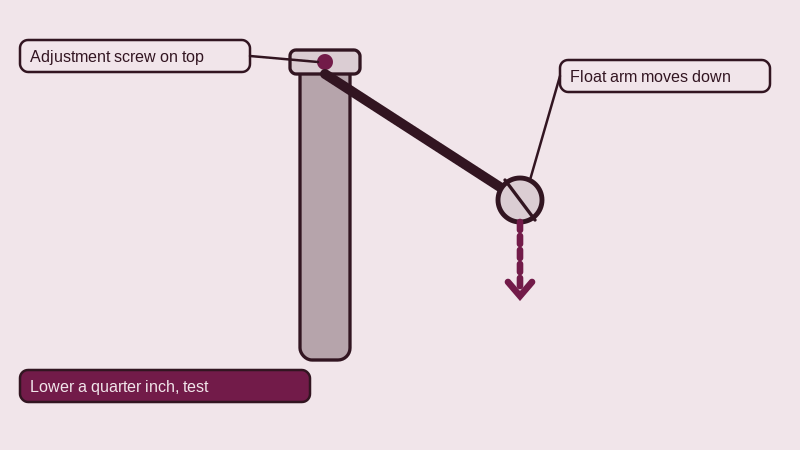
Steps:
- Close the supply valve on the wall behind the bowl, or hold the float up by hand.
- Find the float adjustment: a screw atop the valve, a clip on the rod or a sliding cup.
- Lower it a quarter inch each time.
- Reopen the water and let the tank refill.
- Mark where the water stops. Flush and repeat if needed.
If the level will not drop because the valve keeps running with the float at its lowest, the fill valve is worn out. The swap is explained in repairing a toilet fill valve.
Is it possible to mend a cracked overflow tube?
Even at normal level, a cracked tube lets water seep into the bowl. Epoxy patches rarely hold, since the tube stays wet constantly. The dependable cure is replacing the entire flush valve assembly, which bundles the tube, the flapper seat and the tank seal. A careful homeowner can manage this job.
Signs of a cracked tube: the water level keeps falling once the fill valve stops, the toilet cycles by itself (phantom flush), or a hairline split shows in the plastic. An overly tall tube is a separate problem. If a previous owner fitted a mismatched part, the tube may sit above the tank's overflow line, and water will spill onto the floor first. Compare the tube height to the tank rim.
Replacing a flush valve means draining the tank, then on some toilets unbolting it from the bowl (two or three bolts), installing the new assembly and reseating the seal. If the bolts are rusted or the tank is cracked, stop and hire a plumber.
What happens when the overflow tube is the wrong height?
The tube's height decides how much water the tank holds. One cut too short lowers the level and weakens the flush, while one that stands too tall can let the tank overfill before water reaches the opening. Choose a replacement that suits the model's flush valve, not simply the old part, which may have been wrong already.
Most flush valves adjust in height, so set the tube roughly an inch above the fill valve's refill line, following the maker's instructions on the packet. A modern fill valve paired with an old flush valve often causes poor flushing. Torn between a repair and a new toilet? Price both. Our guide to the cost of having a plumber replace a toilet can help you decide, and toilet flush repair covers weak flushes.
When should you send for a plumber?
Hire a plumber when the bolts leak onto the floor, the tank is cracked, parts are corroded or fused, the supply valve refuses to turn off, or the toilet keeps running even after a new fill valve and flapper. A toilet overflowing because the bowl is blocked is a drain problem and needs a plunger or a plumber, not a float adjustment.
Mention in your request which parts you replaced, how old the toilet is and whether water is reaching the floor. A leak at the base of the toilet is handled on plumber for a toilet leak. A toilet that keeps running wastes water; the EPA notes that leaks in a household can total more than 9,300 gallons a year.
Start with the quote form. Requests are read Monday to Friday, 9am to 5pm. We pass each one to a local plumbing business, and the businesses that accept pay us a fee. We make no promise about response time.
Common questions
How long does an overflow problem take to fix?
Setting the float right takes only minutes. A first-timer can handle a fill valve swap without much trouble. Replacing the entire flush valve takes longer, because the tank has to come off the bowl. A plumber who has parts in the van can often finish in one visit.
What should I ask a plumber before a toilet repair?
Find out whether the price is flat, which parts it covers, and whether the plumber will renew the fill valve and flapper together while the tank is open. Also ask what happens if the tank or bolts turn out damaged. Have the answers written down.
Must someone be home while a plumber fixes the toilet?
Yes. An adult needs to let the plumber in and approve any change. Keep the space around the toilet and its shut off valve clear. You need not stay in the bathroom, but stay reachable while the work is under way in case the plumber finds extra work.
Why does water keep trickling into the overflow tube after a flush?
A small flow down the refill tube after each flush is normal. A steady stream instead points to a float set too high, or to a fill valve that cannot shut off. Try lowering the float first, and replace the fill valve if the noise and flow continue.