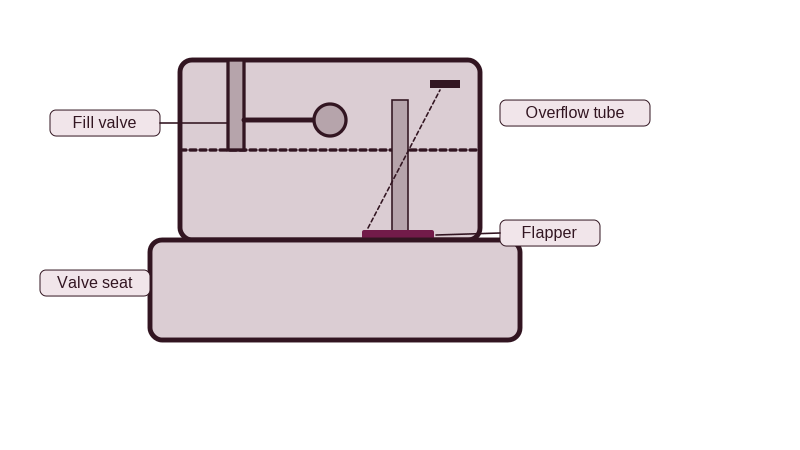
A toilet flapper is a rubber or silicone seal that rises on each flush, then settles back to keep the tank full. Once it warps, stiffens or gathers mineral film, water leaks past it into the bowl and the fill valve keeps refilling. It is among the simplest toilet repairs. This page belongs to the Conejo Plumbing Pros guides; the rest of the services are on our home page.
How do I check whether the flapper is the problem?
Try a dye test. According to the EPA, add a few drops of food coloring to the tank and wait 10 minutes: if color appears in the bowl, there is a leak. Flush straight after so the tank does not stain. Dye reaching the bowl without a flush means water is getting past either the flapper or its seat.
Other signs agree: the toilet hisses or refills now and then on its own, the tank level drops, a ghost flush is heard, or the handle must be held down. The EPA notes that a worn or old flapper may make a toilet flush by itself or quietly lose thousands of gallons a year, and recommends checking it regularly and replacing it at least every five years.
Not every running toilet is a flapper problem. When water spills into the overflow tube from above, the cause is a fill valve or float that is failing or set too high; our repair toilet fill valve and repair toilet overflow tube pages cover that. For a toilet that never stops, see toilet won't stop running.
What tools and parts do I need to swap a flapper?
The job takes a replacement flapper that fits your toilet, a towel, a sponge and a little time. Bring the old flapper to the store, or note the brand and model printed inside the tank, since flappers differ in size (often 2 or 3 inches) and mounting style. A universal flapper may fit, but read its instructions.
Steps for a typical flapper:
- Turn the little shutoff valve on the wall at the back of the toilet clockwise to close it.
- Flush to drain the tank, then sponge up the remainder.
- Unhook the chain from the flush lever arm.
- Lift the flapper's ears or loops from the pegs at the sides of the overflow tube, or unclip the ring that circles it.
- Clean film from the flush valve seat (the opening the flapper rests on) using a cloth or a non-scratch pad.
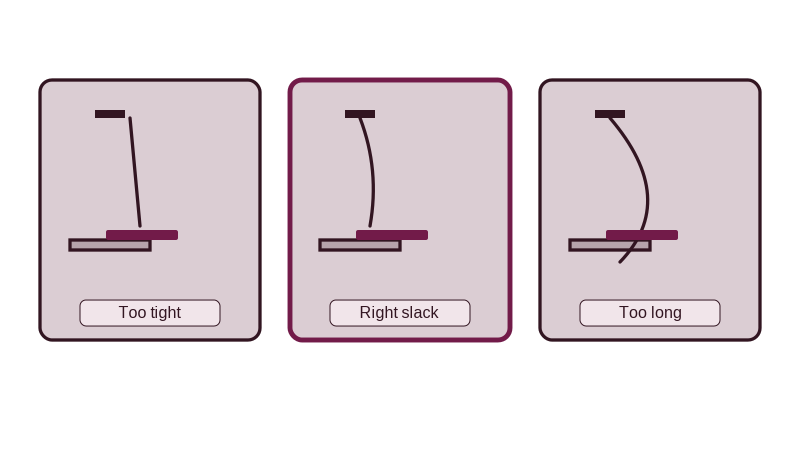
- Fit the new flapper onto the pegs and hook up the chain with some slack, about two links' worth, so the flapper can seal fully.
- Restore the water, let the tank fill, flush several times and watch for leaks.
- Repeat the dye test after an hour.
Too tight a chain holds the flapper open, and an overly long one can slip beneath it. Either mimics a bad flapper, so set the slack with care.
Why does a new flapper still leak?
Should dye still reach the bowl, suspect the seat. Mineral deposits or a nick in the plastic or brass ring spoil the seal, and cleaning may help. For a pitted seat, a repair kit or a new flush valve may be needed. Also check that the flapper is aligned and the chain is not snagged.
Mineral scale can roughen the seat wherever the water is hard, and the rubber in older flappers can go gummy from chlorine tablets dropped into the tank. Avoid those tablets, since they shorten the life of rubber parts. Older homes in Thousand Oaks and Newbury Park may have the original flush valve, so a stubborn leak at an old toilet may call for new tank hardware or a new toilet. Our guide to flush repair covers the other parts inside the tank.
When should a plumber take over?
Get a plumber involved when the shutoff valve will not close or drips after being turned, the tank is cracked, water gathers at the foot of the toilet or appears through the ceiling below, or you cannot tell which part has failed. A stuck shutoff valve is a common surprise, and forcing one risks breaking the pipe fitting.
For a stubborn stop valve, the toilet repair shut off valve guide gives the steps, and plumber for toilet leak covers leaks at the base. Water on a floor can also seep into a subfloor, so do not wait on those. A plumber can swap the whole set of tank parts in a visit if the tank is old.
What to do next
Run the dye test now. If color shows up, replace the flapper this week, since the waste continues all day, and it also raises the water bill. If you would rather leave it to a plumber, or want the full set of tank parts replaced, send the information through the quote page and a local plumbing business can price it.
Common questions
How long does a toilet flapper swap take?
For most people it is a short job, plus the trip to buy the part. A plumber does it in a short visit. If the seat is pitted or the shutoff valve is stuck, expect more time. Allow extra if the toilet has an unusual tank, such as a pressure-assist model, which uses different parts.
What should I ask a plumber before booking a toilet repair?
Find out whether the visit price covers parts, whether all the tank hardware gets replaced together, how a stuck shutoff valve is priced, and what the plan is if the toilet is too worn to repair. Also obtain the California contractor license number of the plumber. A clear flat price for a small repair is a good sign.
Must someone be home while the toilet is fixed?
Yes, an adult should be home to show the plumber the toilet and sign off the finished work, especially if the water has to be shut at the main. Leave a clear route to the bathroom and put away personal items. The repair is quick, so you can usually stay out of the way.
How frequently does a flapper need replacing?
The EPA advises replacing it every five years at the very least. Sooner is better when the dye test fails, the toilet runs on its own, or the rubber feels soft, cracked or slimy. It costs far less than the water it wastes, so do not wait for a leak.