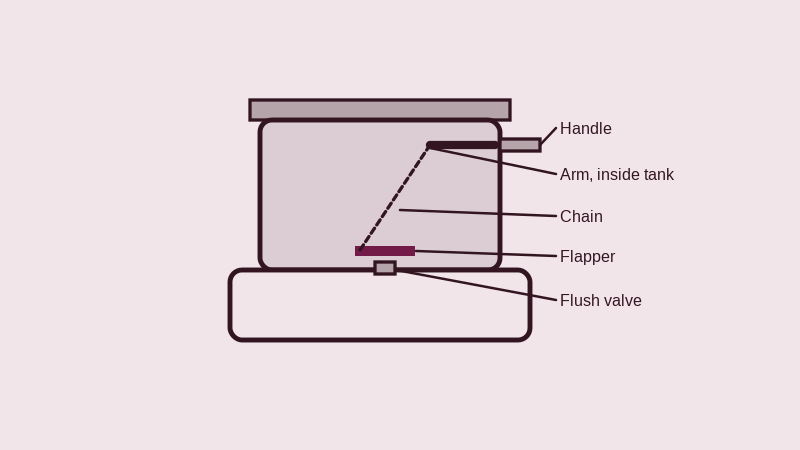
When a toilet flushes weakly, needs two tries or keeps running afterward, the tank is almost always at fault, not the drain. The parts are simple and the fixes are often small. This guide sits within our plumbing help for Thousand Oaks homes and walks you through the order to check things, from the handle outward, so you do not buy parts you do not need.
If the toilet still misbehaves after you work through it, the quote form is how we hand your request to a local plumber who can visit. There is no dispatch line here, and a thank-you page appears once your request is sent.
What are the reasons my toilet is not flushing all the way?
Incomplete flushes usually come from a short or tangled flush: the chain is too slack, the flapper drops too early, the water level in the tank is low, or the rim holes under the bowl rim are clogged with mineral deposit. A partial clog further down the drain can also do it.
Remove the tank lid and watch the parts as you flush. If the flapper falls back before the tank has emptied, the chain is probably too long or snagged. If the tank refills only to a low line, the fill level needs raising. Run a finger under the rim and feel for gritty holes: scale in those holes slows the wash and leaves the bowl half rinsed. If none of this applies and the bowl rises and drains slowly, the problem is below the toilet, and the blocked toilet repair guide takes over.
What should I do next?
Decide which symptom you have, then fix only that. A weak flush traces to the chain, the water level or the rim holes. A loose handle means the arm and nut. A toilet that runs once flushed implicates the flapper or fill valve. Turn off the supply at the shutoff behind the toilet whenever you work on the tank.
Keep a few spare parts at home: a universal flapper and a handle kit cover many models. If the shutoff valve itself is stuck or dripping, do not force it, as that is a common way to turn a small fix into a flood. Our page on toilet shutoff valve repair explains why. Photograph the inside of the tank before you start, so you can put everything back as it was.
What can be done about a flush handle that does not work?
If the handle feels loose or does nothing, the trouble is inside the tank. Check that the arm still connects to the chain, that the chain has a little slack but not a lot, and that the nut holding the handle to the tank is snug. Most handle nuts tighten with a turn counterclockwise, which surprises people.
Lift the lid and move the handle by hand. If the lever turns freely with nothing lifting, the chain has slipped off the arm or the clip has come undone, and rehooking it fixes the flush. A cracked handle or a bent arm calls for a replacement kit, which is standard and fits most toilets. Handles that stick or return slowly often mean the arm hits the tank wall, so check the clearance before buying anything.
At what point is a plumber worth hiring?
Bring one in when the flush stays weak after the chain, flapper and water level have been checked, when the bowl drains slowly with no clog, when water leaks from the base, when the tank has a crack, or when the supply cannot be shut off. Those jobs risk water damage if handled wrongly.
A toilet that rocks, weeps at the floor or smells of sewer may need a new wax ring or flange work, and that is more than a tank fix. A weak flush across several toilets suggests a venting or drain problem elsewhere in the house. For an old toilet where replacement competes with repair, see our guide to toilet replacement costs. The choice gets easier once the plumber has looked the unit over.
How do you repair a worn flush valve?
Sealed by the flapper, the flush valve is the large opening in the tank floor. When it wears, pits or gathers mineral crust, water seeps into the bowl and the tank cannot keep a full charge. Fixes range from cleaning the seat to replacing the whole valve assembly, which means removing the tank.
Start with the cheap step. Close the supply, flush the tank dry and wipe the rim of the opening with a cloth. A rough or crusty seat stops a good flapper sealing. If the seat is cracked, corroded or worn smooth, replacing the valve is the lasting fix: the tank is lifted off, the old valve unscrewed, the new one fitted with a fresh gasket, and the tank bolted back. It is doable for patient owners, but tank bolts crack porcelain if overtightened, so tighten gently and evenly.
Why is my toilet running after I flush?
A toilet that runs on after flushing usually has a leaking flapper, a chain so tight that it props the flapper open, or a fill valve stuck open. The quickest check is to add some food coloring to the tank and see whether color seeps into the bowl without a flush.
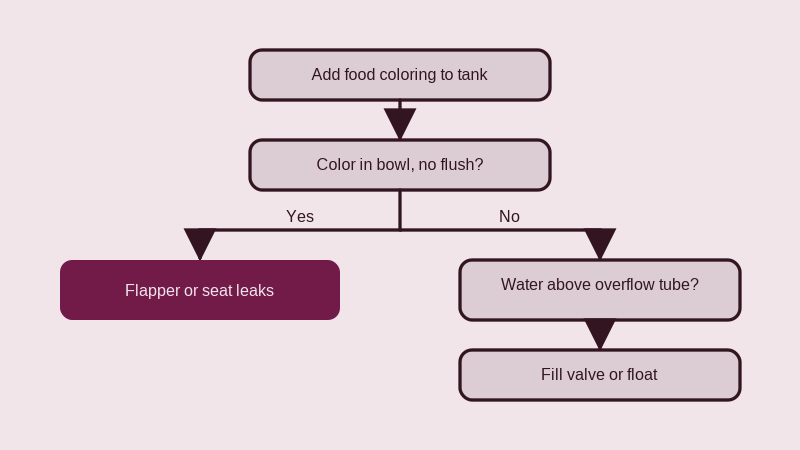
If it does, blame the flapper or its seat, and replace the flapper, which costs little. If the tank water rises as far as the overflow tube and trickles in, adjust or replace the fill valve or float. The toilet that never stops running guide covers the water bill side, and replacing a flapper and fixing a fill valve show each part in detail.
Common questions
How long does a toilet flush repair take?
Swapping a flapper, chain or handle is often done in under an hour, shutting the water and testing included. A flush valve replacement takes longer, usually one to two hours, since the tank must come off and go back. A plumber visit adds travel and any further faults found, and the plumber gives an estimate when on site.
What should I ask before a toilet flush repair?
Ask if the quote covers parts and labor, whether the visit includes a check of the supply line and shutoff valve, and what happens if the toilet turns out to need replacing. Get the price in writing, and confirm which business will do the work before the plumber arrives.
Must I be at home during the repair?
Yes, someone needs to be there to unlock the bathroom, describe the symptoms and agree the price and parts. The visit is short, but the plumber needs to run a flush test with you and confirm the fix. Name an adult if you cannot attend yourself.
Why does my toilet need two flushes?
Usually the first flush starts the water but does not move enough volume. Possible causes are a flapper closing early, a low tank level, scaled rim holes or a partial clog. Check the chain slack and water line first. If the bowl also drains slowly, treat it as a drain problem.
Is a high water bill linked to a running toilet?
Yes. A toilet leaking past the flapper can waste water around the clock without a sound, and the cost shows up on the next bill. Run the food coloring test, and fix it promptly. Our guide on hunting for hidden leaks behind a high bill shows other places to check.