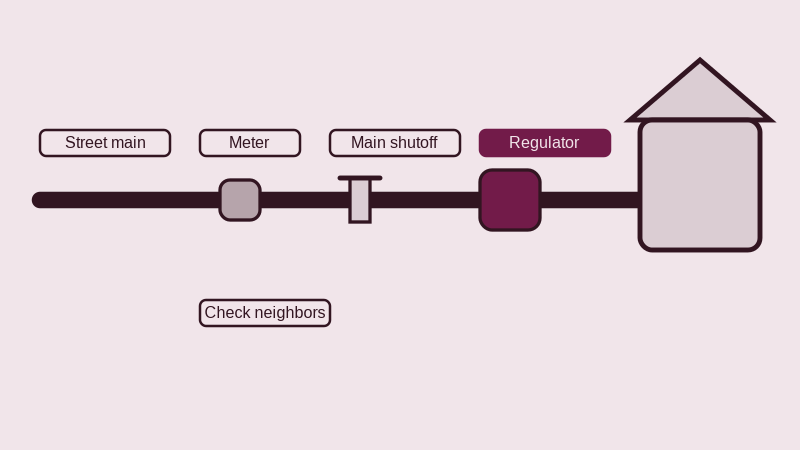
If pressure drops all at once at every fixture, suspect a main valve that got bumped or half closed, a regulator that has failed, a leak on the supply line, or trouble in the supply outside your property. Start with the neighbors, the meter and the main valve, then move on to the regulator. The plumber for low water pressure page is where the wider topic begins. For a local plumber to inspect your home, submit the details on the quote form at Conejo Plumbing Pros.
What makes pressure fall suddenly at home?
The usual suspects: a main or meter valve left partly closed, a regulator on its way out, a leak in the supply line, a clogged filter, or an outage in the outside supply. How many fixtures are weak, all or only a few, tells you which of these fits. A sudden fall tends to mean a valve, a leak or a supplier event, rather than slow pipe corrosion.
Corrosion narrows pipes over years and makes pressure decline gradually. A sudden change points at something that moved, broke or was shut. Think back to the last day: any work at the house, any street work, any visitor who turned a valve, any freezing weather or an earthquake rumble.
Write down what you see: is it hot and cold, one bathroom or the whole house, indoors only or also at the hose bib? Those facts cut the list quickly, as the next sections show.
Why is the pressure low in the house but fine outside?
Good flow outdoors with weak flow inside points to a fault beyond the hose bib branch: a half-shut valve, a blocked filter or a failed regulator downstream of the outdoor tap. A leak or restriction in the indoor lines is also possible. Some homes feed hose bibs ahead of the regulator, so those taps can read higher than indoor fixtures.
Check the inside shut-off valve at the point the line enters the house. A gate valve closed slightly, or a ball valve not turned all the way, cuts flow. Look for a whole-house filter housing with a clogged cartridge, which is a common culprit. Replace the cartridge and see if flow returns.
If both seem right, the regulator may be failing. A regulator can fail low or high. Both guides help you identify yours: finding the water pressure regulator and replacing a water pressure regulator. If all signs point to a failed regulator, replacing it is a job for a plumber.
How do you check for a leak?
Turn off every tap and appliance, note the meter reading, wait two hours, then check the dial again. A dial that has moved means water is escaping. Other signs include running water sounds, wet patches in the yard, a warm spot on a slab floor or a bill that jumped. A leak on the line running from the meter to your house can lower indoor pressure.
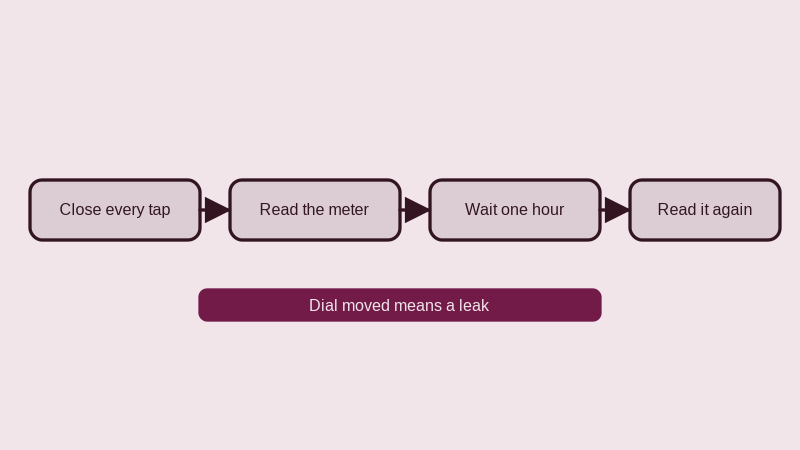
The EPA estimates that a typical household can lose upward of 9,300 gallons of water per year to leaks, and a larger break loses far more and shows up in pressure first. If you suspect a main line leak, close the house valve and see whether the meter stops. If it keeps running, the break is on the line from the meter to the house.
Our guides cover the next steps: a water bill that stays high with no leak you can see, knowing whether a pipe burst and detecting and repairing slab leaks.
Who should you contact about whole-house low pressure?
Begin with your water provider if neighbors share the problem or the meter looks off, since the fault may be in their system. If only your home is affected, a plumber is the right contact, since the problem lies in your own pipes past the meter. Your bill names who supplies you.
Which provider you have depends on your street. Westlake Village and Agoura Hills are reported to be served by Las Virgenes Municipal Water District, many Hidden Valley homes use private wells, and elsewhere you should go by the name on your bill. We cannot say for certain which utility serves your address.
On a well, a failing pump, pressure tank or switch usually explains it, so a well or pump specialist is worth asking alongside a plumber. In every other case, send the details through the form. We pass your request to a local plumbing business, and the inbox is checked Monday to Friday, 9am to 5pm.
Can cold weather cause low water pressure?
Cold can freeze a pipe and block flow, and it can also change the demand on the supply. A freeze is not typical in the Conejo Valley, but a cold snap can still affect exposed pipes outdoors or in an uninsulated attic or crawl space. A frozen section usually leaves the pipes beyond it dry and the pipes before it noisy.
If you suspect a freeze, keep taps open a little, warm the pipe gently with towels soaked in warm water, and never use an open flame. Look for splits when the ice thaws. Insulating exposed pipe and hose bibs prevents the next one. See burst pipe prevention.
Seasonal demand matters too. In hot weather, heavy irrigation across a neighborhood can draw down the supply pressure at busy times. If the drop is predictable and short, it may be the supply.
What if only the water heater or one fixture is affected?
If only hot water is weak, check the heater, the valves around it and the hot-side pipes. Trouble at one fixture alone suggests a blocked aerator, a worn cartridge or a stop valve. Try hot and cold at several taps to tell them apart. One weak fixture is not a house-wide fault.
For hot-only problems, why hot water pressure is low is the page to open. For one sink, try weak flow at the kitchen sink. Clean the aerator first, since mineral scale builds there quickly, and a vinegar soak is a safe test.
If a hissing noise comes from the main, the regulator may be close to failing. Do not wait long for that: a failed regulator can cause the opposite problem, high pressure, which strains fixtures and hoses.
Common questions
Is low water pressure an emergency?
Not by itself, though a sudden drop can signal a burst line, which is. Shut the main valve and arrange a plumber promptly if water is pooling, you can hear it running, or the meter keeps turning with every fixture off. A plain drop with no leak signs leaves you a day or two to diagnose it.
Could the water provider cause low pressure at my house?
Yes. Main breaks, maintenance work, hydrant flushing and fire flows can lower pressure across a neighborhood for hours. Ask neighbors, and look at the provider's notices or the number on your bill. If your house alone is affected, the cause probably lies in your own plumbing, past the meter.
How do I check the pressure myself?
With all other fixtures off, attach a pressure gauge to an outdoor hose bib, open that tap fully and read the dial. Compare it to your regulator's setting if you can find it. A gauge is inexpensive and shows whether the supply or the house lines are the issue.
Will a plumber find the cause quickly?
Often in one visit, because the checks are systematic: valves, regulator, filter, then the lines. A hidden leak may take longer and need leak detection. Tell the plumber what changed and when, and mention neighbors' pressure, since that saves time. Our page on why a water bill gets so high is also worth a read.