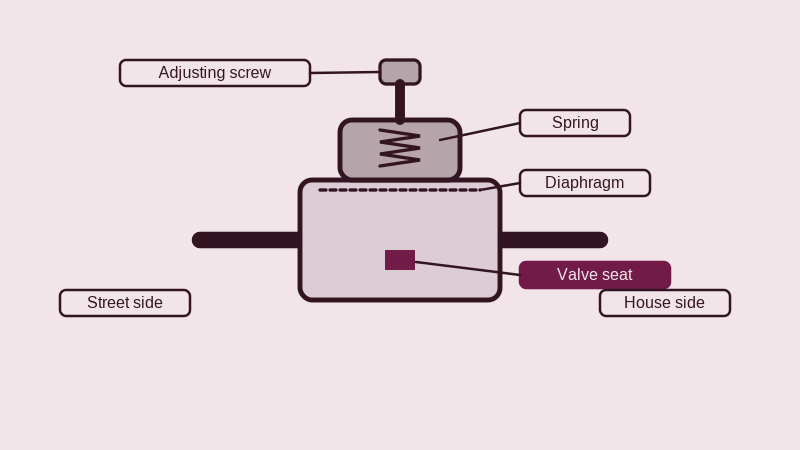
A water line pressure regulator, also called a pressure-reducing valve, is fitted on the supply pipe straight after the main shutoff and brings the incoming pressure down to a steadier level for the house. A spring and a diaphragm inside open and close a seat as demand shifts. While it works you never notice it. For the wider troubleshooting picture, read water pressure and valves.
What does a water line pressure regulator do?
It takes the supply pressure, which can be higher than a house needs and can vary through the day, and holds the pressure inside at a set level. Doing so spares fixtures, the water heater, irrigation lines, toilet fill valves and washing machine hoses from stress. A regulator also keeps showers more consistent when the street pressure changes.
The main part is a bell-shaped body topped by an adjustment screw or bolt. Turning it alters the spring compression, and the outlet pressure with it. Many regulators arrive preset and a plumber tunes them with a gauge. Some include a built-in bypass for thermal expansion, while others depend on an expansion tank at the water heater, which is often needed rather than strictly required, so ask the plumber.
Not every home has one. Supplier pressure may already be moderate, so a house without a regulator can run fine, while others had one fitted at construction. Hillside streets see big pressure differences with elevation, so some Thousand Oaks and Newbury Park homes may have a regulator and others do not. Our page on finding your pressure regulator helps you track it down.
Where on the supply pipe will I find the regulator?
Look close to where the supply pipe enters the home, beside the main shutoff: commonly on the front wall, in the garage, or in a utility box. It is a brass, bell-like valve set into the pipe, usually with a screw cap or bolt at the top. Our guide to what a regulator looks like has more detail.
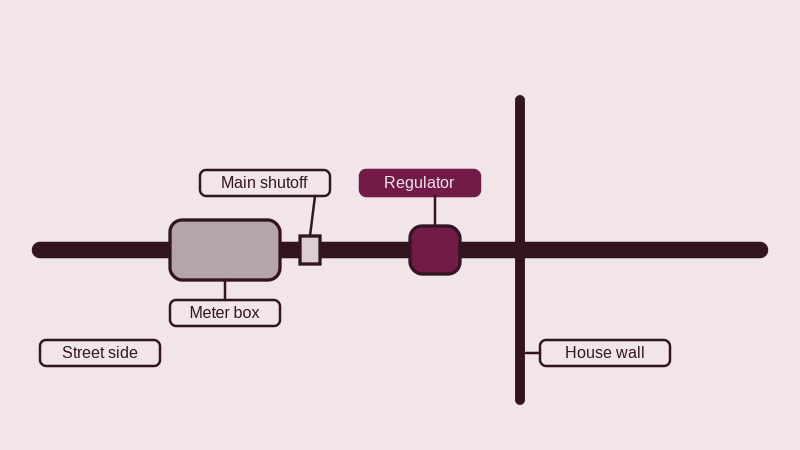
In some homes the regulator is buried in a meter box or a ground-level box near the street. Older houses may have it in a crawlspace. Failing to find one, a plumber can thread a gauge onto a hose bib to establish whether a regulator exists, and whether the pressure calls for it.
Sizes matter. A regulator matches the line diameter, so a house with a 3/4 inch main uses a 3/4 inch unit. You can learn more about 3/4 inch regulators, 1 inch regulators, 1/2 inch regulators and 1/4 inch regulators on their own pages.
How do I know my regulator is failing?
Common signs are pressure that is either too high or too low, a gradual overnight rise, hammering or banging as a tap closes, a hum or whistle, or a relief valve on the water heater that drips. A regulator can also stick partly closed, leading to weak flow everywhere, which is covered on our page for the plumber for low water pressure.
Test it using a pressure gauge fitted to a hose bib. Take the reading while no water is running. If the number climbs over several minutes, the regulator may be creeping, which means the seat is leaking. If the reading changes hugely between a tap open and closed, the regulator may be struggling to keep up. Compare the reading before the regulator and after it, if there is a test point, to see what the valve is doing.
A regulator failing on the high side does more damage. Excess pressure wears out fixtures and appliances early, so a prompt check is worthwhile if you notice leaks or noisy pipes.
How does a plumber adjust or replace a regulator?
The plumber closes the main, drains the line, measures the pressure, and then either turns the screw or takes out the valve and fits a new one in the same size, adding unions where the pipe allows. The new regulator is set to a target with a gauge, and the plumber looks for leaks and thermal expansion issues.
Only someone with a gauge should adjust one, because a blind turn can leave the house with too much or too little. Replacing a regulator counts as plumbing on the main line. California generally requires a contractor license once a job reaches $1,000 or more, so ask the plumber for the license number. Soldered connections need a torch, and a union can make the next replacement easier. More detail is in the water pressure regulator replacement guide.
Whole-house units differ from small ones that screw onto a garden hose, which protect only that hose. Both whole-house pressure regulators and regulators for the water main belong to the same valve family. Choosing a model is covered on best home water pressure regulator.
Do homes in the Conejo Valley have different needs?
Yes, in some ways. Elevation drives pressure on hills, so a home sitting at the bottom of a slope may need a regulator more than one near the crest. Homes on private wells, such as many in Hidden Valley, get pressure from a pump and tank, not a regulator on a utility line. If a utility serves you, your bill shows which one covers your street.
Newer homes may have a regulator from the start, and older homes may have an original unit that has never been swapped. Age is the main variable, so a plumber who reads the gauge will know more than a rule of thumb.
What to do next
Buy a pressure gauge made to screw onto a hose bib, then read it while nobody uses water. Note the number and the time. For a high or odd reading, or noisy pipes, send the reading through the quote page so a nearby plumbing business can quote a check or a replacement.
Common questions
How long does a regulator replacement take?
Usually a brief visit, provided the plumber can get at the valve and the pipe is sound. Soldered connections, corroded pipe or a cramped spot add time. The main water stays off throughout, so expect to go without water for a spell, and request a time estimate before work begins.
What should I ask before having a regulator replaced?
Ask whether they will measure pressure before and after, what pressure they will set, which brand and size they will fit, whether the price covers unions and testing, and which labor warranty applies. Also get the California contractor license number, and keep the quote in writing.
Must an adult stay home during a regulator replacement?
Yes, an adult should be there to point out the main shutoff, approve any extra work, and hear the final pressure reading. The water stays off during the job, so fill a few containers beforehand and tell the household when it comes back on.
Can a regulator be adjusted without replacing it?
Often, yes. Many regulators have a screw or bolt that sets outlet pressure, and a plumber can adjust it with a gauge. If the valve is old, corroded or creeping, adjusting only delays the problem, and replacing the valve is the better fix.