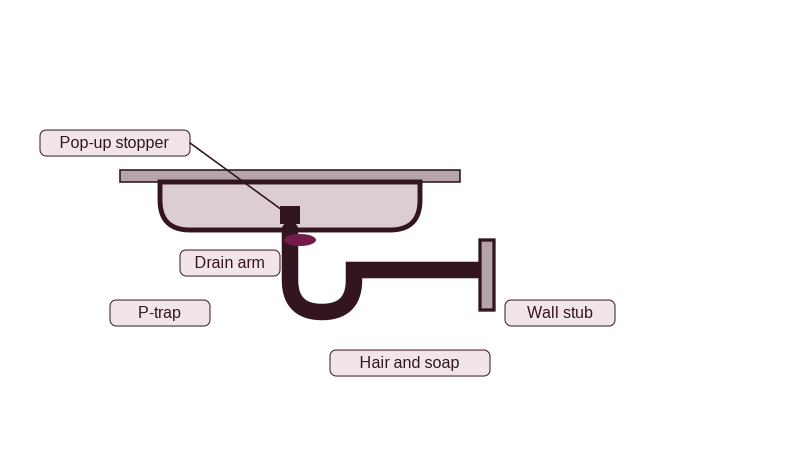
Start by pulling the pop-up stopper and clearing the hair off it, then clean the trap below the basin, then run a small hand snake down the drain arm. These three moves clear most slow sinks without chemicals. If water still crawls away, the blockage lies deeper; drain cleaning and clogs explains when to ask for a plumber.
What tools and supplies should I gather first?
Collect rubber gloves, a flashlight, a flat screwdriver, pliers, an old towel, a bucket, and either a plastic drain-cleaning strip or a small hand snake. Channel-lock pliers help with the trap nuts, though most are hand tight. Empty the cabinet beneath the basin and set the bucket in place.
Observe the sink first. Run water for ten seconds and note how it drains and where it pools. A basin that drains slowly while the overflow hole near the rim gurgles has a blockage in the drain arm. Water that drains and then rises again suggests a clog beyond the trap. Also see whether the neighboring shower or tub is slow, which would mean a shared clog.
Do not pour chemical cleaner into a sink you plan to open afterward. The liquid sits in the trap and can burn skin or eyes when you take it apart.
How do I remove and clean the pop-up stopper?
A pivot rod behind the drain holds most bathroom stoppers. Underneath, find a horizontal rod with a clip or nut where it joins the drain pipe. Loosen the nut, ease the rod out of its slot, and raise the stopper straight up. Some stoppers simply twist or pull free.
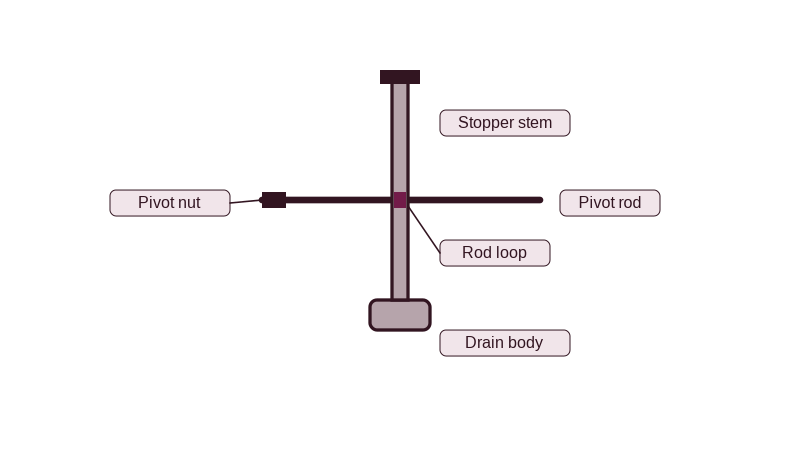
Expect to find a slimy knot of hair wrapped around the stopper's base. Wipe it off, rinse the stopper, and shine the flashlight into the drain to see what remains. Use the plastic strip or a bent wire to pull out hair you can reach. Put everything back, making sure the stopper fits into the pivot rod loop, then test the flow and the closing action.
A stopper that sits too low or closes unevenly will also slow a sink. If the stopper moves freely but still restricts, the issue is lower down.
How do I empty and clean the P-trap?
Put the bucket under the trap, loosen the two slip nuts that hold the U-shaped bend, and lower the trap into the bucket. Empty the sludge, wash the trap in a utility sink or outdoors, and inspect the washers for cracks. Reassemble hand tight, then a small turn more with pliers if the fittings are metal.
Look into the pipe stub that goes to the wall. If you see debris, push the snake or a bottle brush gently in to clear it. Do not force a stiff tool, because a bent or cracked pipe turns a quick fix into a bigger job. When everything is back, run water for a full minute and watch the joints for drips. Tighten slightly if needed, and wipe dry to see any weeping later.
If you find a corroded metal trap or a brittle plastic one, replacing it is cheap and straightforward. Brass and chrome traps in older homes can seize, and a plumber may be better placed to handle them.
When does a slow bathroom sink point to the main line?
If the stopper, trap and arm are all clean and the sink still drains slowly, the blockage is in the branch line or the main. Other signs include gurgling at the sink when the toilet flushes, bubbling in the shower, or sluggish drains in several bathrooms. A plumber can bring a motorized snake or a camera.
In older Thousand Oaks and Newbury Park homes, long drain runs with little slope can hold buildup. In mature neighborhoods with big trees, such as Casa Conejo and Wildwood, roots can enter older pipes. The guide on slow sink drainage goes through the causes, and clearing a bathroom sink clog gives a second set of methods.
How do I keep the sink from clogging again?
A hair catcher costs little and traps most hair before it reaches the pipe. Wipe the stopper every month or two, run hot water after brushing teeth, and avoid rinsing makeup, shaving cream and cooking oils down the sink. A regular check of the stopper takes a minute and saves a cleanout.
Mineral scale on stoppers and in pipes is common where water is hard, so a little white vinegar on the stopper now and then can loosen it. A sink that slows every month deserves a plumber's look at the drain's slope and venting, since a poor vent also causes slow flow and gurgling.
What to do next
When the steps above fail, or the whole house is slow, use the quote page. Note which sinks are slow, what you tried, and whether other drains gurgle. A local plumbing business can then quote a drain cleaning visit. The plumber cost to unclog sink page explains how that price is set.
Common questions
How long does it take to clear a slow bathroom sink?
Allow twenty to forty minutes for a do-it-yourself job, mostly setup and cleanup. A plumber usually clears a sink clog in a short visit. If trap and arm are clean and the line beyond needs a machine, the work runs longer, and the plumber should explain why before starting.
What should I ask before hiring someone for a sink drain?
Ask whether the quote is flat or hourly, whether a camera inspection costs extra, how damage to the trap or a pipe is handled, and whether the work is covered should the clog return. Ask for the California contractor license number, and have the price written down before work starts.
Must an adult be home while the drain is cleared?
Yes. An adult should open the door for the plumber, show which sink is slow, and approve extra work. Clear out the vanity first, which gives the plumber access to the trap and shutoff valves. Watch for small items on the counter that could drop into an open drain.
Will baking soda and vinegar cure a slow bathroom sink?
They can loosen a thin film of soap and oil, but they will not move a mat of hair. Use them only as a light maintenance flush, followed by hot tap water. For a real clog, remove the stopper, clean the trap or snake the drain. Using chemicals first makes later work riskier.