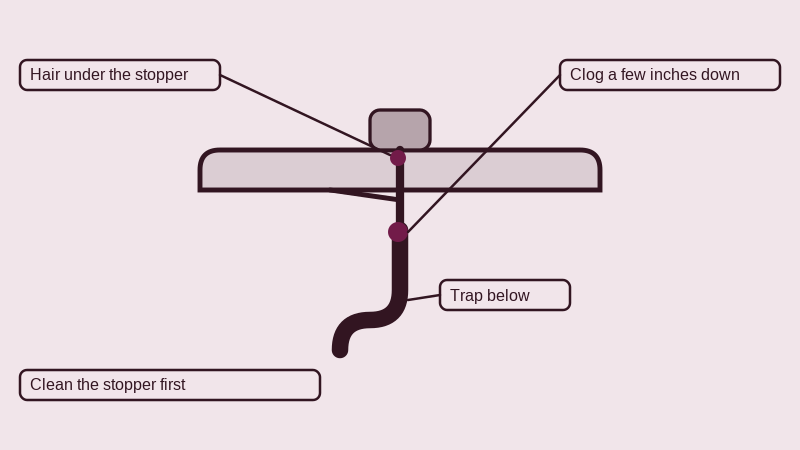
A bathroom sink drains slowly for a boring reason: hair, toothpaste and soap form a mat around the stopper and in the trap below. That means the clog is usually within reach, and a bucket, a pair of gloves and ten minutes will often clear it. It forms part of our wider help on drain cleaning and clogs from Conejo Plumbing Pros. Take the steps in sequence, and quit once the water runs freely.
Which fix works fastest on a clogged bathroom sink?
Lift out the stopper and wipe off what clings to it, then clean the drain opening by hand or with a plastic drain tool. Hair and gunk snagged on the stopper's pivot and just beneath the rim cause most bathroom sink clogs. Run hot tap water afterward to see if the sink drains at its usual speed.
Plenty of pop-up stoppers lift straight out. Others first need the pivot rod loosened below the sink: look for the small nut on the rear of the drain pipe, undo it and slide the rod out. Keep a towel and a small bowl nearby, since the stopper and its coating are rarely pleasant.
A thin barbed plastic strip pushed down the drain and drawn back up hooks hair your fingers cannot reach. It costs little and is a sensible tool to try before any chemical. Repeat until nothing more comes up.
When should you reach for a drain snake?
A small hand-cranked drain snake, also called an auger, is the next step when the stopper and trap are clean but the sink is still sluggish. Feed it into the pipe, crank while pushing to catch the clog, then pull it out or break it up. Rinse with hot water afterward. Never force the cable against heavy resistance.
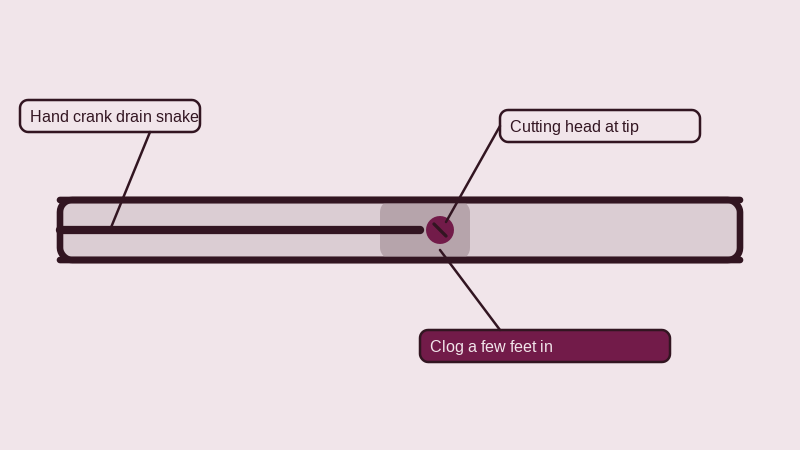
A snake works best on a clog a few feet into the line, which is where hair and soap tend to settle. Push gently and withdraw slowly, wiping the cable as it comes out. Several passes may be needed. If the cable keeps hitting the same spot, the blockage may be a part of the pipe itself.
A snake can scratch porcelain, so keep the cable inside the pipe and not rubbing on the basin. If you have never used one, a short tutorial will help, and if you do not want to learn, that is a normal reason to hire help.
Is a baking soda and vinegar mix worth trying?
It may loosen light films of soap and grease, but a hair clog seldom budges. Tip a half cup of baking soda into the drain, add a half cup of white vinegar, leave it fifteen minutes, then rinse with hot but not boiling water. A sink that still drains slowly has a physical clog that needs a tool.
The fizz is a mild chemical reaction with a gentle effect. It is safe for pipes, a reasonable first try in a house with older plumbing. It will not dissolve a firm mat of hair or a lump of dental floss.
Never combine this with commercial drain cleaners. Mixed chemicals in a drain can give off fumes or splash, and a sink full of cleaner that will not clear puts the next person who works on it at risk.
Should you use chemical drain cleaners?
Steer clear when you can. Caustic cleaners can harm older pipes and fixtures, endanger skin, eyes and lungs and leave a pool of caustic water that makes the next repair risky. They also tend to fail on hair clogs. Mechanical methods are cheaper, safer and more dependable for a bathroom sink.
Should you have used one already, tell the plumber, who will take precautions. Never mix cleaners and never plunge a sink containing them. Do not pour them into a sink that is fully blocked and holding water, because the chemicals will just sit in the basin.
Enzyme cleaners are a milder option and can help prevent buildup if used regularly, though they work slowly and will not clear a heavy clog. A mesh stopper or hair catcher costs little and prevents most repeat clogs in the first place.
When does a slow sink signal a larger problem?
Slow drains throughout the house, gurgling from the toilet while the sink empties, water surfacing in a tub or shower when the sink runs, or a sewage smell all put the clog in a shared line, out of reach of a sink snake. That job needs a plumber with a larger machine.
Mainline clogs are common in older homes with mature trees, since roots work their way into sewer line joints. Older homes may have clay or cast iron sewer lines, with more joints for roots to enter than newer plastic ones, and a camera inspection shows what yours is made of.
Related pages explain why a sink drains slowly and what a visit costs in what a plumber costs. Once you are set to go, the quote form asks which drains are affected.
How do I use a plunger on a bathroom sink?
Block the overflow opening near the rim of the basin with a wet cloth, pour in water until it covers the plunger cup, then pump firmly about a dozen times without breaking the seal. A cup plunger is the right type, not the flanged kind made for toilets. When the water starts draining, run hot water to carry off the loosened debris.
The overflow hole is the key. Left open, it lets the pressure escape and nothing moves. A double bowl, or a basin sharing a second drain, needs that opening blocked too.
Skip plunging a sink that recently had chemical drain cleaner poured in. The splash can burn skin and eyes. If cleaner has already gone in, put on gloves and eye protection and take extra care, or leave it to a plumber.
How do you clean out a P-trap?
Place a bucket under the U-shaped pipe below the sink, then use your hand or pliers to release the two slip nuts, and lower the trap. Tip its contents into the bucket, pull out hair and sludge, rinse the trap, and put it back together with the washers sitting flat. Run the water and check both nuts for leaks.
Most bathroom clogs lodge here or just beyond. Wear rubber gloves, since the contents are unpleasant. A clear trap with a sink that still drains slowly puts the blockage further into the wall.
Inspect the washers and threads on reassembly. Overtightening cracks plastic nuts, and an unseated washer leaks. A leak at the joints calls for gentle tightening in quarter turns, then drying the joint to see whether it recurs. Leave a towel under the pipes for a minute afterward.
Common questions
Why is the sink still slow after cleaning?
The clog may lie further down than you can reach, or soap scum may coat the trap and pipe and narrow the opening. With a clean stopper and trap, try a snake. Slow drains elsewhere too point to a shared line that needs a plumber's equipment.
Can boiling water go down a bathroom sink safely?
No. Boiling water may soften or warp PVC pipes, and it can crack porcelain. Hot tap water is the better choice, warm enough to loosen soap with no risk to the fixture. Boiling water also seldom clears a hair clog, so the risk is not worth taking in a bathroom sink.
How frequently should the drain be cleaned to avoid clogs?
Pull the stopper and clean it every month or two, then flush the drain with hot water. A hair catcher helps if you shave or have long hair. A sink that drains slightly slower each week needs its trap cleaned before it blocks completely. A few minutes of upkeep spares you a mess later.
Must someone be at home when a plumber clears a drain?
Yes, someone should show which drains are slow and approve what the plumber finds. Clear out the cabinet below the sink before the visit so the pipes are reachable, and put away anything breakable near the sink. Mention any chemical cleaner you have used, so the plumber can take proper precautions before starting.