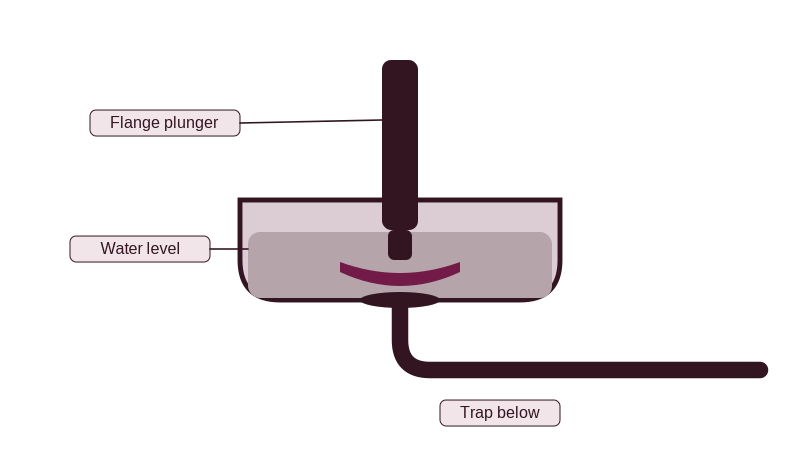
A blocked toilet is usually caused by too much paper, a wipe, or a toy sitting in the trap, the curved part inside the bowl base. Should the water be climbing, never flush a second time. Lift the tank lid and push the flapper closed, or shut the wall valve instead. Then plunge. The full range of blocked drains is covered under clearing drains and clogs.
What is the first thing to do when a toilet is close to overflowing?
Keep more water out of the bowl. Take the lid off the tank and push the flapper down onto its seat, or turn the wall shutoff valve clockwise. Set towels or a bucket around the base, then wait several minutes and watch if the level drops by itself. Never flush as a test.
When the bowl is almost full and still rising, the tank may keep refilling the bowl through a leaking flapper, which our toilet flapper repair page covers. If the toilet is the only fixture with the problem, the block is in the toilet or its short branch. If the bathtub or floor drain also gurgles, the block is further down.
Put on rubber gloves, and lay down old towels. Open a window if you can. Wastewater can carry bacteria, so wash your hands well afterward and clean the floor with a disinfectant.
How should a toilet be plunged?
Pick a flange plunger, the kind with a rubber flap that folds out of the cup, in place of a flat sink plunger. Check that water covers the cup, seat it firmly over the drain opening, then work it with steady push and pull strokes, ten or fifteen of them, without breaking the seal. The last pull often frees the clog.
Technique decides the result. A weak seal wastes effort. Push the first stroke gently to push out air, or the splash will come back at you. If the water drains, flush slowly to confirm. If nothing moves after several rounds, rest a minute and try again, since some clogs need repeated pressure to move.
A little dish soap and hot water, not boiling, can help lubricate the pipe. Never add boiling water to porcelain, as the sudden temperature change can crack it. Avoid chemical drain openers in a toilet: they rarely work on a solid clog, they damage some fittings, and if the plumber must then work on it, the caustic water is hazardous. Baking soda and vinegar will not clear a large clog either.
What can I use if the plunger fails?
Reach for a closet auger, a compact toilet snake whose curved guide shields the porcelain. Feed the cable in until you meet resistance, crank the handle to hook or break the clog, and pull back slowly. Rinse the auger in a tub or outside, since it will be dirty. A standard drain snake can scratch the bowl.
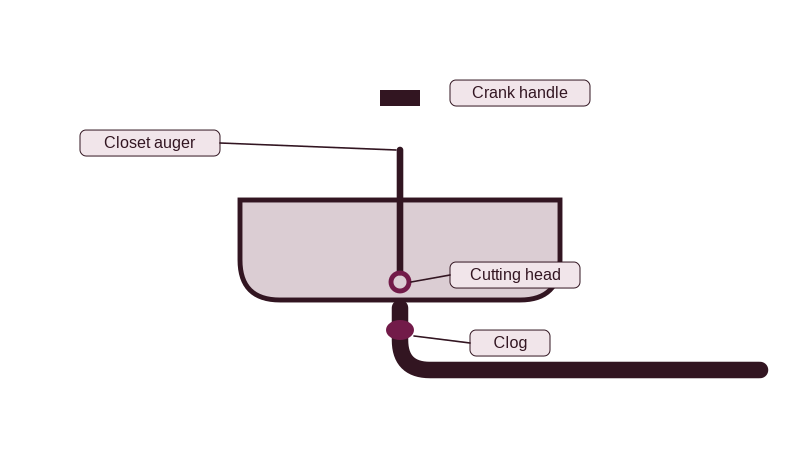
Do not try a coat hanger. It can scratch porcelain and push the blockage further in. If you suspect a foreign object, such as a toy, a brush or a wipe pack, plunging may wedge it deeper. An auger can sometimes hook it out. If you can feel something solid that will not move, stop and ask for help before you damage the toilet or the pipe.
When the toilet clears, flush a few times with small amounts of paper and watch. If it clogs again soon, the problem may be a partial blockage lower in the line.
How do I know a blocked toilet points to something bigger?
When every toilet in the house is slow, water surfaces in a shower or tub on flushing, or the toilet gurgles as the washing machine drains, the main sewer line is the likely site. Roots, a collapsed section or heavy buildup can cause it, and it needs a plumber with a motorized machine or a camera.
Older neighborhoods with mature trees, such as Casa Conejo and Wildwood, can have root intrusion into older sewer lines. In Thousand Oaks and Newbury Park hillside tracts built in the 1960s up to the 1990s, long drain runs with small dips can collect debris. Low-flow toilets, which many homes now have, are also less forgiving than older models, so very heavy loads of paper can block them.
A backup from the main line can flood a floor with wastewater, and cleaning it is a health issue. Use no water anywhere in the house, and ask for help. Our guide how to unclog a drain explains the difference between a fixture clog and a line clog, and plumber to unclog toilet cost covers what a visit involves.
What to do next
If the toilet is cleared, think about why it blocked. Heavy paper use, flushable wipes (they are not truly flushable), feminine products and toys are the usual reasons. Keep a small bin in the bathroom, and put a plunger where you can reach it. If it blocks again within a week, use the quote page to send a request, so that a local plumbing business can quote an inspection.
Common questions
How much time does it take to clear a blocked toilet?
Plunging often succeeds within minutes, and an auger takes slightly longer. A plumber can normally clear a toilet in a brief visit, though a main line problem takes more time, and lifting the toilet to retrieve an object takes the longest, since it must be unbolted and reset on a fresh wax seal.
What should I ask before someone clears my toilet?
Ask whether the price is flat or hourly, whether a camera check is included if the main line is suspect, how the job changes if the toilet must be lifted, and whether the cause of the clog will be explained. Get the contractor's California license number too, and keep the written quote.
Does an adult need to be home for the repair?
Yes. Someone has to open the door, point out the toilet and any other slow drains, and approve extra work, for instance if the toilet must be removed. Beforehand, move rugs and clear the bathroom floor, and keep kids and pets away from the room while work is under way.
Can I safely use drain cleaner in a toilet?
It is not recommended. Chemical drain openers can harm the finish and some seals, they seldom clear paper or solid objects, and the water left in the bowl turns hazardous to touch. A plunger or closet auger is the safer first tool, and a plumber can handle what those cannot.