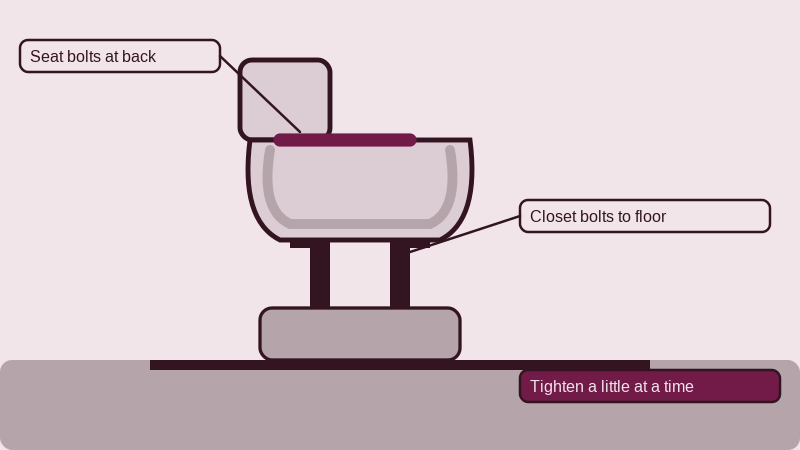
Tighten the two bolts at the back of the seat from above, gripping the nut underneath if it spins. Most seats loosen because the plastic nuts have backed off or the bolts are too short for the bowl. A toilet that shifts against the floor is a base problem, covered below. For other jobs, visit our home page.
Past the seat, this guide answers what people tend to ask next: how to steady a rocking toilet, free a stiff flush button, speed up a slow flush and replace a handle, flapper or flush valve. It also says when a plumber is the safer choice, because a leaking base or cracked bowl is more than a quick fix.
How is a loose toilet seat tightened?
Flip up the bolt caps at the back, then tighten each bolt with a screwdriver, holding the nut beneath the rim with your fingers or a wrench. Line the seat up over the bowl before the last turn. A nut that keeps spinning means swapping the bolts for a new set that matches the seat.
With rusted bolts or stripped plastic nuts, buy a replacement bolt kit. Brass or stainless bolts last longer than plastic. A seat with slotted holes lets you slide it until it sits straight. A cracked hinge or a seat that keeps shifting under weight is usually cheaper to replace than repair. Measure the bolt spacing and bowl shape (round or elongated) before you buy.
If the seat wobbles even after the bolts are tight, the bolt holes may be oversize, and rubber washers can take up the slack.
What frees a stiff or stuck flush button?
Remove the tank lid and study the button mechanism. A dual flush button links to a rod or cable that raises the flush valve. Make sure nothing blocks it, clean off mineral deposits, and adjust the rod length so it presses the valve all the way. A cracked mechanism or stretched cable means replacing the entire button assembly.
Dual flush buttons come in many types, so look for the maker's name on the lid or the tank. Many have a small nut or ring that lets you lift the assembly out from inside the tank. Take a photo before you disassemble. Replacement button kits match the hole size in the tank.
When the button works but the flush is weak, the cause may lie elsewhere, so see toilet flush repair.
Why does a toilet flush slowly, and what helps?
A slow flush normally traces to one of three things: a partly blocked rim jet beneath the bowl rim, a low water level in the tank, or a flapper closing too soon. Clear the rim holes using vinegar and a small brush, raise the water level slightly and check that the chain is not too short.
Mineral buildup clogs rim holes in hard water areas. Work a wire or small brush in with the help of a mirror. Empty a cup of vinegar down the overflow tube and let it sit for an hour. If the flush stays slow with a clean bowl and full tank, a partial blockage in the drain is possible. Plunger steps are in clearing a clogged drain.
The overflow tube sets the water level, as explained on repairing a toilet overflow tube.
How do you fix a flapper, flush valve or tank problem?
When a flapper fails to seal, tank water seeps into the bowl and the fill valve keeps refilling. Swap in the same style of flapper, and clean the seat. A pitted seat or cracked valve means replacing the whole flush valve, which requires lifting the tank off the bowl.
Start with the dye test. Add a few drops of food coloring to the tank water and leave it ten minutes unflushed. The EPA recommends this test; if color reaches the bowl, the flapper or seat is leaking. Flush right after so the dye leaves no stain.
For part-by-part steps, read toilet flapper repair, repairing a fill valve and the reasons a toilet keeps running. If the shut off valve below the tank sticks or leaks, see repairing the toilet shut off valve.
At what point is a plumber needed for a toilet?
Send a request when water seeps from the base, the bowl or tank has cracked, the shut off valve is stuck, the flange is damaged, the floor is soft, or the toilet still misbehaves after you replaced parts. Acting early on a base leak limits floor damage. A loose seat or stiff button is yours to fix.
In the quote form, note the toilet's age, the symptom and what you have tried. We pass your request to a local plumbing business, and the businesses that accept requests pay us a fee. Requests are read Monday to Friday, 9am to 5pm, and we promise no response time.
How do you swap a toilet handle that has no chain?
Some handles link through a rod or lever clip rather than a chain. Close the water and flush, detach the clip or rod from the flapper arm, undo the handle nut inside the tank, and install a handle of the same type. Reconnect with the slack you had before, so the flapper can close fully.
Check what the old handle attaches to. Chain, rod and clip types do not interchange. Bring it to the shop for a match. A new handle is a small cost compared with a plumber visit. If the flapper does not seal after the handle swap, check the lift arm length and the chain slack, which should leave the flapper free to close fully.
What stops a toilet rocking on the floor?
A rocking toilet is either not bolted down firmly, or sits on an uneven floor. Pry off the caps beside the base, then snug the nuts in small steps, switching sides each time, and stop once it feels firm. Overtightening cracks the porcelain. Fill any gap with plastic shims, then trim them and seal with caulk.
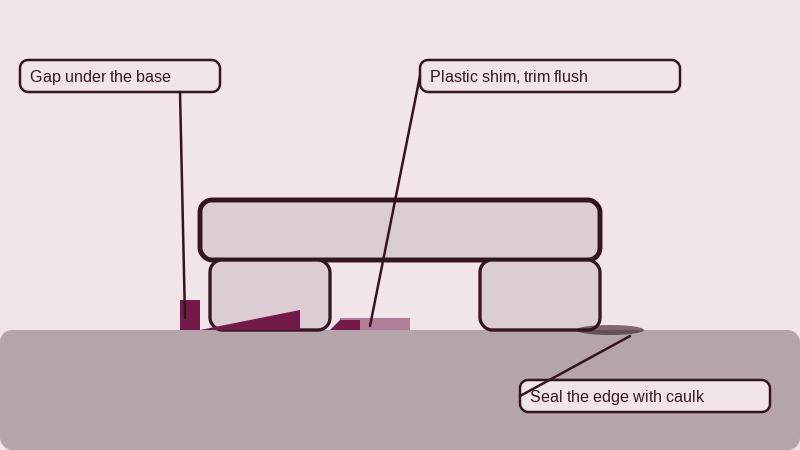
If it still rocks after tightening, the closet bolts may be loose in the flange, or the flange may be broken or sitting too low. A rocking toilet breaks the wax seal, which can let water leak under the base and rot the floor. Check for damp around the base and a stain or soft spot beside it.
A leak at the base is plumber work, covered in plumber for a toilet leak. Lifting the toilet is often needed for a damaged flange or a soft floor, and the cost of replacing a toilet discusses that.
Common questions
How much time does fixing a loose toilet seat take?
A loose seat takes roughly five minutes. Tightening a rocking toilet takes ten to twenty minutes, plus time for caulk to set. Swapping a flapper or handle takes about half an hour. A plumber who must lift the toilet to deal with a flange or floor may need an hour or more.
Which questions are worth asking before booking a toilet repair?
Ask whether the price is flat or hourly, which parts it includes, if the plumber will inspect the flange and floor once the toilet is lifted, and what extra charges could apply. Get every answer in writing before any work starts, so the final bill holds no surprises.
Who must be at the house when a plumber fixes the toilet?
An adult needs to be home to let the plumber in, point out the bathroom and approve any change to the job. Clear space around the toilet and its shut off valve beforehand. You need not sit in the room throughout, but stay reachable.
Why does my new toilet seat keep coming loose?
Most often the seat bolts are too short or the nuts are plastic and loosen with use. Fit longer stainless bolts, use rubber washers, and check the seat is the right shape for the bowl. If the bowl rim itself is cracked, the toilet needs replacing.