A toilet stuck running wastes water around the clock, and quietly enough that many households put up with it for months. The remedy is usually an inexpensive part that takes little time to swap. This page forms part of the plumbing help on our home page for Thousand Oaks and Conejo Valley households, arranged by what you hear and see, so you can reach the cause without dismantling the tank blindly.
Lift the tank lid, flush once and watch. The following minute reveals most of what you need to know.
What makes a toilet keep running?
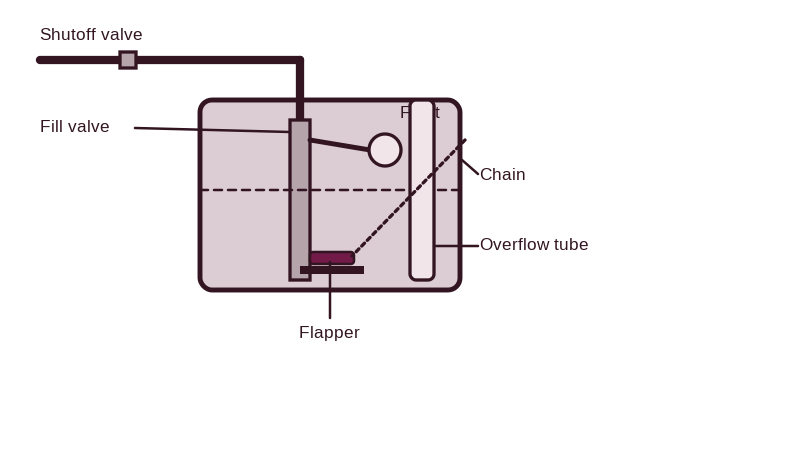
A toilet keeps running for three usual reasons: a worn flapper lets tank water slip into the bowl, the fill valve fails to shut off at the right level, or a float set too high sends the excess down the overflow tube. Each has its own sound and remedy, and a look inside the tank usually shows which.
Three patterns cover most cases. A faint trickle in the bowl with an occasional refill every few minutes is a leaking flapper, sometimes called a ghost flush. A steady hiss and water running over the top of the tall overflow tube is a fill valve or float problem. Water running while the chain is stretched tight means the flapper cannot close, and loosening the chain a link or two fixes it. A flapper that feels soft, sticky or warped should simply be replaced.
What is the next step?
Close the valve behind the toilet to halt the waste while you decide. Then run the dye test, compare the water level with the mark on the overflow tube, and inspect the chain. Fit the matching part, turn the water back on in small steps, and watch for a full minute.
If the toilet runs again, note which symptom came back. Do not force a wall shutoff valve that refuses to close or weeps around its stem. A seized shutoff valve is a common way for a small repair to turn into a flood, and our page on shutoff valve repair explains why. Most toilet repair work ends at the tank, so jot down the date of your fix to compare your next water bill with the last.
Why will the flush handle not work?
A handle that sticks, feels loose or does nothing almost always has its fault inside the tank: an unhooked chain, a bent lever arm, a slack handle nut or a handle touching the tank wall. A handle that fails to spring back can also hold the flapper up, so the toilet runs on.
Start with the chain, since a slipped clip is the commonest cause. Then examine the arm and the nut fastening the handle to the tank. Handle nuts usually tighten counterclockwise. A cracked handle or rusted arm calls for a replacement kit, which is cheap and fits most toilets. Sticking can also come from scale or from a lever rubbing the tank edge. For more on the flushing side of the problem, see our guide to toilet flush repair.
Does a leaking toilet raise the water bill?
Yes. A toilet leaking into the bowl can pass a large volume over a month without any visible sign, and the cost lands on the next bill. Because the leak is silent, toilets are the first fixture to check when a bill climbs unexplained.
To test, drop a few drops of dye or a dissolving tablet into the tank, hold off flushing, and look in the bowl after fifteen minutes. If color turns up in the bowl, the flapper or seat is leaking. Another option is to check whether the water meter moves while every fixture is switched off. The meter test and other usual suspects are covered in why a bill can rise with no visible leak, and leaks at the base are covered in getting a plumber for a toilet leak.
How do you decide which part to replace?
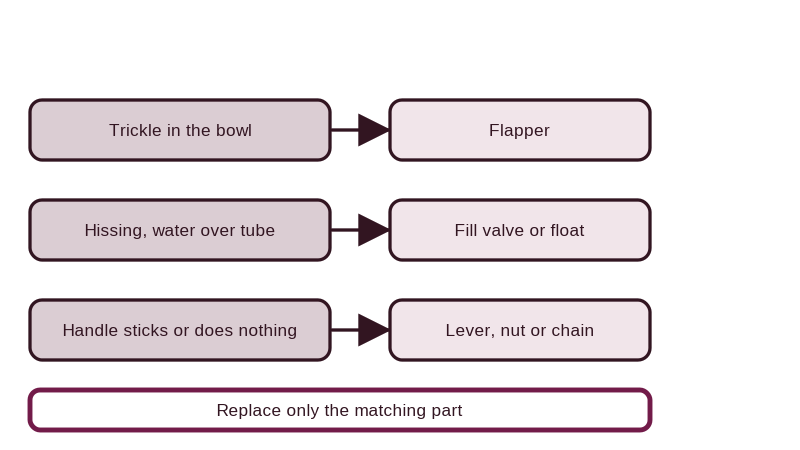
Pair the symptom with the part. A trickle or ghost flush implicates the flapper. Hissing, or water over the overflow tube, implicates the fill valve or float. A handle that sticks implicates the lever, nut or chain. Swap only the matching part, since new parts that miss the cause waste money.
Many parts are universal, but photograph the tank before you shop. Detailed pages cover each swap in order: toilet flapper repair, fixing the fill valve, the inlet valve and the overflow tube. Close the supply at the wall valve before beginning, and flush to empty the tank.
When does a running toilet need a plumber?
Get one involved when new parts fail to stop the running, the shutoff valve will not shut, water leaks from the base or supply line, the tank has cracked, or the cause stays hidden. The plumber can also assess if the toilet merits repair or is better replaced.
Send the details through the quote form, and we arrange for a local plumbing business to visit. Describe the sounds you hear, the parts already swapped, and the age of the toilet. If you are weighing a whole-unit swap, our guide to toilet replacement costs explains what drives the price. A new toilet is also a chance to choose a model using less water per flush.
Common questions
How much time does fixing a running toilet take?
Most running toilets are sorted in under an hour: a flapper swap takes minutes, and a new fill valve usually takes thirty to sixty minutes. A plumber visit adds travel and any extra faults, such as a stuck shutoff valve. A realistic estimate comes once the plumber has looked inside the tank.
What do I need to check before hiring someone for a running toilet?
Check that the quote covers parts as well as labor, that the visit includes a look at the shutoff valve and supply line, and how a switch to replacement would be handled. Have the price in writing, and confirm which business is doing the work before anyone arrives.
Does someone need to be home for the toilet repair?
Yes, an adult has to be there to let the plumber in, point out the toilet and agree the work and price. The job is short, but the plumber should test the flush with you present. If you cannot attend, name a trusted adult and tell us when you send the request.
Can a running toilet damage anything?
The toilet itself will not be harmed, but the waste adds up on your bill, and constant flow can wear parts faster. A fill valve that fails entirely can push water over the tank's overflow tube nonstop. Should water ever reach the floor, close the wall valve straight away.
Is a running toilet an emergency?
Usually not, though it should not wait for months. Shut the wall valve if you cannot fix it the same day. It turns urgent if water overflows onto the floor, or seeps from the base or supply line, since that can damage flooring and the ceiling below.