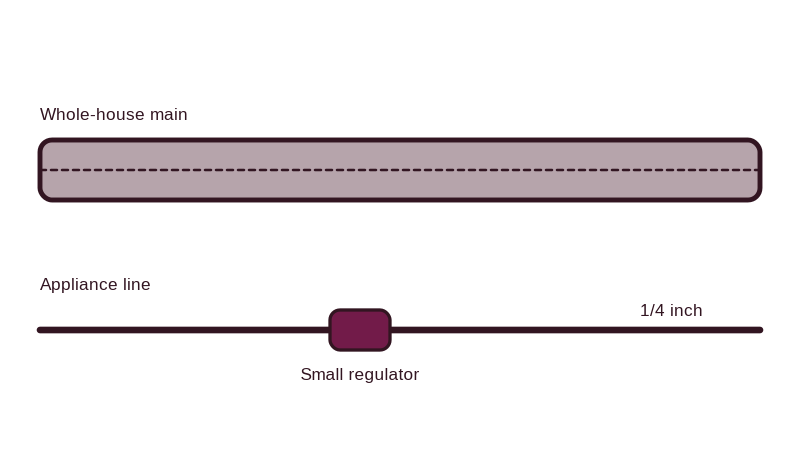
Regulators are sold by the size of the pipe or tube connection, and a 1/4 inch connection is tiny next to the pipe feeding a house. A valve that small belongs on a single branch, an appliance feed or a treatment system, not on the line that serves the whole home. Knowing that saves a wrong purchase. This page is part of our low water pressure help for Conejo homes, and the home page shows every service we arrange.
Where does a quarter-inch pressure regulator belong?
It belongs where a thin line needs a steady, lower pressure: reverse osmosis systems, ice maker and humidifier feeds, small irrigation or drip lines, and some filter housings. It is sized to the connection on that device, not to the home's main water line, which is far larger.
Check the instructions for the equipment, since many state the pressure range they need. A drip irrigation regulator, for instance, holds pressure down so emitters do not pop off. A small regulator on an appliance line protects fittings that cannot take full line pressure. These parts are sold at hardware and irrigation stores. Confirm the thread type, since small regulators come with push-fit, compression or threaded ends, and a mismatched end will not seal.
Why does low pressure still happen after I fit a regulator?
Since a regulator can only lower pressure, weak flow comes from something else: a valve left partly shut, a clogged aerator or showerhead, scale in the pipe, a failing supply or an undersized line. Compare one fixture against all, then check the meter valve, then have the plumber test.
Weak hot water alone is a separate issue, usually traced to the heater or the valves around it. For that case, read hot water pressure regulators. An old galvanized line can restrict flow badly; see galvanized pipe replacement. A plumber with a gauge can tell whether the fault is in the supply or your own pipes, and can write a quote for the fix. Use the quote form, and browse the areas page.
Can I install a small regulator myself?
Yes, on an appliance or irrigation line, if you shut the supply first, use the right fittings and follow the product's flow direction arrow. Fitting one on the main water line is different: it means cutting into the pipe and may need a permit, so many owners hire a plumber.
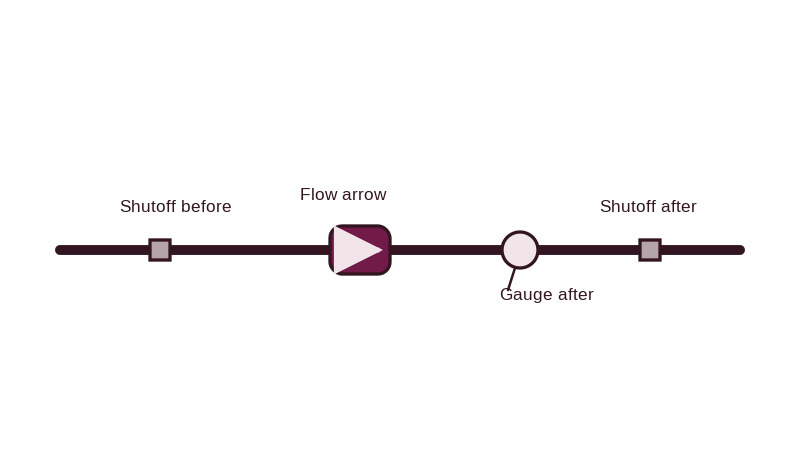
With a small regulator, look for the arrow on the body, which marks flow direction. Place it on the correct side of any filter if the instructions say so. Wrap threaded joints with thread tape as the product describes, snug them by hand plus a small turn, and test for leaks under pressure. Take gauge readings before and after to confirm it works. If you are unsure of the fitting, bring the old part with you to the shop.
Would a 1/4 inch regulator suit my whole house?
No, not in a typical home. Whole-house regulators sit on the main line, commonly three-quarter inch or one inch pipe in a house, and the regulator is chosen to match that pipe. A 1/4 inch part would choke the flow and leave fixtures starved.
You may have meant 1-1/4 inch, a larger pipe size found in bigger homes or on a long main, which would be a whole-house regulator. Find the size by looking at the pipe where it comes into the house, or have a plumber measure it. The guide to finding the pressure regulator shows where to look, and the page on water line pressure regulators explains the whole-house type.
Is a regulator necessary for my home?
Screw a gauge onto an outdoor hose bib with no water running and test the pressure. Note the number, then ask a plumber or the fixture maker what the safe range is. Signs of too much pressure include banging pipes, dripping relief valves, leaks and short-lived fixtures.
Pressure can differ between neighborhoods, since elevation and the supplier's delivery system both play a part, so a reading at your own tap tells you more than a neighbor's. If the reading is high, a whole-house regulator is the standard answer. If the pressure is low, a regulator does not help, because it only lowers pressure and cannot raise it. For a failed unit, read water pressure regulator replacement, and for the banging sound, water hammer noise.
Common questions
What size water pressure regulator do I need?
Size the regulator to the pipe or tube it joins. A whole-house valve matches the main line, commonly three-quarter inch or one inch. A 1/4 inch regulator suits a small appliance or irrigation line. A plumber can measure your pipe to confirm the size.
How long does it take to fit a regulator?
On an appliance line, a small regulator takes minutes. A whole-house regulator is frequently a quick job for a plumber, though longer if the line is awkward to reach or a union or shutoff must be added. Ask how long the water will stay off while the work is done.
What should I ask the person fitting a regulator?
Ask whether the plumber will measure pressure before and after, which brand and size is planned, if a permit applies, and what the price is with shutoff valves included. Get the contractor license number and verify it with the state board. Insist on a written quote.
Can a regulator quiet noisy pipes?
It can, when high pressure is the cause, since lower pressure reduces hammer and strain. If the banging comes from loose pipes or a worn valve, a regulator will not fix it. A gauge reading shows which case you have.