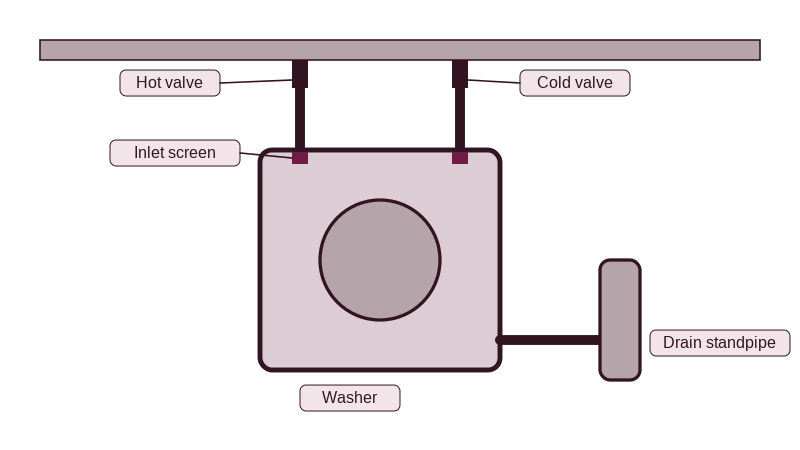
A washer seldom needs a regulator of its own. What it needs is house water pressure that stays within the manufacturer's listed range, and a regulator, if one is called for, usually sits where the main supply comes into the house, shielding every fixture. If your machine bangs, leaks at the hoses or fills with a shriek, pressure is the thing to measure first. Our page for the garbage disposal repair plumber covers related fixture work. For a local plumber to test pressure, use the quote form at Conejo Plumbing Pros.
Is a water pressure regulator necessary for a washing machine?
Normally no separate unit is. A washer's inlet valves and screens are built to work inside a pressure range printed in the manual. Pressure within that range needs nothing more. Pressure far above it is better handled by a main line regulator, which protects the washer, the water heater, the toilets and every faucet, and does more good than a regulator on one appliance.
Some people fit a small regulator at the washer's supply valves. That is possible, but it treats one symptom and leaves other fixtures exposed. A plumber would normally test the incoming pressure first. When the number is in range, the washer's own fault is the target instead: a clogged inlet screen, a weak inlet valve or a kinked hose.
Look at your washer's manual for the stated minimum and maximum pressure. We do not state a figure that applies to every machine, because makers differ. If the manual lists none, ask the manufacturer.
What are the signs that high pressure is hurting my washer?
Look for water hammer when the machine's valve shuts, hoses that bulge or weep at the couplings, a washer that overfills, and dripping faucets or running toilets elsewhere in the house. A cheap pressure gauge that threads onto a hose bib shows the number. Test with everything off, since pressure often peaks at night.
Read the gauge at several times of day. Municipal supply can climb when demand falls, and a house that looks fine at 5pm may run high at 2am. A reading above the manufacturer's range usually calls for a main line regulator. Details are in water pressure regulator replacement and in the guide to locating the regulator.
Hillside homes in Thousand Oaks and Newbury Park sit at different elevations, and pressure can vary with the street's position on the slope. Some homes already have a regulator that is old and failing, which can cause pressure to creep up rather than just go low. If you hear water hammer, our guide to the water hammer sound goes through causes.
What if the problem is low water pressure to the washer?
Slow filling, long cycles or error codes about water supply suggest low flow. Inspect the inlet screens at the back of the machine, look at the hose for kinks and make sure the wall valves are not only partly open. If other fixtures are weak too, the fault is house-wide, and plumber for low water pressure covers it.
Slide the machine out a little, close both valves, unscrew the hoses and examine the screens. Mineral scale, sand or rubber bits collect there. Rinse and refit them. Slow hot fills with normal cold point to the hot side, which links to hot water pressure low.
If only the laundry area is weak, an old galvanized stub or a partly closed wall valve may be to blame. A plumber can replace an old multi-turn valve with a quarter-turn one, making it easier to shut off the washer later.
Where is a pressure regulator fitted, and who does the work?
A whole-house regulator is fitted on the main line close to where water enters, frequently right after the shutoff valve. It is a brass fitting shaped like a bell, with an adjusting screw. Fitting or swapping one means cutting into the main supply, which makes it generally a plumber's task, and a permit may be required in some jurisdictions. Check with the City of Thousand Oaks Building and Safety or the county.
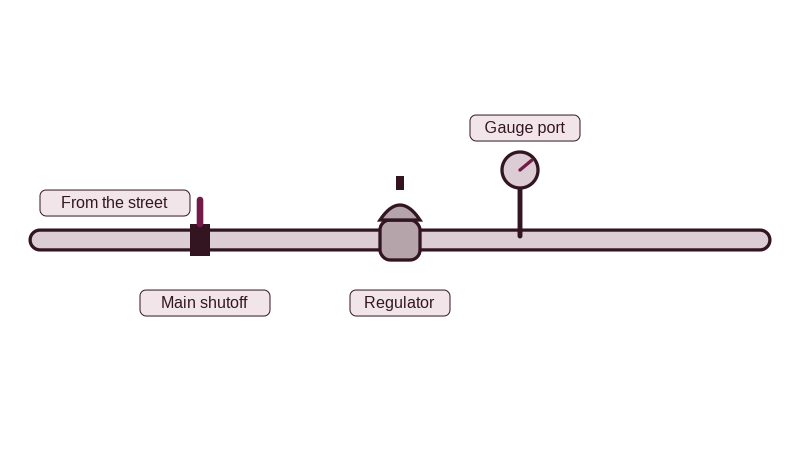
Regulators come in the sizes of the pipe they serve, such as 3/4 inch for many single-family homes. The model guides on our site, such as 3/4 pressure regulator and whole-house regulator, explain the common forms. Fitting a regulator often calls for an expansion tank afterward, since a regulator can close the system to expansion.
Renters should ask the landlord. A regulator belongs to the building's plumbing, and a tenant should not cut into the main line.
Will a regulator make washing machine hoses last longer?
Yes, when high pressure is what causes hoses to fail early. Constant high pressure strains rubber hoses and their couplings. Swap rubber hoses for braided stainless ones, inspect them every few years, and close the washer valves before a long trip. A burst hose can flood a house within minutes.
After a burst or leaking hose, check pressure before fitting another, or the new hose faces the same load. The EPA estimates that over 9,300 gallons of water a year are lost to leaks in the average household, and a slow weep behind a washer can go unseen for weeks. Look behind the machine and on the floor beneath it when you check.
Common questions
What water pressure should my washing machine have?
The manual has the answer: makers publish a minimum and a maximum, which differ by model. Should it be missing, the maker's support line can supply it. A hose bib gauge reveals your supply, and a reading outside the range calls for a plumber, who can address the regulator or the cause of low flow.
Why does my washing machine bang when it fills?
A bang is usually water hammer: the inlet valve closes quickly and the moving water slams against it. High pressure makes it worse, and a failed regulator or missing air chamber can contribute. Checking pressure is the first step, and a plumber can fit an arrestor at the washer if needed.
Can I install a regulator myself?
A small hose-end regulator screws on tool-free, but a whole-house regulator involves cutting the main supply and, depending on location, may need a permit. Most homeowners leave that to a plumber. Stay off the main line unless you can close it completely and know how to refit it.
How often should washing machine hoses be replaced?
Many appliance makers suggest checking them regularly and replacing rubber ones every few years, but follow your manual. Replace any with bulges, cracks or rust at the couplings. Braided stainless hoses last longer but still wear. Shut off the supply valves when you travel.